


Speaking at Fan Expo, Andy Serkis uses his experiences filming The Lord of the Rings and Planet of the Apes franchises to explain how motion capture technology has evolved. For many audiences, Serkis is a known figure mostly for roles that don't show his actual appearance. The magic of CGI made it possible for him to appear as Gollum in the Lord of the Rings trilogy, as Kong in King Kong (2005), as Caesar in the Planet of the Apes reboot trilogy, and as Snoke in Disney's recent Star Wars sequel trilogy.
During a recent interview with Screen Rant at Fan Expo San Francisco, Serkis pulls back the curtain on his motion capture work across some major franchises, using Lord of the Rings and Planet of the Apes to explain how it went from "motion capture" to "performance capture." As technology improved, Serkis' performance was no longer limited to studio sets, and more of how he performed could be translated to the final film. Check out Serkis' in-depth explanation below:
It was all about the performance and, at this point now, one of the things that had changed [with motion capture technology] was that we were able to shoot everything. On Lord of the Rings, there wasn't facial capture; it was the animators copying my facial expressions, and Gollum was redesigned to fit my – I hope I don’t look like him – facial features.
By the time we got to Apes, we were able to shoot everything with motion capture. We were able to shoot on set in real-time for the whole thing. And then, through the course of the three movies, we were able to then take that technology out of the sets and onto locations. In Dawn, for instance, we were up in the forests of Vancouver pretending to be in the real woods. And then in War, we were up in the mountains in snow with motion capture. By then, it changed from being just motion capture to performance capture, which means you capture the voice, the physicality, the facial, the body – everything all at the same time, and you just do it once just like regular filming.
That was how the technology advanced, but what was really incredible was being with a group of actors who were all playing apes. But it wasn't just about mimicking ape behavior; it's about creating a character and the psychological and emotional journey, and also the linguistic journey of it. They learn to speak throughout the course of the films. They're using sign language at the beginning, but by the end, they're actually communicating using language. So through the three films, you have that journey too. It was a fascinating process and it was an amazing cast of really talented actors who played different apes.
It's no different from the way actors create conventional roles on screen. People say to me, “Should there be some sort of special category for performance capture, if you are rewarding performance?” But I would say, no, absolutely not. Acting is acting, and instead of putting on makeup and costume, you're putting on a suit and coating your body and face in a form of digital makeup and digital costume.
What Andy Serkis' Career Means For Performance Capture In Movies
How Serkis' Early Work Paved The Way For Jaw-Dropping Performance Capture

Before Gollum in The Lord of the Rings, there hadn't really been an expressive, human-like CGI character in a movie before, at least not one that looked convincing. The technology used for Peter Jackson's acclaimed trilogy wasn't just impressive because of how it looked, but specifically because there was a strong, memorable performance behind it. The performance was so strong that Jackson would ask Serkis to play Kong in King Kong in the early 2000s, and Serkis ultimately became a go-to star for this kind of acting.
Serkis' Lord of the Rings work didn't just help to shape his own career, however. Weta FX was responsible for bringing Serkis' Gollum performance to life, and there's a clear line between this and the company's work on Avatar a few years later. As Serkis explains with Planet of the Apes, a major change with Avatar is that VFX artists aren't attempting to themselves recreate an actor's performance on a sound stage, but instead translate it to the screen.
Weta's FX's work helped all three Lord of the Rings movies, King Kong, and both Avatar movies win Oscars for Best Visual Effects.
Our Take On Serkis' Performance Capture Career
Serkis Has Been Instrumental In Changing Attitudes Toward Performance Capture

Though major awards ceremonies like the Oscars still haven't really recognized performance capture performances in any major way, Serkis has been crucial to changing the perception around this kind of acting. With Caesar, especially, it's become more clear that audiences aren't just looking at technical wizardry and computer animation, but an actual performance that's just being presented in a new form. If an actor ever wins an Oscar for performance capture work, Serkis (if he's not the one winning) will have been crucial in making it happen.
Serkis' next major performance capture role will seemingly come in one of his own movies with the announced The Lord of the Rings: The Hunt for Gollum. Coming at least a handful of years after Avatar: The Way of Water dazzled with its life-like CGI, Gollum will likely be looking better than ever in this upcoming project. Even without that film, however, Serkis is undoubtedly one of the biggest and most important names when it comes to performance capture acting.
- Movie(s)
- The Lord of the Rings (1978), The Lord of the Rings: The Fellowship of the Ring, The Lord of the Rings: The Two Towers, The Lord of the Rings: The Return of the King, The Hobbit: An Unexpected Journey, The Hobbit: The Desolation of Smaug, The Hobbit: The Battle of the Five Armies, The Lord of the Rings: The War of the Rohirrim
- Created by
- J.R.R. Tolkien
The Lord of the Rings is a multimedia franchise consisting of several movies and a TV show released by Amazon titled The Lord of the Rings: The Rings of Power. The franchise is based on J.R.R. Tolkien's book series that began in 1954 with The Fellowship of the Ring. The Lord of the Rings saw mainstream popularity with Peter Jackson's The Lord of the Rings and The Hobbit trilogies.
- Cast
- Norman Bird, Anthony Daniels, Elijah Wood, Ian McKellen, Liv Tyler, Viggo Mortensen, Sean Astin, Cate Blanchett, John Rhys-Davies, Billy Boyd, Dominic Monaghan, Orlando Bloom, Christopher Lee, Hugo Weaving, Sean Bean, Ian Holm, Andy Serkis, Brad Dourif, Karl Urban, Martin Freeman, Richard Armitage, James Nesbitt, Ken Stott, Benedict Cumberbatch, Evangeline Lilly, Lee Pace, Luke Evans, Morfydd Clark, Mike Wood, Ismael Cruz Cordova, Charlie Vickers, Markella Kavenagh, Megan Richards, Sara Zwangobani, Daniel Weyman, Cynthia Addai-Robinson, Lenny Henry, Brian Cox, Shaun Dooley, Miranda Otto, Bilal Hasna, Benjamin Wainwright, Luke Pasqualino, Christopher Guard, William Squire, Michael Scholes, John Hurt
- Created by
- Pierre Boulle
- Cast
- Charlton Heston, Roddy McDowall, Kim Hunter, Maurice Evans, James Whitmore, Linda Harrison, Mark Wahlberg, Helena Bonham Carter, Tim Roth, Michael Clarke Duncan, Paul Giamatti, James Franco, Andy Serkis, John Lithgow, Freida Pinto, Gary Oldman, Keri Russell, Kodi Smit-McPhee, Jason Clarke, Toby Kebbell, Judy Greer, Woody Harrelson, Amiah Miller, Kevin Durand, Dichen Lachman, William H. Macy, Owen Teague, Freya Allan
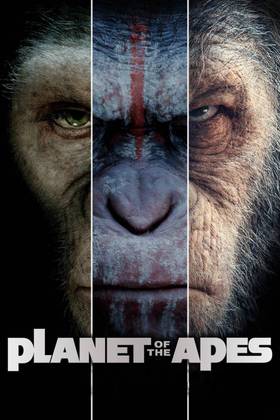
Planet of the Apes is a multimedia sci-fi franchise that began in 1963 with Pierre Boulle's novel, which was later adapted into a film in 1968 starring Charlton Heston. The success of the movie led to four sequels, two TV shows, a remake from Tim Burton, and a reboot trilogy. The Planet of the Apes franchise has also seen success in video games and comic books.
