


Summary
- Balatro reimagines video poker as a roguelite scoring puzzle, offering addictive and satisfying gameplay.
- The game focuses solely on poker and math, with no extra elements like narratives or lore.
- Balatro includes unique elements like special jokers that impact scoring, card enhancements, and endless mode for replayability.
The next great deckbuilder roguelite doesn’t boast pretty hand-painted fantasy art or an epic story, just pixelated chips, cards, and threes-of-a-kind. Solo developer LocalThunk’s debut Balatro is, simply and on its face, an upgraded riff on video poker, but recontextualizes the familiar betting game as a roguelite scoring puzzle. Vulnerable to broken builds which produce compulsively satisfying feedback heretofore unknown to digital cards, Balatro is a spellbinding, time-engulfing abyss. It’s also one of the most accessibly elegant deckbuilders since Slay the Spire first laid claims to the genre, and what it lacks in fluffy set design it more than makes up for in raw, mesmeric gameplay.
Balatro is by no means the first video game poker mutation of its kind, with last year’s Poker Quest only the most recent roguelite to incorporate these basics into more complicated deckbuilder setups. There was also Sword & Poker, a smartphone game series mixing standard poker hands with a bingo board play space. Both of these games and many others begin with the basic architecture of poker, but expand on it with fantasy creatures, narrative elements, and special abilities to spice up the standard expectations.
And then there’s the humble, unassuming Balatro. No narrative, no dragon boss fights, no talkative NPCs or lore-rich flavor text. Balatro begins and ends with just poker and math, with the essential amusement of seeing those big numbers become ever-bigger, framing its high scores with pleasant noises and colors to achieve maximal lizard-brain stimulation.
Balatro Starts With Basic Video Poker


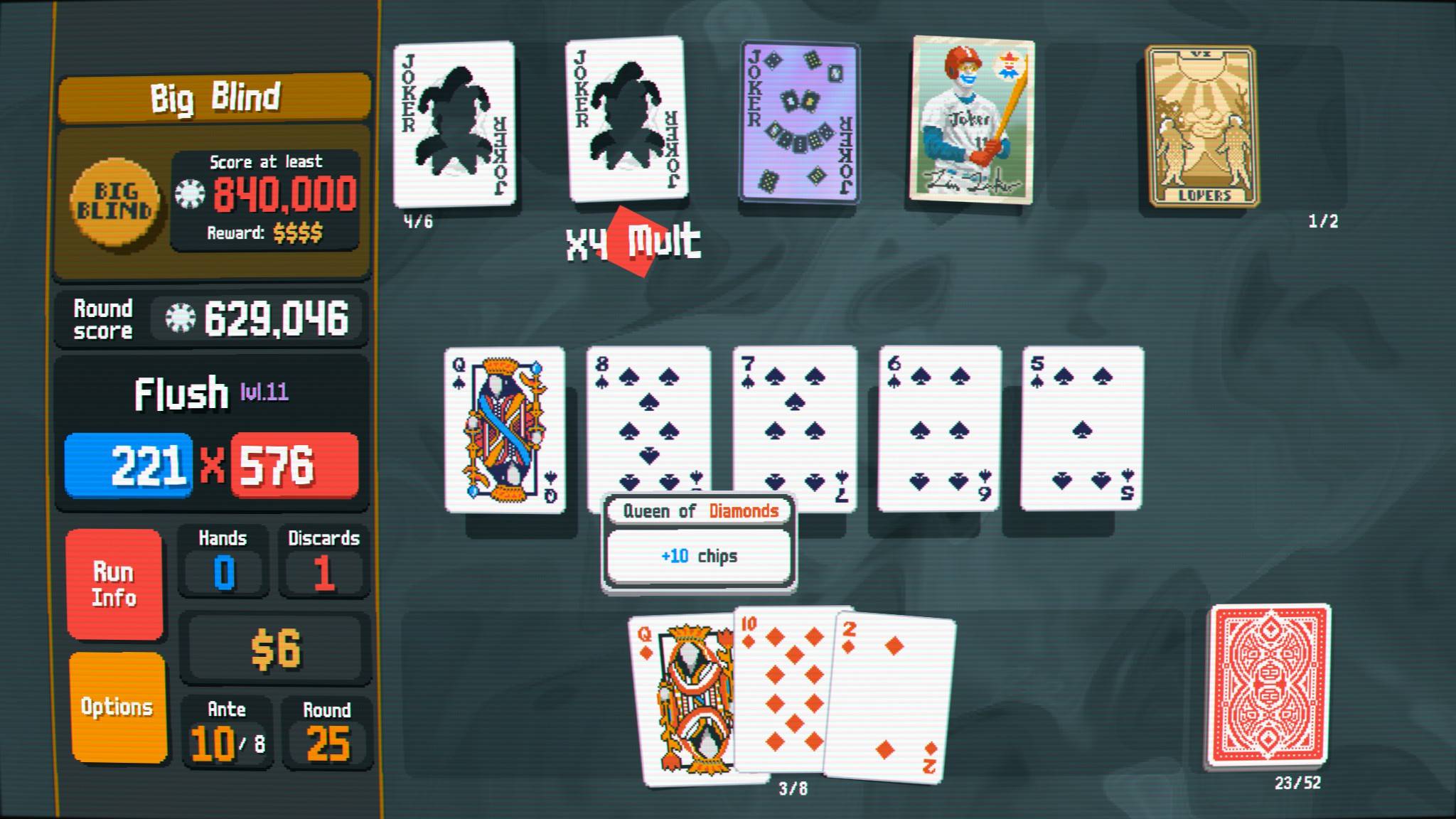
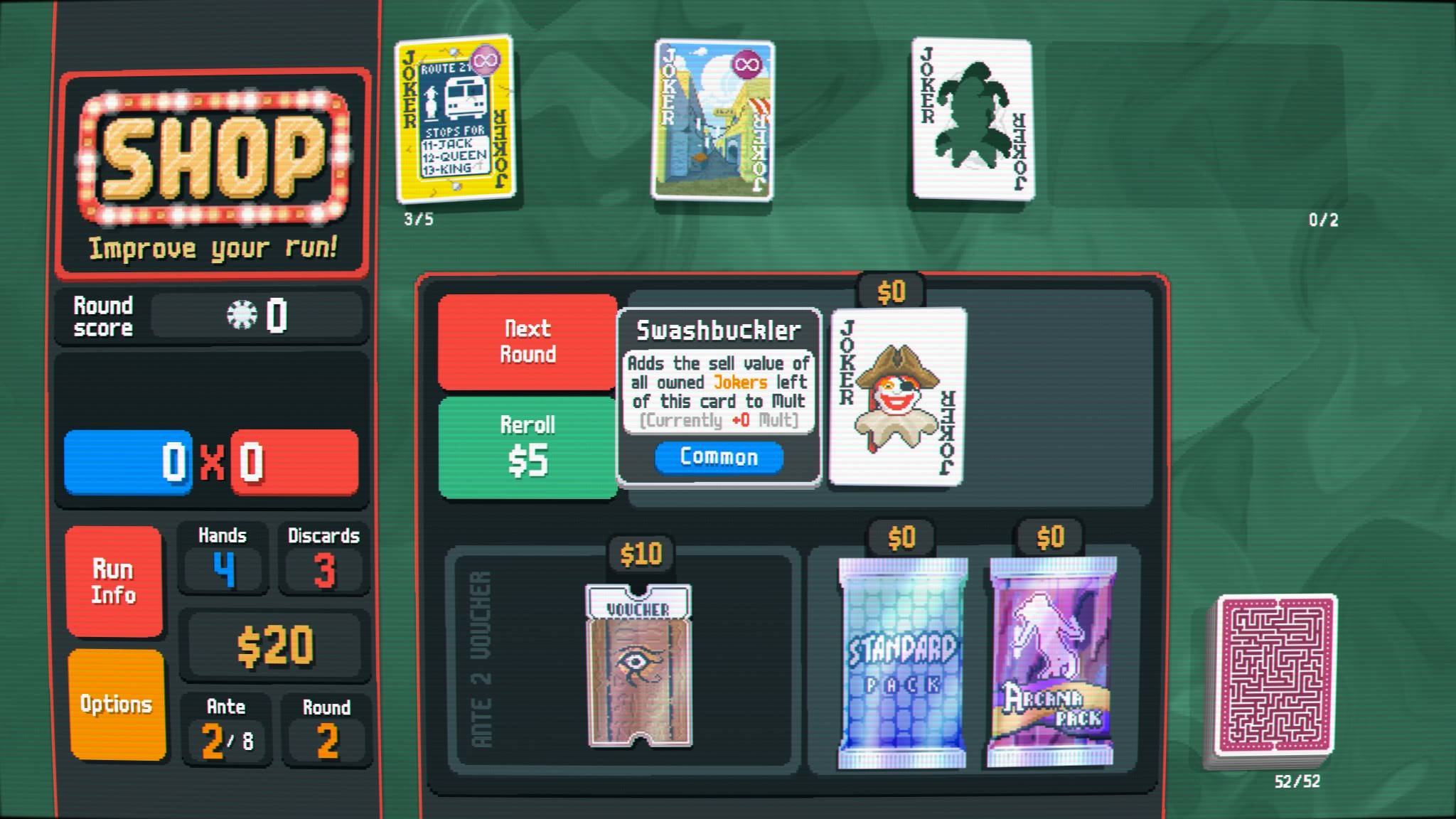
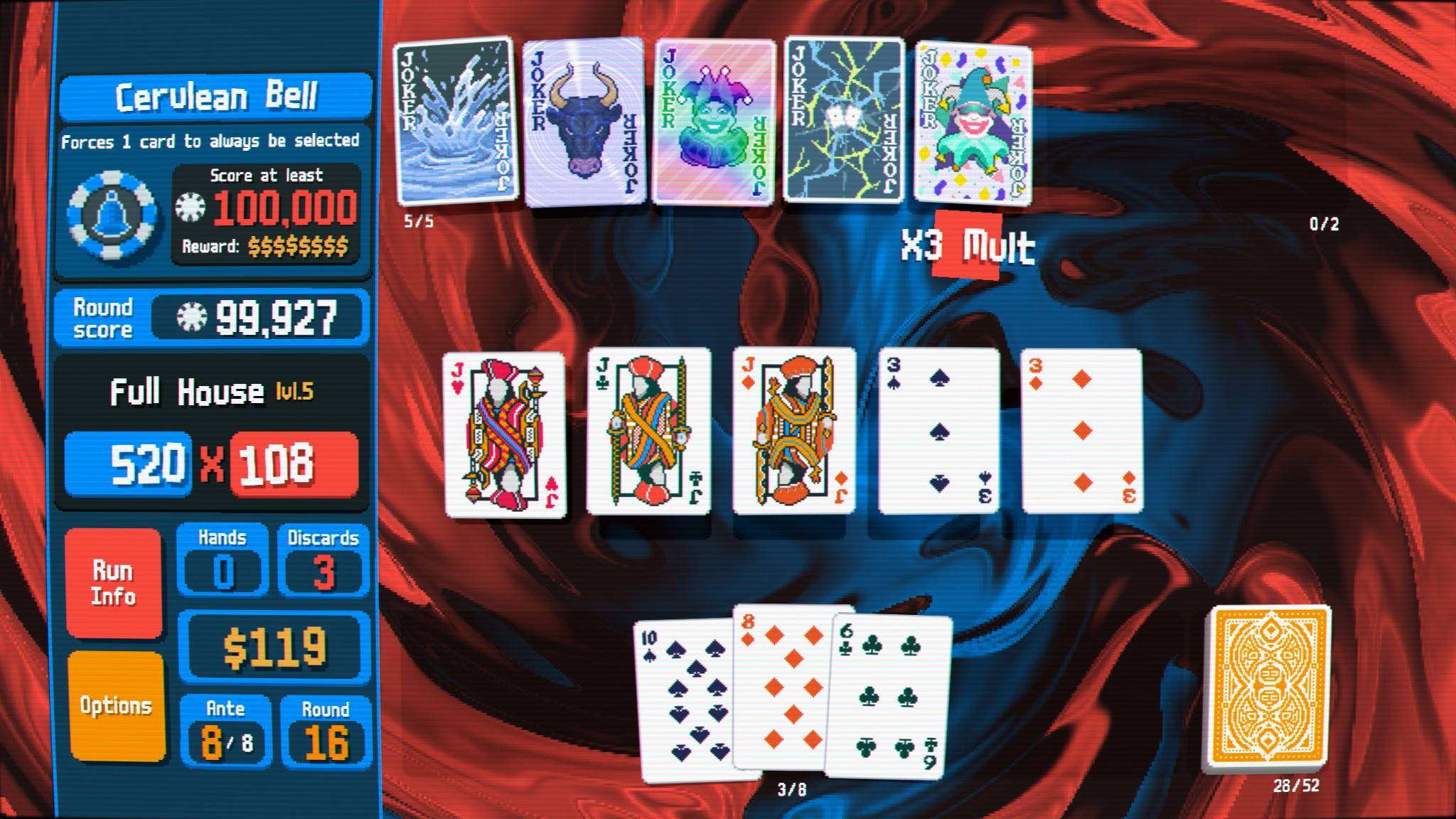



In Balatro, players compete against three blinds in sequence for a score in chips each round: a small blind, a big blind, and a boss blind. The latter always presents a special, randomly selected challenge quirk, like achieving the blind minimum while sabotaging cards played in the previous round's matches, or preventing cards with certain suits from scoring at all. Succeeding against any blind typically results in a cash reward, which can then be spent at a randomized shop in between matches, or strategically hoarded towards future ends with crossed fingers.
The most jarring aspect of Balatro is its stringent solitude. There are no personalized competitors in the game whatsoever, making the process a pure scoring competition, a battle against a number; in this way, it’s much more akin to video poker than actual poker. There’s only chaos and the self, though a personified joker card character does stop by after a loss or win to offer a few quick words of insult or praise.
Poker hands have a set designation of scoring values and multipliers, with higher potential attributed to hands which are more traditionally difficult to draw; straight flushes and fours-of-a-kind tend to outperform a simple pair by orders of magnitude in the first few games, though successfully played cards also add their face values to the pre-multiplied score. With most blinds resolving in only four or five hands and minimal discards available, there’s a drive to pump that score as quickly as possible or suffer a hard loss to the blind, which results in a complete restart.
It’s an addictive crawl upward through mushrooming scoring potential, making for a compelling carrot to chase, over and over.
An Assortment of Game-Changing Jokers

Balatro employs several different methods that stack layers of luck and complexity onto the fairly ordered chaos of a poker deal. Most prominent of these is the joker, a special card which can be equipped to one of five open slots at the top of the screen. Jokers are not played directly on their own, but continuously provide effects which run the gamut from simple – a +4 multiplier across the board, additional bonuses when special hands are played, etc. – to increasingly weirder and wilder score modifiers, like jokers which pump up their values with conditions met over time, supply cash bonuses after matches, or even consume nearby jokers to buff multipliers that persist between rounds.
There are a total of 150 jokers in Balatro, each of which synergize with others and inform intricate deck construction. There are jokers which add multipliers if certain other jokers are present, others which destroy themselves at random or after certain conditions are met, and jokers which can be sold for extra cash or to trigger yet other effects. Some jokers will prove utterly worthless in a given run but then completely obliterate scores in others, becoming the unexpected linchpin of a virtually unstoppable build.
The possibility space in earlier attempts expands after completing achievements, which steadily unlock new jokers and other special features over time, prodding a new game after every failure. It’s an addictive crawl upward through mushrooming scoring potential, making for a compelling carrot to chase, over and over.
Card Enhancements and Mad Multipliers

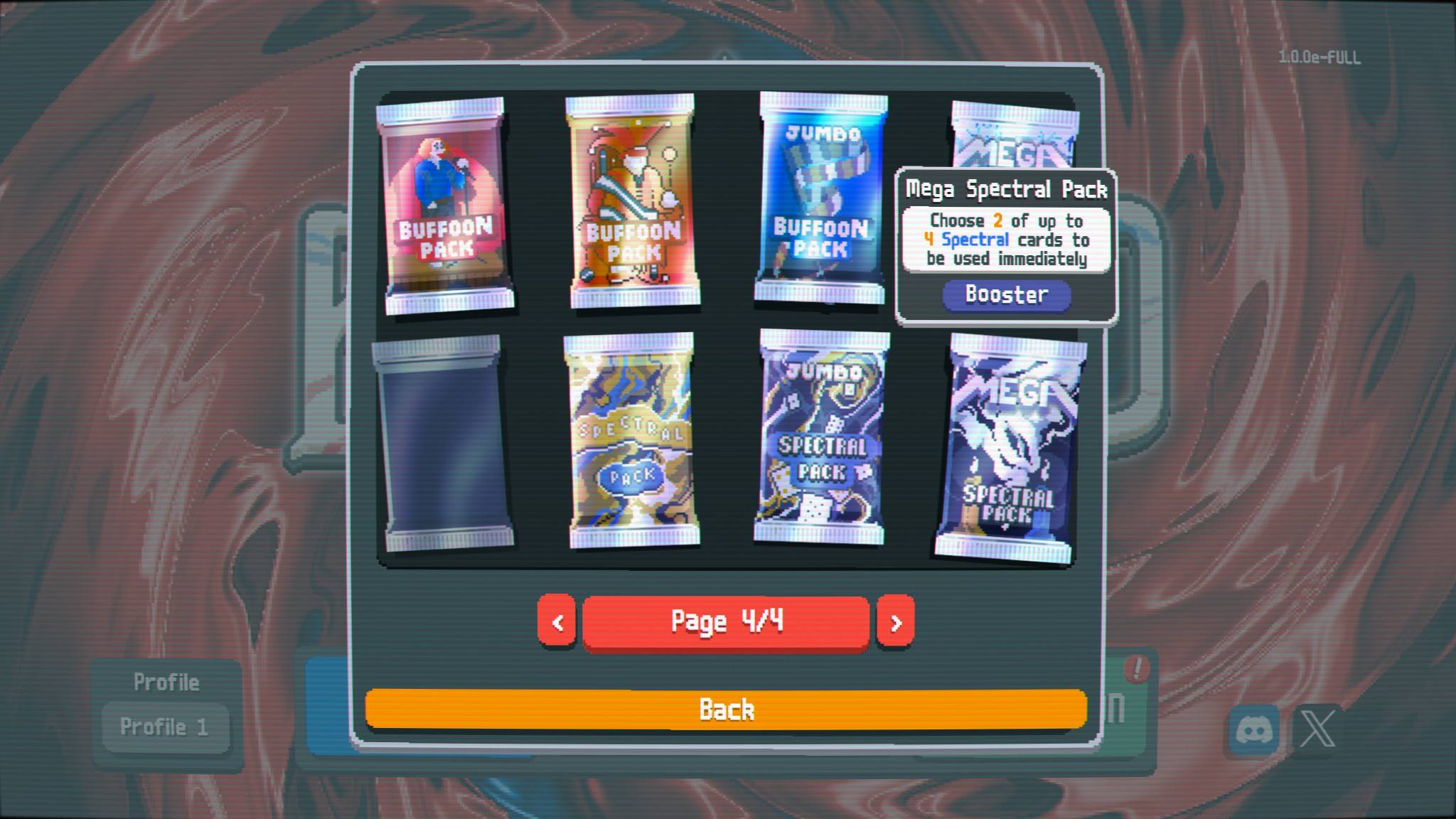
Jokers may greatly impact scoring, but it isn’t the sole place that Balatro bends poker’s basic ruleset. Decks can be considered as malleable constructs, and the basic 52-card start can be modified with unlockable card backs (which can be understood as “classes” in a fantasy deckbuilder), purchasable booster packs which delete cards, duplicate them, add others to the deck, or enhance individual cards with special qualities.
Gold cards add $3 to cash winnings at the end of a blind, steel cards add a 1.5x multiplier to a hand score, and glass cards double the original score of a hand but risk being destroyed at random…and all of this is before the jokers even start applying their own modifiers. Reducing a deck down has its own benefits as well, shrinking the chaos into a better controlled form, further renovated with spectral cards which can reprint a full hand into one single suit or rank.

There are luck cards which feature a 1 in 15 chance of dispensing $20 on the spot when played – a small fortune in Balatro money – and stone cards add a flat 50 chips to the original score but won’t play nice with other suits or ranks. Four or five antes in and that first deal can make for a mighty setup for the next high score.
The path to success almost always seems within reach, with sufficient visibility in the design and interface that helps players make smart choices
And then there are the hands themselves, all of which can be leveled up akin to weapons in a fantasy RPG. A low-scoring pair or high-card can evolve into the intimidating cornerstone of a Balatro build after leveling them up with special one-use planet or tarot cards, special items which can also be saved between matches. Meanwhile, purchasable vouchers in the shop act like relics in Slay the Spire, changing how blinds play out, adding consumable slots to player inventory, or even nullifying the otherwise run-ending boss blind effects on later antes.
A Delightful Deckbuilder Design

In Balatro, players stare at a simple, familiar video poker view most of the time, but the aesthetic considerations of its design makes ludicrously high-scoring runs an unexpected delight. The flutter of cards reshuffling after a successful match, the escalating slot machine ding cascade of million-scoring plays, and the tactile click sound of plucking a card to prep a timely flush all seem scientifically engineered to elicit the utmost pleasure and satisfaction.
Beyond those effects, though, it’s all about the complexity and randomness of bonus cards, the myriad shop items, the lucky joker pulls, these random prompts which can spin the most compromised run into gold. There’s a convenient seed system where players can challenge randomness, repeating their attempts with different choices (but without the opportunity to unlock achievements, of course). The path to success almost always seems within reach, with sufficient visibility in the design and interface that helps players make smart choices, once they’ve better learned what those are. The setup plays nicely with controllers and on the Steam Deck as well, and Balatro’s lightweight sensibility pairs perfectly with a lengthy flight or commute.
Final Thoughts & Review Score

It should be stated up front that anyone looking for more personality or substantive context in their deckbuilders will not really find it here. Peeling away that glamor leaves an addictive game of cunning math, risk and reward, craft and probability. Balatro first positions the player at the boundary of the universal randomness of card pulls, then empowers them with enough authorial design to own their little corner of chaos.
In one of its most brilliant design strokes, Balatro also incorporates endless runs into the main game itself. What this means is that "winning" a run by defeating the boss blind of the eighth ante offers a progression reward, but also allows the player to continue on into endless mode with their current deck, testing it out on increasingly absurd, exponentially higher scoring competitions from the ninth ante up. It's a genius idea that will hopefully be incorporated into other deckbuilders from here on out.
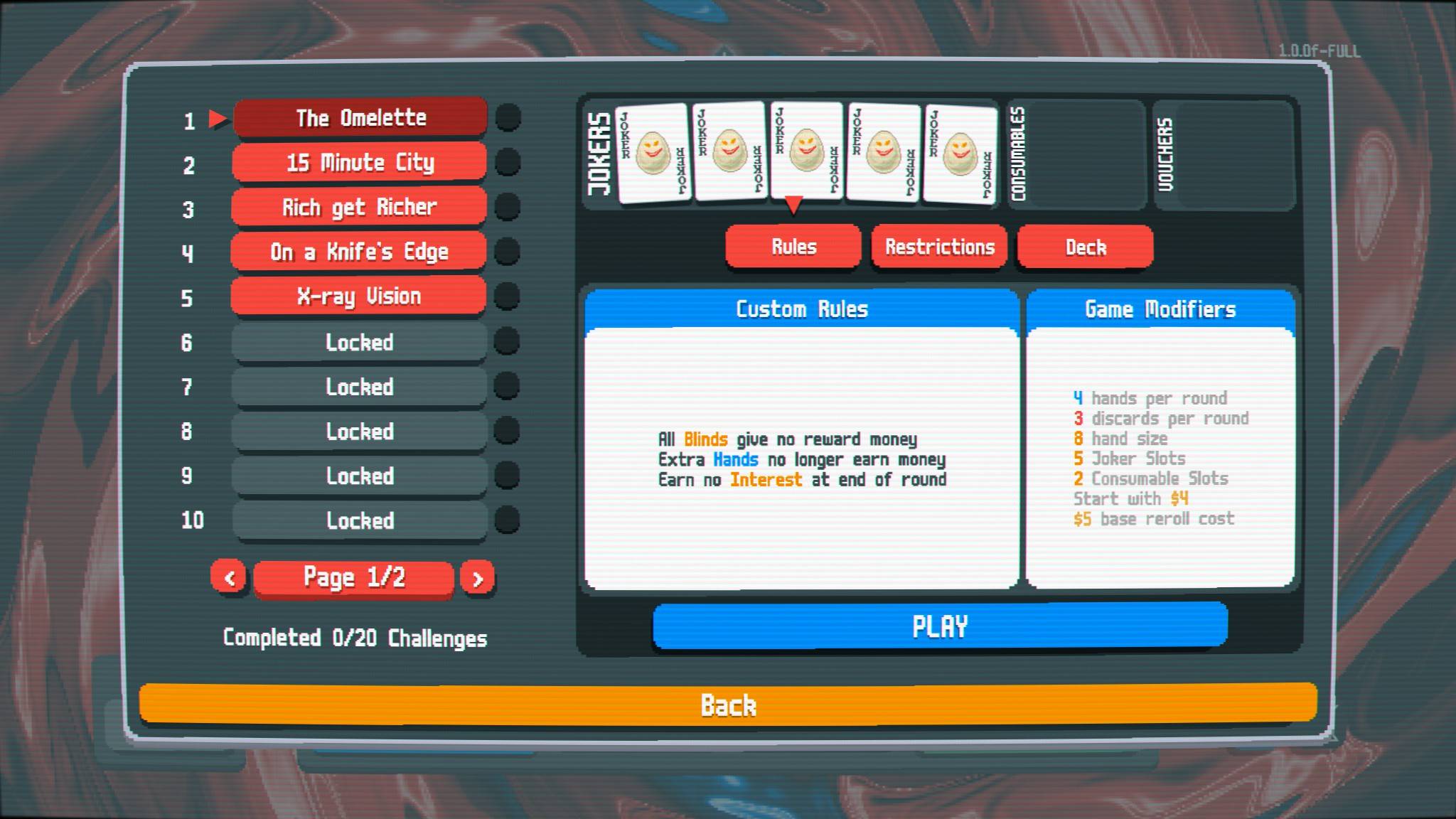
With its unlockable deck types, tricky economy, advanced joker concepts, challenge runs, and ascension-like “stake” system, Balatro offers countless hours to engage its treacherous machine of diversion. If this was preinstalled with Windows in lieu of Microsoft’s mandatory, productivity-wrecking Solitaire back in the 90s, modern civilization as we know it could have very well ground to a halt. For fans of deckbuilders, Balatro is an addictively delicious, menacing creation which devours hours without mercy. It should be handled with great care.
Balatro releases on February 20 for PC, PlayStation 5, Xbox Series X|S, Nintendo Switch, PlayStation 4, and Xbox One. A digital PC code was provided to Screen Rant for the purpose of this review.


1
- Genre(s)
- Strategy, Digital Card Game, Roguelike
