


For a character defined by reinvention, Batman has managed to carry one oddly persistent issue for decades. While Gotham evolves, villains modernize, and creative teams reshape continuity, one element of the lore feels increasingly strained: the legacy of Robin. What was once a clean, emotional progression has become a crowded, sometimes contradictory lineage.
It’s now been roughly twenty years since Damian Wayne stepped into the role, and in that time, the Boy Wonder mantle has stopped feeling like a meaningful evolution and started feeling like a logistical problem. The question is no longer who Robin is, it’s whether the concept still works the way DC wants it to.
The Robin Legacy Has Become Too Crowded to Ignore

Robin was originally a simple idea: a young partner to balance Batman’s darkness. Dick Grayson set the template, and his eventual evolution into Nightwing created a natural cycle. But as successors like Jason Todd and Tim Drake entered the picture, the timeline began to compress in ways that strain believability.
The problem isn’t just the number of Robins, it’s how they all fit into Batman’s relatively fixed career span. The idea that Bruce Wayne has mentored this many partners, each with distinct arcs, transformations, and identities, creates a sense that time in Gotham simply doesn’t function like it should. Suspension of disbelief can only stretch so far.
Even attempts to smooth continuity haven’t fully resolved the issue. Reboots and timeline tweaks may rearrange events, but they rarely reduce the number of Robins. Instead, they compress their histories even further, making it feel like Batman has lived multiple lifetimes in a single decade. The result is a mythology that feels dense, but also cluttered.
This overcrowding also dilutes what made Robin special in the first place. When there’s always another successor waiting in the wings, the role loses its emotional weight. Instead of being a defining chapter in Batman’s life, it becomes just another rotating position in an ever-expanding cast.
Damian Wayne’s Longevity Has Exposed the Problem

When Damian Wayne debuted, he was a disruptive force by design. As Bruce’s biological son, he brought a new kind of tension to the role that was rooted in legacy, morality, and identity. Over time, he evolved into a more nuanced character, forming bonds with both Batman and the wider Bat-Family.
But two decades later, Damian’s continued presence as Robin highlights a deeper issue: stagnation. Unlike his predecessors, he hasn’t moved on in a definitive way. Dick Grayson became Nightwing. Jason Todd became Red Hood. Even Tim Drake carved out a distinct identity. Damian, however, keeps circling back to Robin.
That cyclical storytelling undermines the sense of progression that once defined the mantle. If Robin is meant to be a stepping stone, Damian’s long tenure makes it feel more like a permanent assignment. And if it’s permanent, then what exactly is the purpose of introducing new Robins at all?
It also creates a bottleneck for new ideas. As long as Damian occupies the role, there’s little room for a fresh perspective. And yet removing him entirely would risk alienating fans who have grown attached to his character. DC finds itself caught between maintaining a popular status quo and addressing a structural problem.
In many ways, Damian is both the most interesting Robin and the clearest sign that the system around him no longer works. His story isn’t the issue, it’s the lack of forward movement that defines it.
DC’s Attempts to Reinvent Robin Haven’t Fully Landed

DC has experimented with ways to modernize the Robin concept without fully replacing it. Characters like Duke Thomas were introduced with the potential to redefine what a sidekick could be. Duke’s connection to the “We Are Robin” movement hinted at a broader, more communal idea of heroism in Gotham.
However, these experiments often struggle to gain the same cultural traction as traditional Robins. Duke eventually evolved into his own identity as The Signal, but he never became a central pillar of the Batman mythos. Instead of solving the Robin problem, his story sidestepped it.
Alternative universe versions of Robin have also gained attention. Characters like Carrie Kelley remain fan favorites, proving there’s still appetite for new takes on the role. But because they exist outside main continuity, they don’t resolve the core issue, they simply highlight how flexible the concept can be when freed from canon constraints.
This leaves DC in a difficult position. Reinvention attempts show creativity, but they rarely integrate seamlessly into the mainline story. Meanwhile, the primary continuity continues to carry the weight of decades of overlapping legacies.
The result is a Batman franchise that feels caught between honoring its past and making room for its future. Without a clear strategy, every new attempt at reinvention risks becoming just another layer on an already crowded foundation.
The Only Real Solution May Be a Complete Robin Reset

If the problem is structural, then the solution may need to be equally fundamental. One option is to re-emphasize legacy by allowing characters to truly move on. That could mean finally pushing Damian into a new identity or giving Tim Drake a definitive endpoint that opens space for something new.
Another possibility is revisiting overlooked characters. Stephanie Brown, for example, had a brief and often underappreciated tenure as Robin. Giving her a more substantial role could both diversify the legacy and correct a long-standing imbalance in how the mantle has been treated.
There’s also the option of bringing characters like Carrie Kelley into mainstream continuity in a meaningful way. Fans already associate her with the Robin identity, and her inclusion could provide a fresh dynamic without erasing what came before.
Of course, the most radical solution would be to reduce the number of Robins altogether, streamlining the timeline and restoring the role’s significance. But that would require DC to make difficult choices about which parts of its history to prioritize, a task that’s never easy in a franchise built on legacy.
What’s clear is that the current approach isn’t sustainable. The Robin mantle can’t continue to expand indefinitely without losing its meaning. Whether through reinvention, reduction, or reintegration, something has to change.
Twenty years after Damian Wayne’s debut, the issue is no longer subtle. The Batman franchise has reached a point where its greatest strength, its rich history, has also become its most pressing challenge. And until DC finds a way to reconcile that, the question of Robin will remain unresolved.
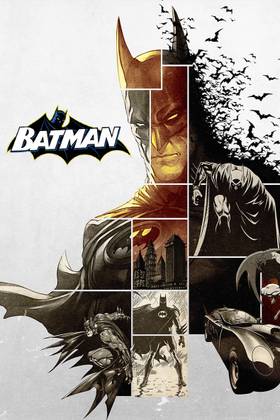
- Created by
- Bob Kane, Bill Finger
- First Film
- Batman
- Latest Film
- The Batman
- Upcoming Films
- The Batman Part II
- First TV Show
- Batman (1966)
- Latest TV Show
- Batman: The Brave and the Bold
