


As one of DC’s two most popular heroes, Batman carries an unmatched legacy, and with it an endless supply of high-quality and beloved storylines. The Dark Knight has always been a show-stealer, whether starring in his own Gotham-centered adventures or sharing the spotlight in crossover events with the Justice League. From grounded detective tales to larger-than-life epics, Batman’s comic history remains one of the richest in superhero fiction.
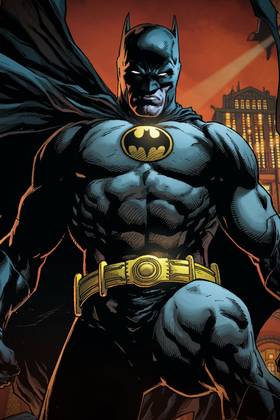
Since Batman's first appearance in 1939's Detective Comics #27, the Caped Crusader has constantly evolved, from pulp-inspired vigilante to the world’s greatest detective, and even to a battle-hardened strategist in the Justice League. This ability to adapt across eras has allowed Batman to stay relevant for generations. And while there are dozens of iconic Batman storylines, a few stand out as absolutely unmissable for longtime fans and newcomers alike.
10 JLA: Tower Of Babel
JLA: Tower of Babel (2000); Written By Mark Waid; Art By Howard Porter & Inks By Drew Geraci, Mark Propst; Colors By John Kalisz

JLA: Tower of Babel is one of the most important Justice League stories ever written, as it redefines Batman’s role within the team. The story follows Ra’s al Ghul using Batman’s contingency plans against the League, revealing that the Dark Knight has prepared countermeasures for every single one of his allies. Tower of Babel epitomizes Batman’s paranoia and foresight. Even among gods, Batman's strategic mind is his greatest weapon.
JLA: Tower of Babel highlights Batman’s ability to outthink the most powerful beings in the DC Universe. At the same time, it also raises questions about trust and leadership within the League. Howard Porter’s art captures the intensity and scale of the conflict, while Mark Waid’s writing ensures every hero is shaken by the idea that Batman could defeat them at will.
9 Batman: The Court Of Owls
Batman: The Court of Owls (The New 52, 2011); Written By Scott Snyder; Art By Greg Capullo & Jonathan Glapion

In 2011, Scott Snyder and Greg Capullo introduced the secret society that controlled Gotham for centuries from the shadows, instantly adding layers upon layers of mystery to the city’s history. The Court of Owls' introduction was groundbreaking. The Dark Knight who prided himself on knowing every inch of Gotham discovered he had been blind to an entire empire of influence and violence beneath his feet.
What makes Court of Owls stand out is its combination of psychological horror and operatic action. Snyder turns Batman’s obsession with control into a weakness when the Court traps him in a nightmarish labyrinth that breaks him. Capullo’s artwork heightens this descent with pages that twist and force the reader to rotate the comic, mirroring Batman’s disorientation.
8 Batman: Hush
Batman: Hush (2002–2003); Written By Jeph Loeb; Art By Jim Lee & Inks By Scott Williams; Colors By Alex Sinclair

Batman: Hush weaves together nearly every major ally and villain in the Dark Knight’s history. The plot follows the mysterious Thomas Elliot, who manipulates Gotham’s rogues into breaking Batman piece by piece, while Bruce struggles with his own vulnerability and a rekindled romance with Catwoman. Using sheer manipulation, Hush pushes Batman to ponder whether he can truly open himself up to anyone.
Hush features appearances from classic DC characters like Joker, Poison Ivy, and even Superman while delivering a modern classic detective mystery, but the spotlight is placed on the rarely explored and underrated Hush. In Hush, Jim Lee’s artwork became instantly definitive for a new generation of fans. To this day, Hush remains a celebration of Batman’s detective qualities.
7 Batman: Under The Red Hood
Batman: Under the Red Hood (2005–2006); Written By Judd Winick; Art By Doug Mahnke, Eric Battle & Shane Davis

Batman: Under the Red Hood is one of the most consequential Batman stories of the 2000s, as it brings Jason Todd back seventeen years after his death. Jason’s return comes with a profound shift in DC mythos, as Batman’s failure to save Robin creates an antihero who embodies everything Bruce fears. The Red Hood kills and brutalizes criminals, and Batman struggles to stop his former sidekick.
Under the Red Hood succeeds by making Jason Todd’s tragedy inseparable from Batman’s psyche. Bruce is forced to confront whether his moral code actually causes more harm than good, while Jason demands answers for his own death and Joker’s survival. The result is a deeply personal story that reshaped the Bat-family forever, giving Jason Todd a permanent place in Batman lore.
6 Batman: Knightfall
Batman: Knightfall (1993–1994); Written By Doug Moench & Chuck Dixon; Cover Art By Kelley Jones

Batman: Knightfall is one of the defining Batman epics of the 1990s, famous for establishing Bane as a villain who could defeat the Dark Knight both mentally and physically. At a time when Batman seemed untouchable, Knightfall dismantled that myth by having Bane release all of Arkham’s criminals and “breaking the Bat.” Batman: Knightfall marked a seismic shift in Batman lore by questioning his very limits.
Designed as both a genius tactician and physical powerhouse, Bane is elevated above most Batman foes by his methodical approach. Meanwhile, Bruce Wayne’s eventual replacement by Jean-Paul Valley as Azrael highlights the discipline and moral restraint that defines Batman. Knightfall's vivid art vividly contrasts Bruce’s downfall and Valley’s descent into violent excess.
5 Batman: The Long Halloween
Batman: The Long Halloween (1996–1997); Written By Jeph Loeb; Art By Tim Sale; Colors By Gregory Wright

Batman: The Long Halloween expands upon Year One by placing Batman in the midst of his early career. The Long Halloween follows the “Holiday Killer,” a murderer striking on holidays across an entire year, while the mob families of Gotham crumble under Batman’s pressure. It doubles down on Batman's noir tropes, showing Batman as the world’s greatest detective in a crime-ridden city.
The Long Halloween's mob drama set a new standard for sweeping Gotham storylines, and it has influenced everything from The Dark Knight to The Batman. Tim Sale’s stylized art perfectly captures Gotham’s noir aesthetic, and this version of Harvey Dent’s transformation into Two-Face is one of the most tragic takes on the villain.
4 Batman: Year One
Batman: Year One (1987); Written By Frank Miller; Art By David Mazzucchelli; Colors By Richmond Lewis; Letters By Todd Klein

In 1987, Batman: Year One redefined Batman’s origin for the modern era. Rather than a flashy superhero debut, Frank Miller presented a raw portrait of Bruce Wayne’s first year as Batman alongside Jim Gordon’s early struggles with Gotham’s corruption. Year One made Gotham itself feel like a living, breathing character, showing a city suffocating under crime and in desperate need of heroes.
Bruce Wayne is portrayed as flawed and inexperienced, often failing before finding his path, while Gordon is equally compelling as a principled cop tempted by corruption but unwilling to break. Mazzucchelli’s subdued, noir-inspired art and Richmond Lewis’s moody colors give Year One a timeless atmosphere that makes it a cornerstone for nearly every subsequent Batman adaptation, from Nolan’s Batman Begins to The Batman.
3 Batman: The Dark Knight Returns
Batman: The Dark Knight Returns (1986); Written & Art By Frank Miller; Colors By Lynn Varley

The Dark Knight Returns divided Batman's history in two with its brutal, uncompromising vision of an aging Bruce Wayne coming out of retirement. Set in a Gotham drowned in corruption and urban decay, TDKR showed Batman fighting mutants, the Joker, and even Superman in a dystopian America. At the time, it was groundbreaking for pulling superheroes into gritty social commentary.
The strongest points of The Dark Knight Returns are its unflinching depiction of Batman as both savior and obsessive, its political subtext, and its iconic visuals. Frank Miller's wry exploration of Batman’s psychology made it a benchmark for mature superhero storytelling. The tank-like Batmobile, Carrie Kelley’s Robin, and the Batman vs. Superman duel became instant staples of DC lore and continue to shape numerous Batman adaptations.
2 Batman: A Death In The Family
Batman: A Death in the Family (1988–1989); Written By Jim Starlin; Art By Jim Aparo & Mike DeCarlo

A Death in the Family forever changed Batman lore by killing off Jason Todd at the hands of the Joker. More than a tragic story, Robin's death was an interactive one, with DC readers voting by phone on whether Jason would live or die. The outcome led guilt and failure to become central to Batman's story.
The Joker’s cruelty is amplified to nightmarish extremes, which cements him as Batman’s ultimate nemesis. A Death in the Family confronted readers with the idea of an irreversible death (at least at the time) and definitive consequences, as well as a story with no happy ending. Jim Aparo’s gritty linework underscores the violence, while Jim Starlin’s script forces Batman into an emotional state few comics dared to explore at the time.
1 Batman: The Killing Joke
Batman: The Killing Joke (1988); Written By Alan Moore; Art & Color By John Higgins & Brian Bolland

The Killing Joke is one of the most pivotal DC comics ever published. In 1988. Alan Moore presented a chilling reimagining of the Joker’s possible origin while staging one of his cruelest crimes: the shooting and paralysis of Barbara Gordon. The Killing Joke examines the philosophical bond between Batman and Joker and frames them as mirror images defined by “one bad day.”
Batman and Joker's rivalry reaches its peak in The Killing Joke, which redefined the Joker as a figure of pure nihilism. Naturally, this storyline changed Barbara Gordon’s trajectory in DC lore forever as well. Brian Bolland’s razor-sharp linework and John Higgins’ haunting colors make the comic visually unforgettable, with stark contrasts between grotesque carnival imagery and moments of brutal realism.
- Created By
- Bob Kane, Bill Finger
- First Appearance
- Detective Comics
- Alias
- Bruce Wayne
- Alliance
- Justice League, Outsiders, Batman Family
- Race
- Human
- Franchise
- D.C.
- FIRST APP
- Detective Comics #27 (1939)
