


Whether they're full of gore and action, tension and suspense, or thought-provoking themes, post-apocalyptic shows are all the rage right now. In many ways, the genre has much in common with the best neo-Western shows, often focusing on characters journeying through lawless lands and societal beginnings.
In a one-two punch, The Last of Us and Fallout have even managed to do the impossible and make video game adaptations prestige TV, likely thanks to their buzzy end-of-times concepts. But a post-apocalyptic premise doesn't equal quality on its own. Compelling characters, interesting worlds, and believable conflicts make some shows stand out as the best in the genre.
10 Jericho
2006-2008, 2 Seasons

Most post-apocalyptic shows take a pretty black and white/before and after approach to the apocalypse; everything was normal, then something happened, and now it's all completely gone. Jericho is unique, as it lives in the seldom-seen middle ground, deriving much of its tension from the fear of the unknown.
Its brief second season doubled down on this perspective, letting more of the outside world into Jericho and introducing the Allied States of America. A semi-intact iteration of the pre-apocalypse government feels like a more realistic outcome than a world starting completely from scratch, and it allowed the show to explore conflicts unlike those in most other apocalypse stories.
9 Paradise
2025-Present, 1 Season

Image via Hulu
Paradise has a cool pilot, an interesting premise, and a surprisingly moving performance from James Marsden, but it also has some narrative problems that kept it from being further down on this list. Creator Dan Fogelman's writing tends to lean into soapy territory, often opting for flashy cliffhangers over naturally paced developments.
Many episodes needed to use flashbacks to retroactively explain the previous episode's ending, creating an overall choppy feel rather than a smooth build towards a climax. Nonetheless, the bottle episode "The Day", depicting a play-by-play of the day the world ended, was gripping, emotional, disturbingly plausible, and honestly award-worthy.
It looks like Paradise season 2 will have Sterling K. Brown's Xavier venturing out of Paradise. Here's hoping the show can keep what works and leave what doesn't.
8 Falling Skies
2011-2015, 5 Seasons
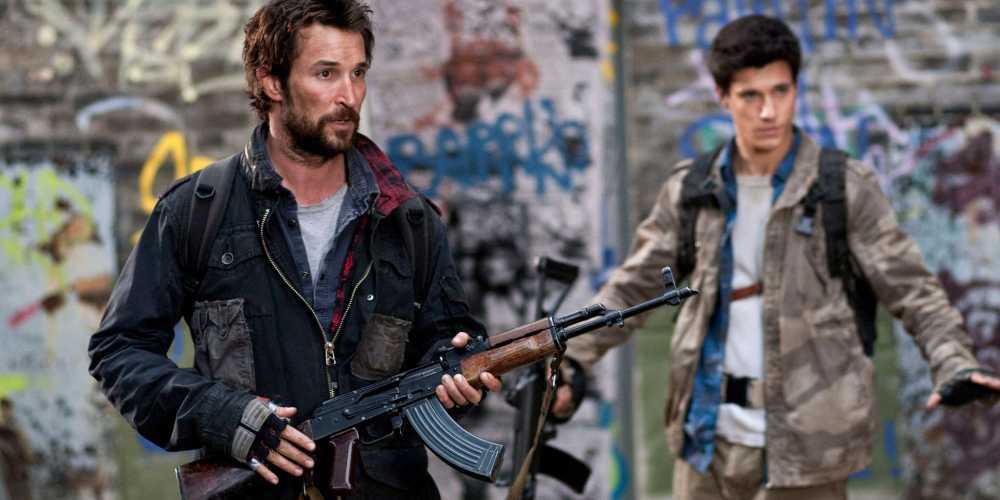
A humans-versus-aliens conflict on Earth is a lofty premise; many post-apocalyptic shows opt to avoid all the challenges this narrative poses by focusing on an unseen enemy or a timeline in which the damage has already been done. Yet Falling Skies manages to do a war against aliens that doesn't feel cheesy or campy.
Almost equally impressive, the show was neither canceled nor overstayed its welcome. Since the apocalypse genre has leaned much more heavily towards zombies than aliens, this show still feels fresh a decade after its finale. It also offers a great lead performance from Noah Wyle, whose biggest claims to fame inexplicably don't seem to include Falling Skies.
7 Silo
2023-Present, 2 Seasons

Silo proves how well a strange premise can speak to relevant real-world themes. In this case, it's how not knowing your history can throw your whole world into question or let others control your narrative. The beauty of apocalypse stories, though, is that they get to explore not only this question, but also what it would be like if 10,000 people lived in a 144-floor silo.
Quality shows are both entertaining on a surface level and thoughtful on a deeper one. Silo accomplishes this by pairing civil unrest in the bunker with the mystery of what the world is really like outside, and connecting that mystery to the mass deception of the people of the silo. Nonetheless, that thematic depth does at times cause Silo to drag.
6 Pluribus
2025-Present, 1 Season

Frankly, Pluribus just hasn't been on long enough to rank higher — but if it maintains this level of humor and self-reflection, it'll be well on its way to number one. Pluribus is in a category all its own; it's an apocalypse with no danger. With every character making compelling arguments for or against the hive mind, it's the ultimate conversation starter of a show.
It's also an absolute acting feat for Rhea Seehorn, who is practically doing a one-woman show (especially since "Got Milk" saw everyone abandon her in Albuquerque). As the season progresses, Pluribus has proven that it's more than simply a thought exercise. Carol took failed action in "Pirate Lady" and has been pivoting ever since, refusing to be a passive observer of this bizarre event.
In doing so, Pluribus has started to take a stance on its own debate. While the somewhat comical and endearing hive mind "just wants to help," Carol has unearthed that they may not be as sunshine-and-rainbows as they seem. She's clearly relentless in her stance against the virus and those impacted by it, meaning that the show will eventually not just pose, but answer its biggest questions.
5 The Last Of Us
2023-Present, 2 Seasons

The Last of Us season 2 was definitely a setback for the video game adaptation that took the world by storm, but in its defense, it had big shoes to fill. The first season became a cultural phenomenon for very good reason — Pedro Pascal and Bella Ramsey had incredible pseudo-father-daughter chemistry, filling the show to the brim with emotional complexity.
Whether or not you agree with Joel's climactic season 1 decision to save Ellie at all costs, it made perfect sense for his flawed character, and the ethical ambiguity makes him all the more compelling. The same can't be said for Ellie's belligerent season 2 crusade. Every single problem she faced was of her own making, and until the very end, she had every opportunity to turn around and go home.
It's tough, even infuriating, to watch a once-liked character make such a long series of bad decisions. And it seems that The Last of Us season 3 is gearing up to be a mirror image of season 2 from the perspective of Kaitlyn Dever's Abby.
4 The 100
2014-2020, 7 Seasons

The 100 is a CW show based on a young adult book series, so it caters to a different audience than a prestige HBO drama, but that doesn't stop it from going to genuinely dark places with genuinely surprising plot twists. Season 2 is especially strong as the show finds its footing and starts relying less on YA tropes.
A major selling point of the premise is its connection to Earth, so the show admittedly loses some of its identity in the final two seasons when it abandons Earth for the completely new planet Sanctum. Nonetheless, The 100 is full of mature themes and dark turns in its successful seven-season run.
3 Station Eleven
2021, 1 Season

Station Eleven's timing is pretty eerie. While the limited series adaptation premiered in 2021, the 2014 novel feels almost prophetic with its similarities to the COVID-19 pandemic. Station Eleven feels like a haunting alternate universe that has only grown more impactful over time.
Despite the shock value of its real-life similarities, Station Eleven is completely its own story. Dropping a troupe of nomadic performers into the apocalypse is a wholly original move, while the lingering intrigue of the mysterious titular novel gives the whole show a unique, off-beat, eerie vibe.
2 Fallout
2024-Present, 2 Seasons

Considering its hefty source material, Fallout made some great key choices. Season 1 being set in Los Angeles was strategic, laying the groundwork for a rewarding long-game story. While the games are set in several American cities, LA isn't one of them. This levels the playing field for the viewers; people unfamiliar with the games aren't yet missing out on any major lore.
However, LA does happen to be in close proximity to New Vegas, the main setting of Fallout's most beloved game. This gives the show access to the franchise's richest stories without overloading the audience with it. And with such a strong first season, they've built up enough goodwill among newcomers to stir up interest in the backstory.
The lights of New Vegas seen in the distance at the end of season 1 made for an exciting season finale and a bold promise: the best is yet to come.
1 The Walking Dead
2010-2022, 11 Seasons

Commercial success doesn't always equal quality, but it's hard to argue that an 11-season show with six spin-offs isn't doing something right. The Walking Dead's longevity stems from its understanding of and wholehearted commitment to something crucial in television: change.
Many shows get stuck in repetitive ruts, rehashing the same stories among the same characters out of fear that switching things up would cost them their audience. This is the key area where TV differs from movies. While movies tend to highlight one moment of growth, TV audiences continue tuning in with an expectation that one milestone will lead to another; in short, that things will change.
The Walking Dead boldly traversed from settlement to settlement, each one with its own identity that challenged its core cast in a new way — a core cast that was also consistently being shaken up with deaths, departures, and new additions. There was zero overlap between main TWD cast members in seasons 1 and 11 (though some smaller season 1 roles had grown and vice versa).
But The Walking Dead didn't just rotate locations and cast members. Change was embedded into its thematic purpose. The Walking Dead is about how these circumstances transform people. Its goal was for characters to be unrecognizable by the time the show was through with them. Its success proves that audiences can hang on for the ride.
