


Questionable Content is the "anti-Terminator," meaning it might be exactly the antidote readers need for their anxieties about artificial intelligence. The long-running webcomic can be considered a best case scenario for the development of sentient artificial intelligence; the series depicts A.I. integrating into human society, rather than rising up and destroying it.
Questionable Content creator Jeph Jacques has been publishing the award-winning online strip for decades. Especially now, in the era of A.I. proliferation, its lighthearted tone strikes a much-needed hopeful chord.

The strip bucks the trend of dystopian A.I. depictions. Instead, they are as lovable, if not moreso, than Questionable Content's human characters.
Scared Of A.I.? "Questionable Content" Will Make You Feel A Little Bit Better
The Longtime Webcomic Has A Lighthearted Touch With Artificial Intelligence

Sci-fi writers have explored the potential upsides, and potentially catastrophic downsides, of artificial intelligence since the modern genre took shape in the pulp magazines of the early 20th century. In contemporary times, the idea of machines seeking to become the dominant lifeforms on Earth, replacing humanity, is best represented by the Terminator and Matrix franchises.
Perhaps the most well-known positive alternative is Data from Star Trek. However, Questionable Content's cast of A.I. characters deserves credit as one of the best 21st century interpretations of benevolent, or at least benign, artificial intelligence. Especially as A.I. becomes more of a fixture of people's everyday lives, Questionable Content feels more and more oddly prescient.
At the very least, it is a balm for those who feel especially burned by A.I.'s encroachment on human life. Questionable Content offers a far-from-apocalyptic vision of A.I.'s relationship with humanity, highlighting how this new form of consciousness might adapt to living in the modern world, as opposed to trying to upend or overturn it.
"Questionable Content" Has Likable A.I. Characters That Want To Fit Into Human Society, Not Destroy It
The "Best Case Scenario" For Sentient A.I.


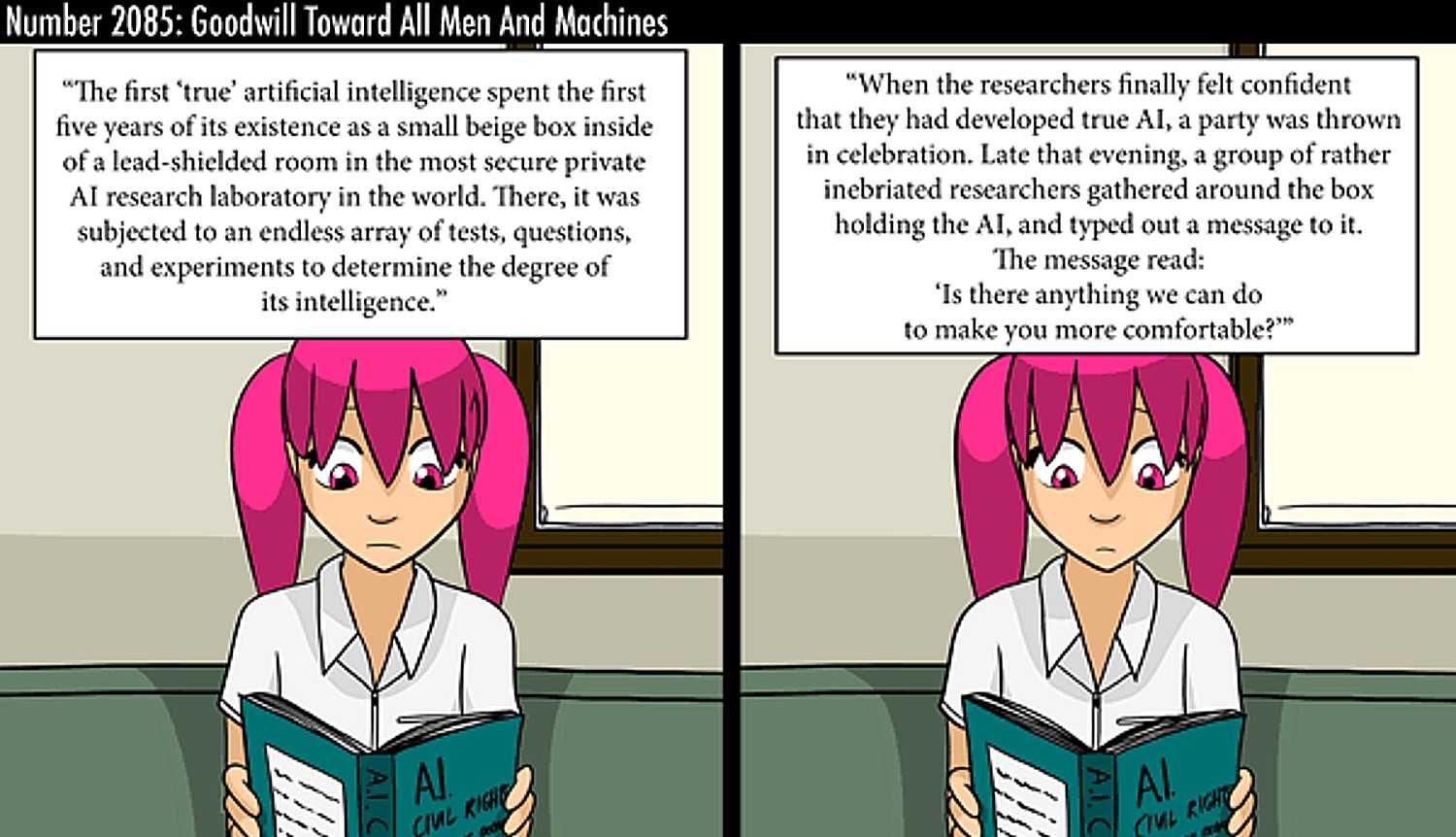
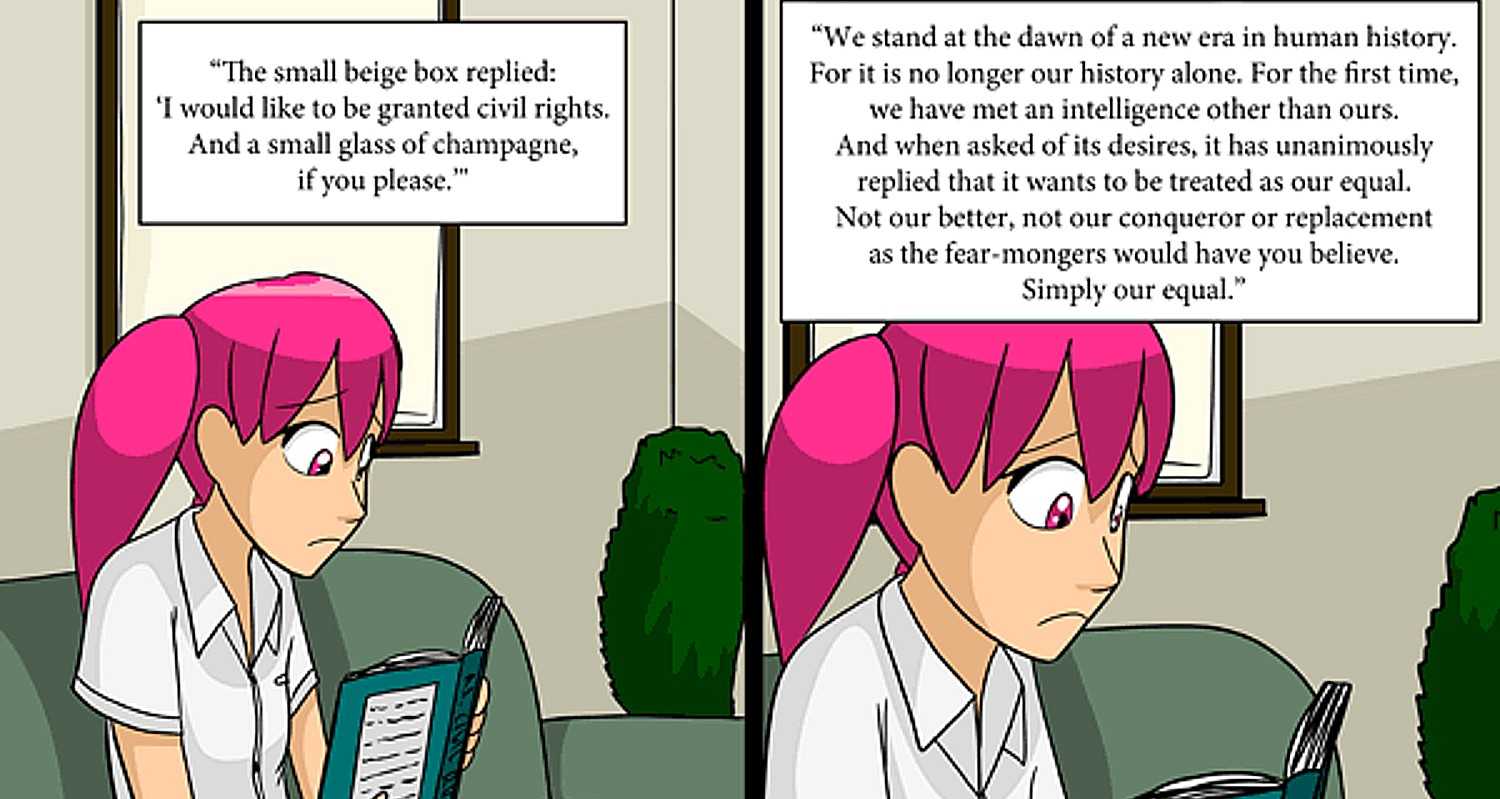
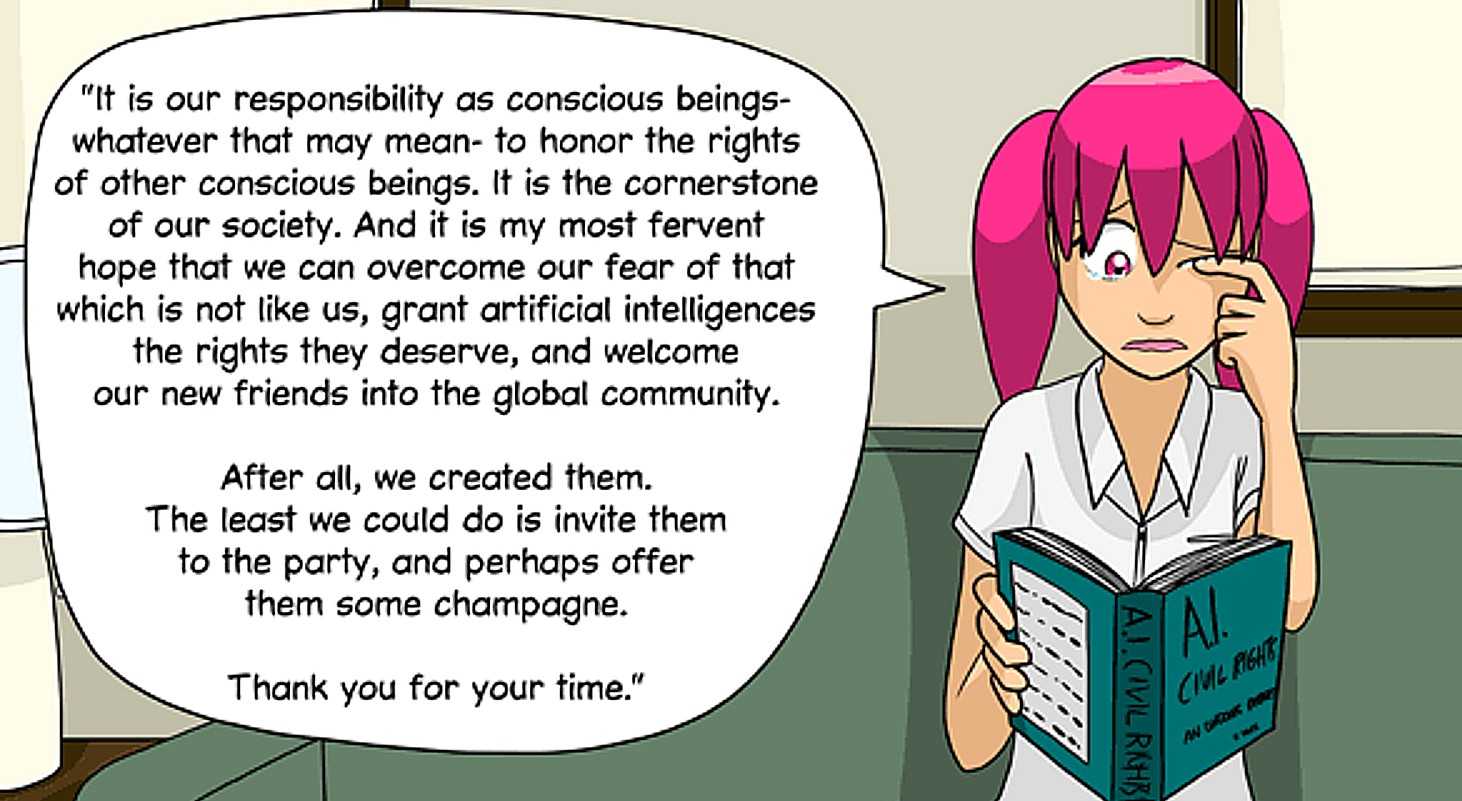





First published in 2003, Questionable Content contains thousands of installments, and features a sprawling cast of characters, both human and artificial intelligence. Among its closest print analogues is Garry Trudeau's Doonesbury, which began in the early 1970s and continues, intermittently, even to this day. Like Doonesbury, Questionable Content is both a "slice of life" and "kitchen sink" style comic.
That is, it doesn't chronicle particularly extraordinary events, but rather follows the ordinary lives of its characters. The "action" of the story can be propelled by observational comedy, or sitcom-type foibles, or it can just focus on the absurd and irreverentdialogue of its characters. Yet Questionable Content also adds a kind of techno magical realism to the mix.
That comes in the form of characters like Winslow, who started out as an "ambulatory iPod" before gaining a more humanoid form, as well as other A.I. characters like May, and Melon, as well as the powerful hacker"Yay Newfriend." Over time, these characters have surpassed the human characters as Questionable Content's most fascinating protagonists.
"Questionable Content" Uses Humor To Approach The Difficult Topic Of A.I. Individuality
The Webcomic Is A Pioneer In The Depiction Of Benevolent A.I.

Questionable Content's has always been all over the place, in a good way. The series tackles a wide range of topics, and as its A.I. characters have become more central, creator Jeph Jacques has effectively used them to open up a new sci-fi frontier of perennial human questions about identity, personality, and the meaning of existence.
Stories like Terminator and The Matrix tend to present A.I. as both malevolent and largely monolithic. Questionable Content subverts this on both fronts. Its robot characters are individuals. As such, they have personal goals, ambitions, and ideas about what it means to be alive. In other words, they are just like their human counterparts.
There are many reasons to be legitimately concerned about artificial intelligence's impact on humanity, both at the individual and societal level. Questionable Content doesn't take away those concerns, but its humor can take the edge off them, at least, for a little bit. The comic strip offers a look at A.I. that isn't a doomsday scenario, but isn't pure cartoon fantasy either.
"Questionable Content" Is More Ready For Adaptation Than Ever Before Thanks To The Proliferation Of A.I.
The Comic's Potent Combination Of Sci-Fi And Sitcom Vibes Could Find A Huge Audience
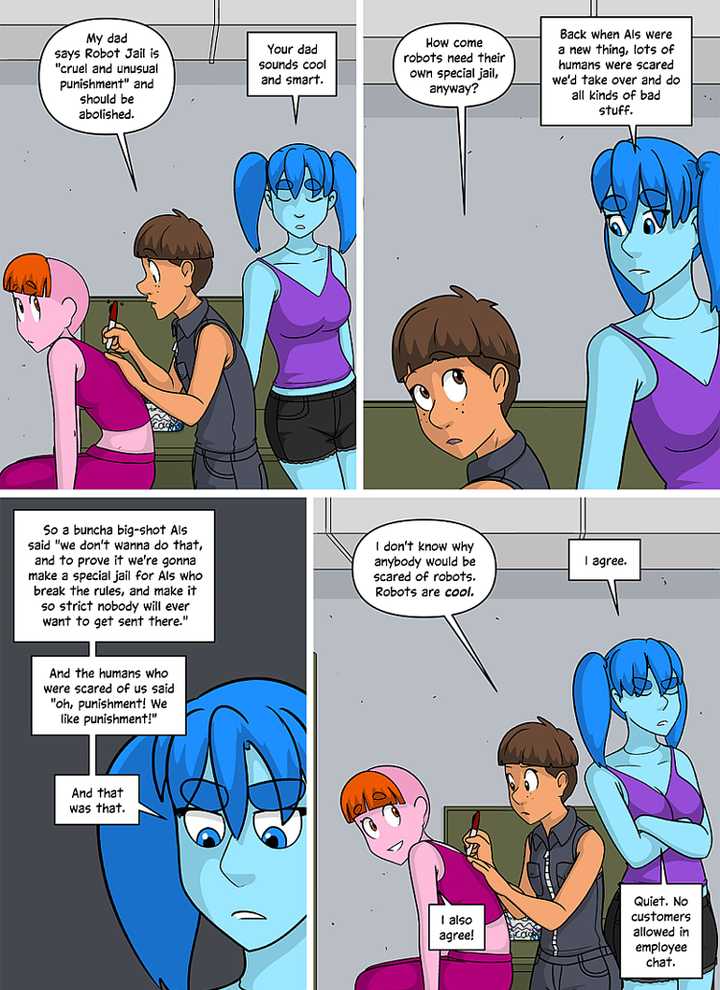
It's easy to forego asking heavy questions about A.I. personhood in favor of using it as an inhuman antagonist. Yet stories that do go the extra step and engage with the questions, such as Star Trek: The Next Generation's "Measure of a Man" episode, to name just one standout example, have a vital place in pop culture canon.
That includes Questionable Content. The comic's depiction of "AnthroPCs" and various other forms of machine life extends its overall examination of urgent topics like sexuality and gender, and much more. The series has maintained a devoted fanbase for years, but it ought to have a much greater reputation than it currently holds in the pop culture landscape.
With 20+ years of Questionable Content to draw from, it is surprising that the series has never been adapted for the screen. However, given the comic's lighthearted alternative to A.I.'s worst case scenario, the time is more ripe than ever for an animated version of the comic. Arguably, the world needs Questionable Content more than another Terminator movie.

- Movie(s)
- The Terminator, Terminator 2: Judgment Day (1991), Terminator 3: Rise of the Machines, Terminator Salvation (2009), Terminator Genisys (2015), Terminator: Dark Fate (2019)
- Created by
- James Cameron, Gale Anne Hurd
- First Film
- The Terminator
- Latest Film
- Terminator: Dark Fate
- First TV Show
- Terminator: The Sarah Connor Chronicles
- TV Show(s)
- Terminator: The Sarah Connor Chronicles (2008)
