


Apple TV is the streaming home of an incredible sci-fi series that has the potential to become as epic as Netflix's Dark. With its three-season run, Netflix's Dark set an incredibly high bar for sci-fi TV shows. Almost a decade has passed since its premiere on Netflix, but it is still touted as one of the most complete and well-rounded time travel shows of all time.
While even some of the best time travel movies and shows struggle to have a coherent mythology across multiple timelines, Dark proved that it was possible to tell an incredibly complex sci-fi story without losing sight of logic. It is still among the rare few sci-fi shows like 12 Monkeys that actually make a semblance of sense.
From the looks of it, Apple TV's Dark Matter is treading the same path. Dark Matter is less about time travel and more about the multiverse and parallel universe. Similar to Dark, it also adopts some wildly fantastical plot devices. However, Dark Matter, too, never gets weighed down by its ambition and borrows from real science to make sense out of its plot.
Dark Matter’s Exploration Of Quantum Physics Has Some Plausibility

Like many movies and shows about multiverses, Dark Matter, too, pushes its sci-fi elements far past theoretical limits into pure speculative fiction. However, before scaling into pure fantasy, the show cleverly grounds its core logic in real quantum mechanics. The primary driver of its storyline is Hugh Everett III's Many-Worlds Interpretation.
According to the Many-Worlds Interpretation, quantum wavefunctions never truly collapse. Every time a quantum event has multiple potential outcomes, the universe ends up splitting into infinite non-interacting branches where every outcome occurs. Taking this to the macro scale, Dark Matter shows how its characters move through infinite alternate possibilities of their own universe.
Subatomic particles exist in a state of quantum superposition according to quantum mechanics. This means they can occupy multiple alternate states at once before being measured or observed. Humans do not experience superposition because when microscopic particles interact with their environment, their quantum state collapses into a single classical reality.
Dark Matter addresses this head-on by showing how its central plot device, The Box, creates an isolation chamber that is shielded from radiation, matter, and observation. The humans who enter "The Box" in Dark Matter also inject themselves with a substance that numbs their pre-frontal cortex. This ensures the humans inside "The Box" do not experience decoherence that collapses the superposition.
As a result, before the injected drug fades away, characters are able to "see" alternate realities and move across them. The show's whole portrayal of mind-driven navigation across alternate realities through the corridor of "The Box" obviously has no scientific plausibility. However, it is hard not to appreciate Dark Matter's efforts to ground its sci-fi rules in some semblance of realism.
Theoretical Physicist Clifford V. Johnson Served As An Advisor For Apple TV’s Dark Matter

Dr. Clifford Johnson, a professor of theoretical physics at the University of California, Santa Barbara (UCSB), has been the official science advisor for both Blake Crouch's original novel and the Apple TV+ adaptation. He helped Blake Crouch determine how the characters in the story could achieve superposition through sensory deprivation and isolation inside "The Box."
His advice even ensured that the book and the show's main character, Jason, talked and acted like a real theoretical physicist who understands how quantum mechanics works.
Dr. Johnson has addressed (via Inverse) how the show's portrayal of the superposition being used as a tool that can be turned on and off is the very basis of modern quantum computing. However, he also established that, unlike Dark Matter, real quantum computers do not allow objects or people to experience multiple physical realities simultaneously.
He also addressed other speculative elements from Apple TV's Dark Matter that currently lack scientific grounding. However, his involvement with the series alone adds more credibility to its real science inspirations. While the show is yet to become as iconic and distinct as Netflix's Dark, it seems to have the potential to get there with its twisty yet somewhat plausible sci-fi.
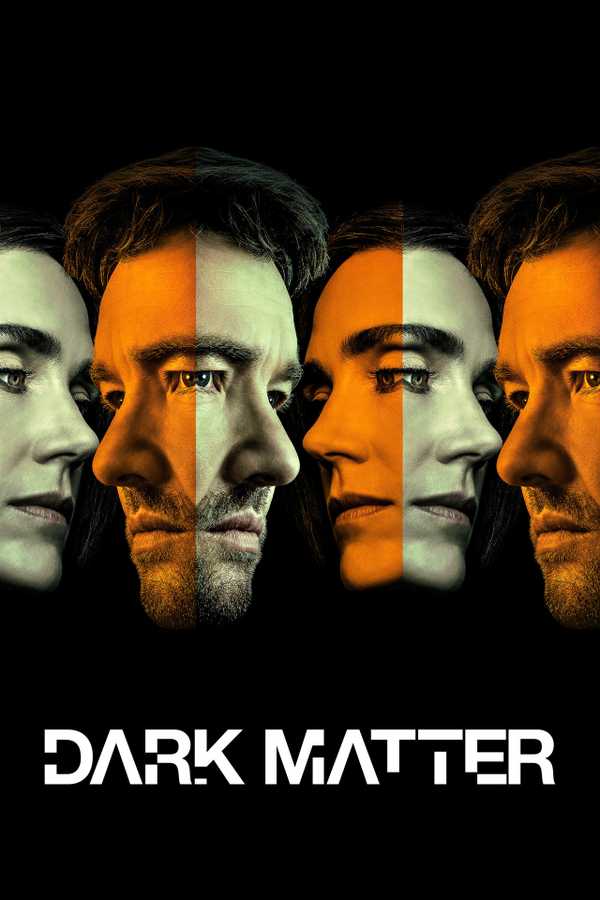

Based on his novel of the same name, Dark Matter is a sci-fi drama-thriller television series created for Apple TV+ by Blake Crouch. The series follows a physicist who is kidnapped and thrown into an alternate reality where he witnesses one potential path his life could have taken. However, he learns that the lives of his family are in jeopardy by an alternate version of himself.
- Network
- Apple TV+
- Cast
- Joel Edgerton, Jennifer Connelly, Oakes Fegley, Alice Braga, Jimmi Simpson, Dayo Okeniyi, Amanda Brugel, William Smillie, Jenne Kang, Bassam Abdelfattah
- Directors
- Jakob Verbruggen, Alik Sakharov, Roxann Dawson, Logan George
- Writers
- Blake Crouch
- Main Genre
- Sci-Fi
- Creator(s)
- Blake Crouch
- Producers
- Don Kurt, Joel Edgerton, Matt Tolmach, David Manpearl, Blake Crouch, Megan McDonnell
- Seasons
- 2
- Where To Watch
- AppleTV+

