


Summary
- Elden Ring has six ambiguous endings.
- Elden Ring DLC occurs before the main game's end and its canon ending doesn't affect the expansion.
- One particular ending is satisfying and consistent with the base game and DLC.
The continuity of Elden Ring: Shadow of the Erdtree has many wondering which ending of the base game is canon. The game allows players to make a variety of choices that impact the story’s conclusion, most of which revolve around helping NPCs by choosing to complete their personal quests. However, since the timeline of Shadow of the Erdtree relative to Elden Ring is muddy by design, it can be difficult to tell exactly where the base game ends and the DLC begins. Still, one particular ending stands out as a possible canon choice, especially based on details in Shadow of the Erdtree’s announcement image and in the DLC itself.
[Warning: This article contains spoilers for every ending possible in Elden Ring's base game.]
Elden Ring has six endings to choose from, with each leaving the Lands Between and the Erdtree in different states.  Ranni the Witch’s Age of Stars is Elden Ring’s best ending, but also the most ambiguous. It results in the Outer Gods being unable to alter the nature of reality by preventing their access to the Elden Ring, but also sees the Tarnished depart for a millennia-spanning journey across the stars. The Blessing of Despair is arguably the worst ending, as it causes the serial killer Dung Eater's foul curse to spread throughout the Lands Between and prevent dead souls from returning to the Erdtree. But ultimately, each ending is pretty ambiguous in what it means for the future of the Lands Between, and the story of the DLC.
Elden Ring: Shadow Of The Erdtree Has No Canon Ending
The DLC Takes Place Before The Main Ending

Elden Ring’s ending has little to no bearing on Shadow of the Erdtree. The DLC can be definitively said to take place before the ending of Elden Ring's base game. Players can begin it at any time during the main campaign, so long as they've defeated both  Starscourge Radahn and
 Mohg, Lord of Blood. They don't have to have beaten the final boss, or even set fire to the Erdtree in order to enter the Land of Shadow.
But even if they have finished the main game, players still access the DLC before the story ends, and do so in the exact same way. This is because, once the player does finish Elden Ring's campaign, they're teleported back to a world frozen in the exact state it was in before they entered the final fight. The only difference is that, if they want to challenge the  Elden Beast again, they'll have to start a New Game Plus. This is pretty unique among FromSoft titles, and is a direct consequence of Elden Ring's nonlinear nature. In the Dark Souls series, along with Bloodborne, players will be immediately thrust into a NG+ run after the credits roll. But since there's so much side content in Elden Ring, players are given the opportunity to take some time and clear it up before they're forced to start a new, harder run.
The only FromSoft Soulsborne games never to have DLC are Sekiro and Demon's Souls.
But despite this departure, FromSoft still follows the trend established with their previous DLCs by making Elden Ring's base ending inconsequential. In past titles, FromSoftware DLC is accessed through points in the main game world. That's a little easier to do in Elden Ring, as players still have access to most of the map even after defeating the final boss (and without starting a New Game Plus run). Moreover, the ending chosen in previous games hardly had an effect on playing through DLCs. There is one notable expiation, though, in Dark Souls 3 and its Ashes of Ariandel DLC. In this instance, a character will reference the player’s ending choice if they followed the Usurpation of Fire, Dark Souls 3’s true ending, before entering the expansion area.
Shadow Of The Erdtree Makes The Most Sense With Elden Ring's Age Of Stars Ending
Breaking The Cycle With Ranni

Considering the events of Elden Ring and its DLC, the Age of Stars ending seems to offer the most satisfying conclusion, even if it doesn't have a direct impact on the DLC. Elden Ring is all about a cycle of violence caused by innumerable forces and factions, each vying for a slice of a powerful pie. The DLC continues that story by following Miquella on a journey through the Land of Shadow, where he (along with the Tarnished) discovers more about Marika and her reasons for seizing control of the Elden Ring.
Without giving too much away, the DLC portrays Marika as both victim and perpetrator of that violence. Ranni acts similarly, even if it is for what seems like a noble cause - an end to the Golden Order and a hopefully better future. Still, her own violent methods leave the player to question whether the Age of Stars ending justifies the means. This is one of the most thought-provoking endings, and it's thematically congruent with both the base game and the DLC. It's also the hardest one to achieve. As a result, it makes an excellent follow-up to Shadow of the Erdtree.
To date, only one ending for Shadow of the Erdtree has been discovered, and can be said to be canon with the base game.
Truly nothing the player does in the base game affects the DLC, and vice versa. With as many possible choices as the game already has, it would be quite time-consuming to implement reactions or consequences that take into account all the potential paths the player can take. Apart from the obvious lore connections, the recurring characters, and the fact that players can use the same character across both, the two could effectively be called entirely separate works. Players can have the same experience with Shadow of the Erdtree regardless of which ending to the base game they achieved, even if they haven't achieved one yet at all. That's part of what makes Elden Ring's DLC feel more like a sequel.
Source: Elden Ring/Twitter



-
 OpenCritic Reviews
- Top Critic Avg: 95/100 Critics Rec: 97%
- Released
- February 25, 2022
- ESRB
- M for Mature: Blood and Gore, Language, Suggestive Themes, Violence
- Developer(s)
- From Software
- Publisher(s)
- Bandai Namco Entertainment, From Software
- Engine
- Proprietary

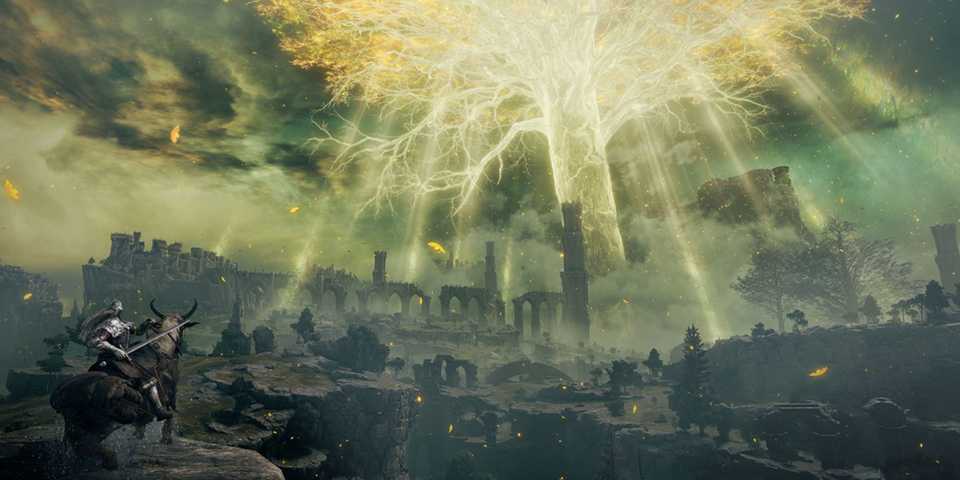
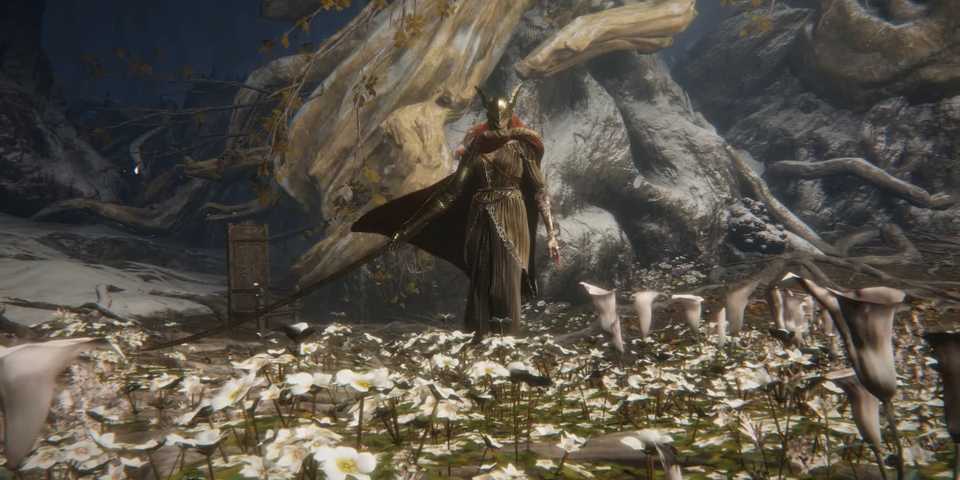
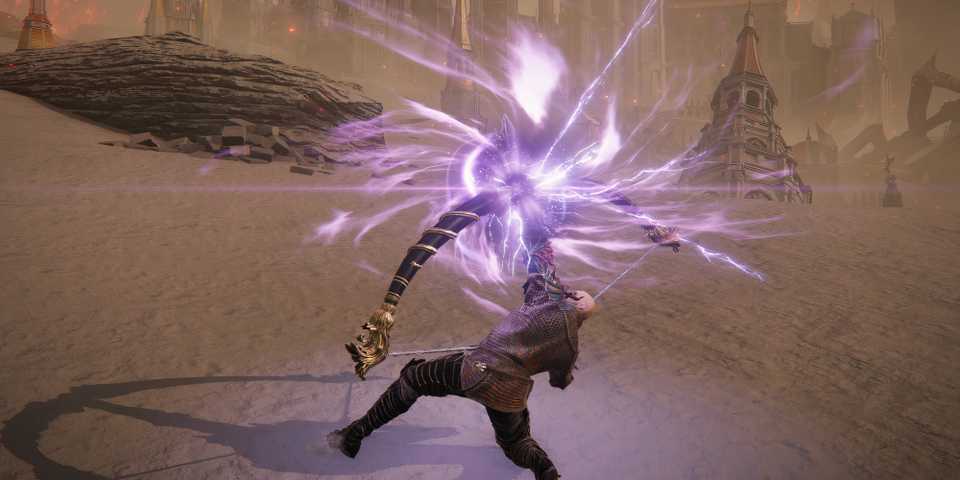
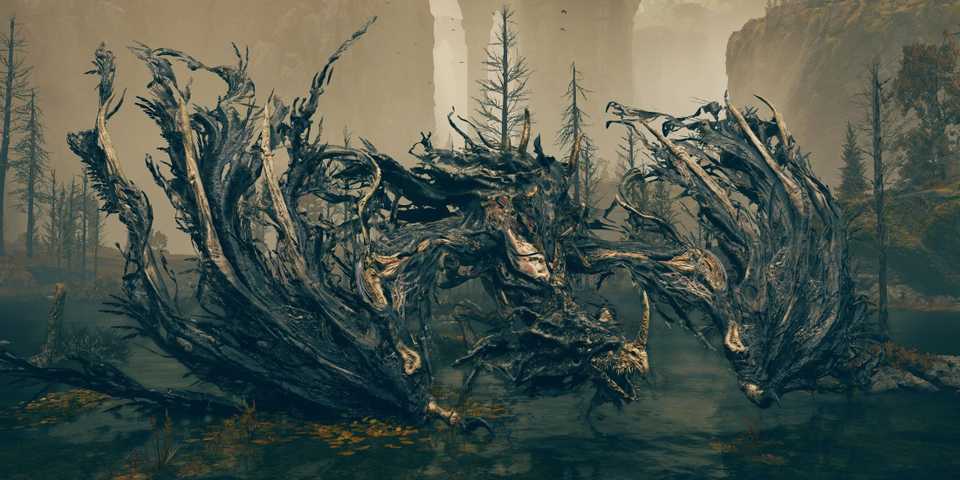
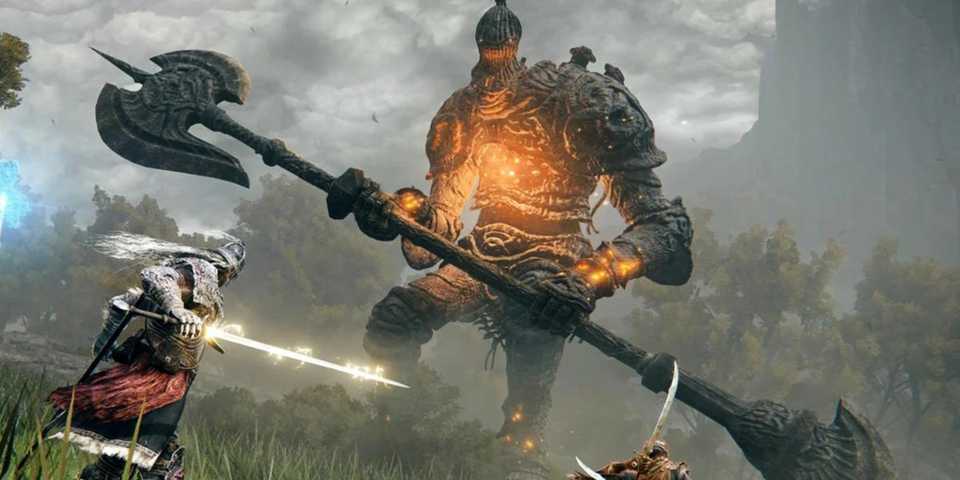
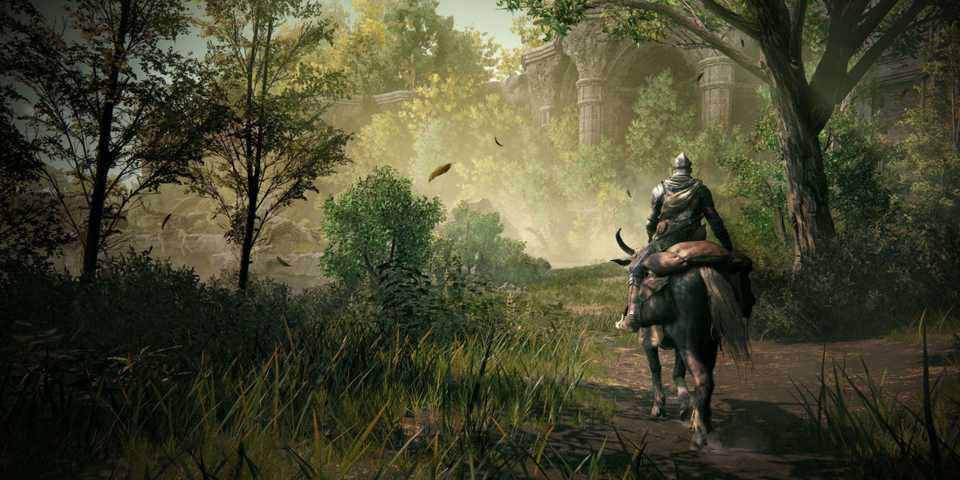


Elden Ring is a popular game released by From Software, creators of games such as Armored Core, Dark Souls, and Bloodborne. Players assume the role of a Tarnished, a being once exiled to the Lands Between and has returned to repair the Elden Ring after the events of "The Shattering." "The Shattering" occurred when the offspring of Queen Marika battled to claim the shards of the Elden Ring, known as Great Runes. Their war has brought lawlessness, destruction, and chaos to the land, and the player will challenge them with the assistance of a Maiden known as Melina as they travel towards the great Erd Tree to face their destiny and to become the one true Elden Lord. Players can tackle the game how they choose and can adventure across realms as they build their character how they want - be it a powerful magic caster or a brutal swordsman - they will have complete control over their build.
- Multiplayer
- Online Co-Op, Online Multiplayer
- Platform(s)
- PC, PlayStation 4, PlayStation 5, Xbox One, Xbox Series S, Xbox Series X
- How Long To Beat
- 58 Hours
- Metascore
- 96
- Platforms That Support Crossplay
- PS4 & PS5 and Xbox One & Xbox Series X|S
- PS Plus Availability
- N/A

