Although Fringe wasn’t the biggest hit in sci-fi history when the series began 17 years ago, the show did manage to revolutionize the genre in the years that followed. There have been plenty of high-concept sci-fi shows over the years, but few of them managed to match the success of The X-Files. Debuting in 1993, the original series ran until 2002.
The original show spawned two movie spinoffs and a reboot in 2016, but perhaps its biggest legacy was the legion of X-Files imitators that followed its success. Supernatural, Evil, Buffy the Vampire Slayer, and Grimm would never have been green lit without the success of The X-Files, since the series proved that horror procedurals could be major network TV hits.
While all these shows benefited from the boom of interest in horror television shows after the success of The X-Files, it’s important to note that The X-Files itself wasn’t just a horror series. The series was primarily a sci-fi show, and one follow-up leaned into the sci-fi elements that made the series special.
Fringe Showed A New Way Of Doing Sci-Fi Television

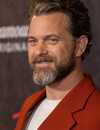
Airing on Fox from 2008 until 2013, Fringe came from Lost creator JJ Abrams and legendary Hollywood screenwriters Alex Kurtzman and Roberto Orci. The show followed Anna Torv’s Olivia Dunham, an FBI agent who is introduced to a whole universe of far-fetched sci-fi by John Noble’s eccentric scientific genius, John Bishop, and his estranged son, Joshua Jackson’s gruff Peter Bishop.
Together, the trio forms the ragtag Fringe Division, a Joint Federal Task Force that is specifically tasked with investigating anything related to fringe science. If that term sounds familiar, it might be because it applies to any scientific theory that could be real, but also may be pure unproven hokum.
As such, the group was always guaranteed a steady stream of outlandish phenomena to investigate, and this provided the true appeal of the series. This five-season masterpiece adopted the monster of the week formula of The X-Files, but adapted it to allow the main characters to investigate everything from parallel universes to alternate histories to cryptozoology.
Fringe’s ingenious trick was that, in terms of its structure, the series was very much just another network TV procedural. However, more so than its spiritual predecessor, The X-Files, the show leaned heavily into the more esoteric side of sci-fi. It even established tropes and incorporated concepts that now dominate the industry, from time travel and multiverses to alternate realities.
Shows Like Fringe Are Harder To Find Now

The X-Files touched on some of these concepts in passing, but they were relegated to random one-off episodes lest the series get too heavy, talky, and theoretical for mainstream audiences. Despite its reputation as one of the best sci-fi shows ever, The X-Files was surprisingly light on complex scientific plot points.
In contrast, Fringe was more like Netflix’s Dark, unapologetically delving into complicated concepts like multiverses at a time when they weren’t a part of mainstream culture. Most viewers had never heard of parallel universes in 2009, meaning the show was ahead of the curve when it came to incorporating these complex concepts into its plot lines.
Although Fringe was influential, that doesn’t mean that it is easy to find shows like this classic procedural nowadays. The economics of television have changed in the years since the original series ended in 2013, and it is rare for a network TV show with a 20-episode season to focus on esoteric concepts to the same extent.
There are still great sci-fi TV shows like Prime’s The Expanse, but by and large, these shows are released on streaming and have far shorter seasons of only ten episodes or fewer. Network sci-fi shows are an increasingly rare sight in 2025, as the genre has migrated almost entirely to streaming.
The upside of this setup is that viewers get superb original shows like Andor, Severance, Alien: Earth, and Pluribus on services like Netflix, Apple TV, Prime Video, and Paramount+. However, the trade-off is that network TV has little incentive to fund experimental sci-fi procedurals that explore the weirder, more conceptual side of the genre.
Will Fringe Ever Return?

Throughout its six seasons, Fringe introduced viewers to some heady concepts, but the show also didn’t stint on straightforward thrills. Now, as sci-fi has become largely relegated to streaming services and more conventional police procedurals dominate network TV, it is hard to see where a Fringe revival would be at home.
Some classic TV shows moved from network TV to streaming for their revivals, but this approach yields mixed returns. For every follow-up like Twin Peaks: The Return, widely lauded as one of the most daring and experimental pieces of television ever made, there is a flop like 2019’s The Twilight Zone.
However, it is even less likely that Fringe will return to network TV, given the lack of interest in sci-fi-focused procedural shows. As such, it is hard to imagine how a Fringe revival could happen, even though this would be a welcome development for many fans.


Fringe
- Release Date
- 2008 - 2013-00-00
- Network
- FOX
- Showrunner
- Jeff Pinkner
- Directors
- Brad Anderson, Fred Toye, Jeannot Szwarc, Charles Beeson, Akiva Goldsman, David Straiton, Dennis Smith, Jeffrey G. Hunt, Paul A. Edwards, Paul Holahan, Thomas Yatsko, J.H. Wyman, Jon Cassar, Miguel Sapochnik, P.J. Pesce, Adam Davidson, Anthony Hemingway, Bill Eagles, Bobby Roth, Bryan Spicer, Christopher Misiano, Chuck Russell, David Moxness, David Solomon
- Writers
- Graham Roland, Alison Schapker, Josh Singer, David Fury, Monica Owusu-Breen, David Wilcox, J.R. Orci, David H. Goodman, Glen Whitman, Robert Chiappetta, Ashley Miller, Zack Stentz, Zack Whedon, Julia Cho, Matt Pitts, Ethan Gross, Jeff Vlaming, Jason Cahill, Felicia D. Henderson, Justin Doble, Nora Zuckerman, Christine Lavaf, Lilla Zuckerman