
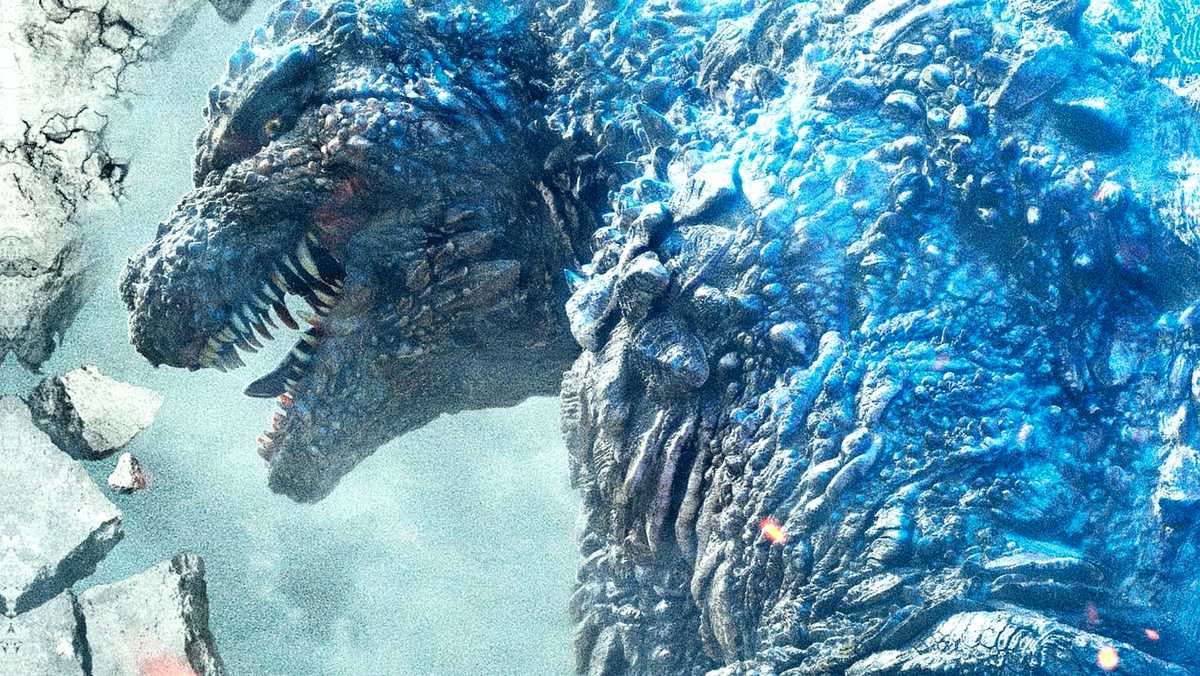

Few multimedia franchises are as appropriately intimidating and massive as that of Godzilla, and for good reason. A beloved property out of Japan, the series was born as a greater commentary on the dangers of nuclear devastation, with its eponymous character often standing in to represent nuclear weapons, and how often humanity can be powerless to resist. But it's since evolved past even just those themes, to address concerns about the environment, inadequate and inefficient government responses to imminent disasters, while still putting spectacle after spectacle in the spotlight as Godzilla faces off against an array of terrifying kaiju. But one particular story put the focus squarely on Godzill as a character, rather than a force of nature.
Godzilla in Hell, a five-issue creative collaboration across multiple teams at IDW Publishing, is one of the most surprising visual showcases squarely focusing on the King of Monsters with no humans in sight. Featuring mostly narrative, visual storytelling, and virtually no dialogue, it's a more symbolic, surreal experience than the usual kaiju story. And, being just five issues long, Godzilla in Hell makes for a monumentally rewarding binge-read, with plenty of opportunity to reflect on its messaging as Godzilla braves a violent and horrifying array of torments, fighting twisted variations on familiar enemies, confronting himself, shucking the usual tropes for a stimulating, yet brutal, meditative read.
Godzilla Goes To Hell Itself In This Horrific Miniseries

With a different creative team on each of its five issues, Godzilla in Hell goes across various horror subgenres to convey its symbolic message. Fittingly, the first issue comes out swinging just as Godzilla does the moment he drops to Hell, in his apparent demise, encountering a twisted, desolate landscape with immediate and overt nods to Dante's Inferno, finding a demonic adversary and even a hostile doppelgänger in the nuclear reactor-riddled wasteland. Doing only what he knows best, asserting dominance, pushing forward, and always coming back, this issue throws familiar threats with a body horror twist his way, but Godzilla proceeds even then.
But readers will soon be treated to the dramatic differences faced within each issue. The gory and vibrant comic aesthetic of James Stokoe's work on issue #1 fades into a painterly visual presentation in the next installment, with Bob Eggleton going all-out in creating a rendition that resembles classic Godzilla, pitting classic enemies with a demon twist like Rodan, Anguirus, Varan, and even King Ghidorah his way. Readers will begin to notice that these aren't so much feats of strength for Godzilla, but a mounting stack of torments for the King of Monsters as he proceeds.
But beyond lingering to admire the incredible artwork, the breezy nature of its visual storytelling and low exposition make Godzilla in Hell a worthwhile binge easy to complete in a short sitting. But it's worth picking apart for its fascinating depiction of the character, and just what it means for him to be a force of nature.
The King Of Monsters Confronts His Demons In Five Mesmerizing Issues


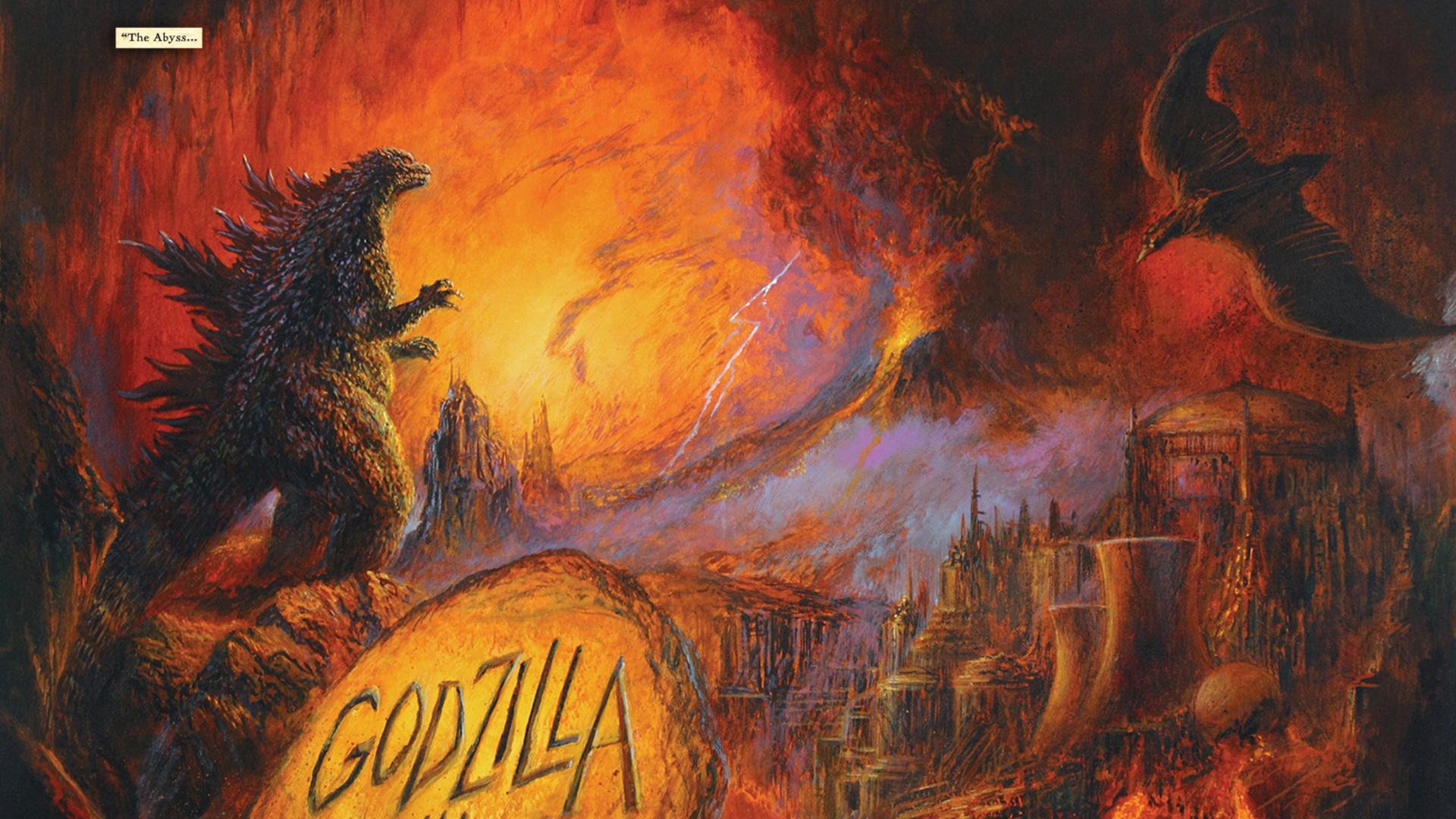
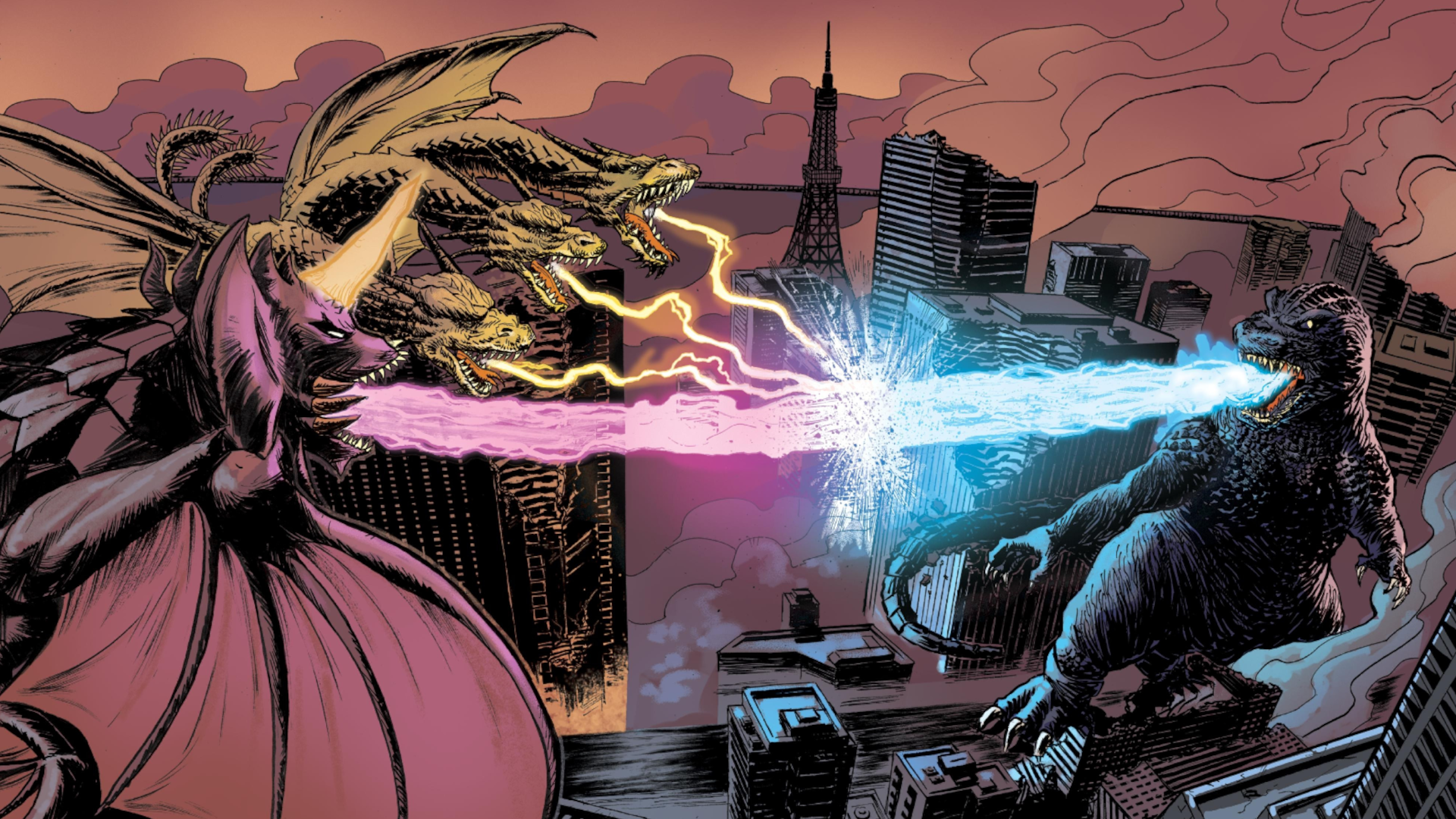
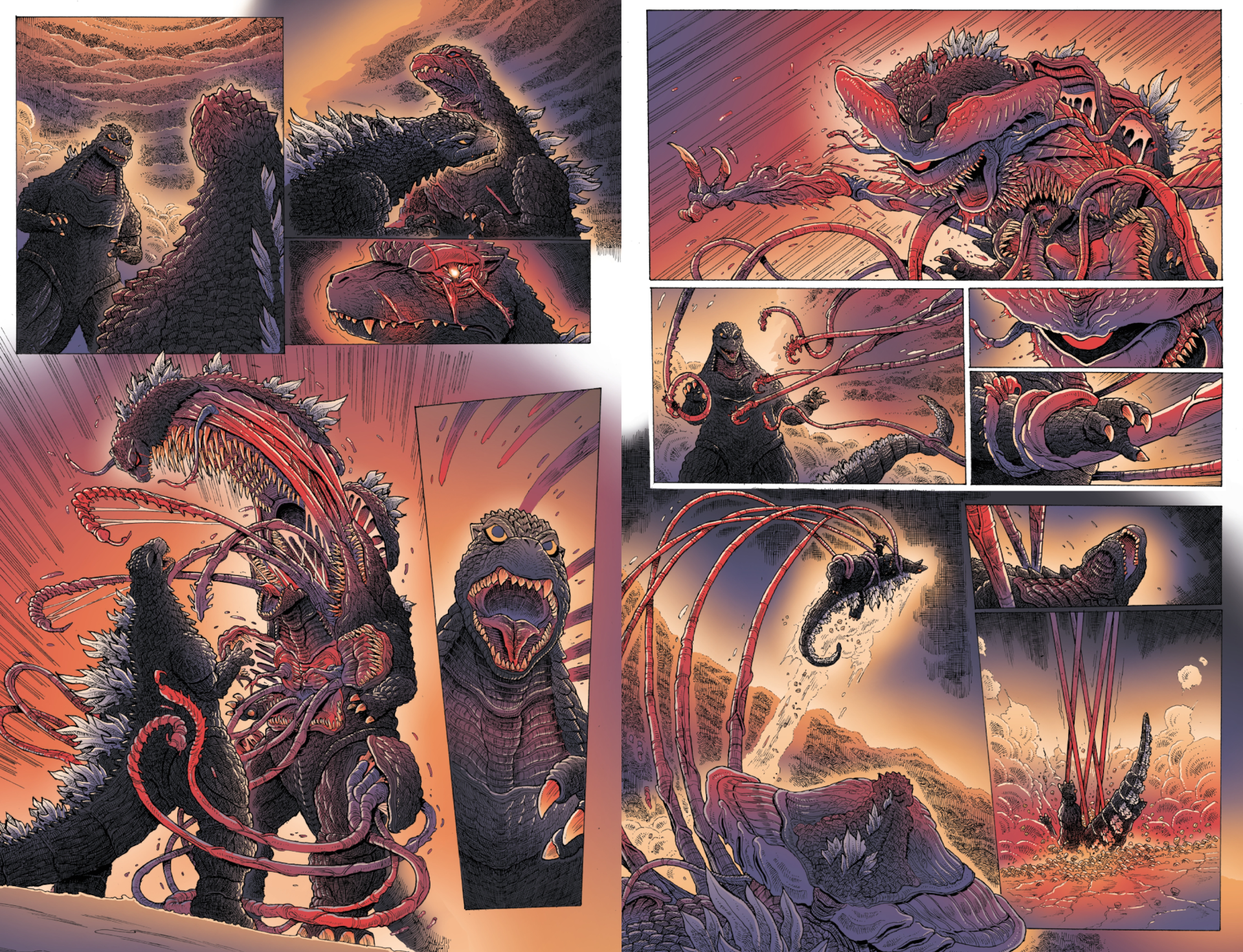
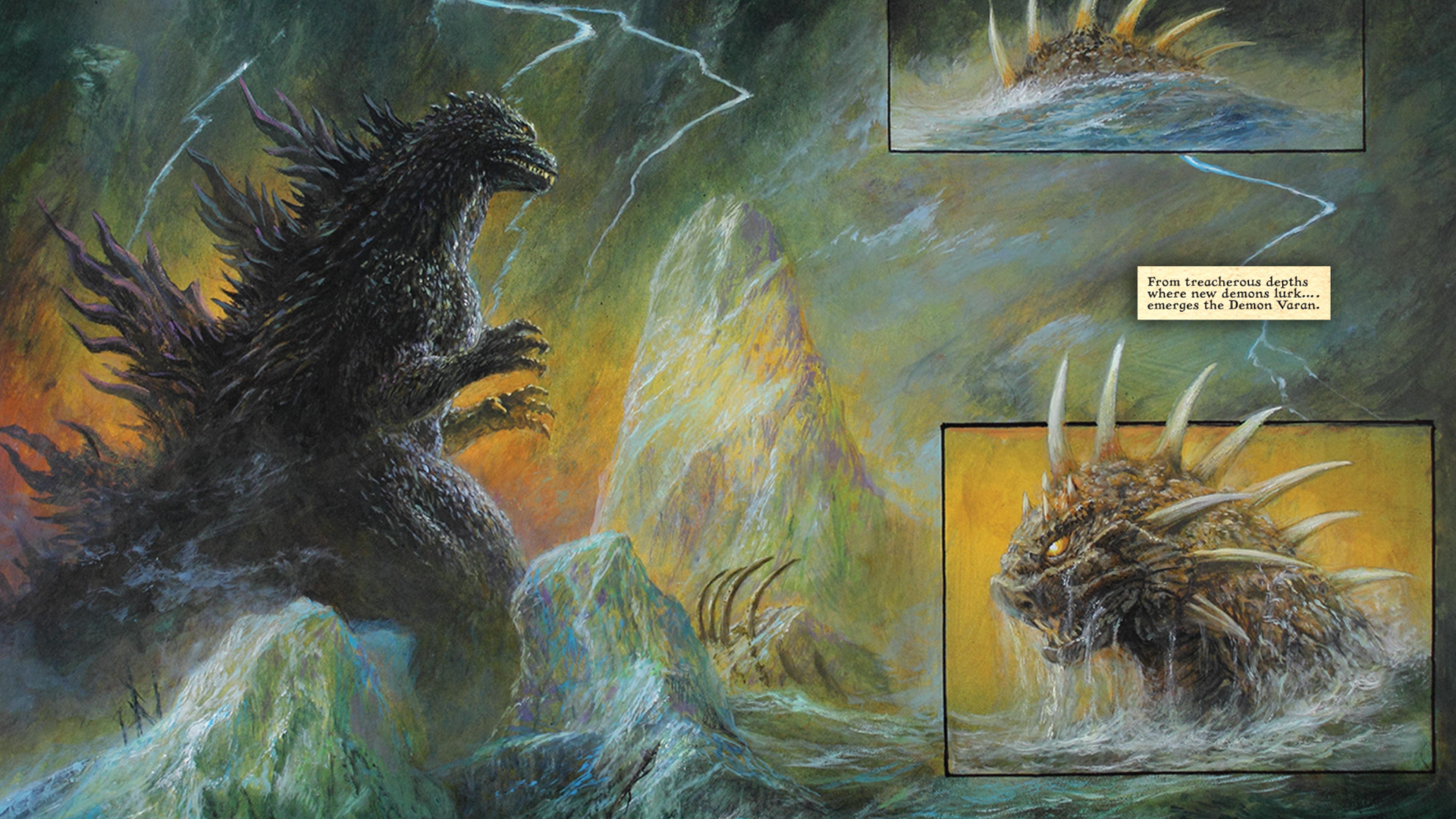
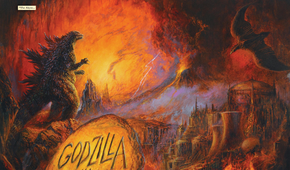
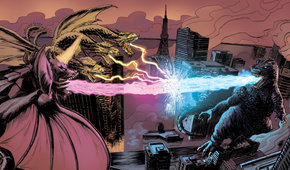
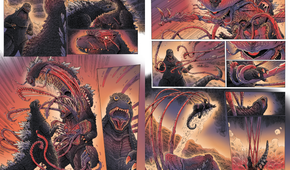
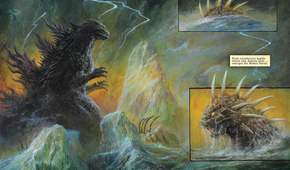
Godzilla in Hell's settings include hellscapes like Tokyo as well as territories vastly more surreal than the last. It becomes clear, either by the endless conflict, or by Godzilla's own uncaring reactions to those who begin worshiping him, that these victories are meaningless in the face of a realm actively trying to destroy him. Turning his might against the demonic structures resembling something out of Pieter Bruegel the Elder's artwork, the story becomes clearly less of an exercise in powerscaling, and more about another quality that makes Godzilla incredible: his resilience. Rather than going out of character and attaining enlightenment, though, Godzilla affirms his greatest qualities in the most direct sense.
Fans know that, be it missile attacks or a Kyushu J7W1 Shinden flown straight into his head, Godzilla, either his current iteration or another version, always comes back. It presents the idea of Hell, a place of eternal torment, and whether even such a realm has the capacity of breaking the will of a creature that remains utterly indomitable. Still, even Godzilla himself doesn't recognize this potential until his final, most gruesome trial, which in a very real sense totally deconstructs him, without spoiling too much.
It is better to conquer yourself than to win a thousand battles. Then the victory is yours. It cannot be taken from you, not by angels or by demons, heaven or hell.
The moment is quite an interesting take on the character, and even though it uses a famously incorrect translation of Buddha's words from the Dhammapada, the message still stands. Every fight is a grueling torment in this comic, and it's not about feats of overwhelming might. Godzilla, upon surrendering to his torments instead of fighting his way through, is still impossibly resilient, and will indeed come back every time, solidifying his true greatest strength of being a force of nature. Even though he didn't go down fighting in the end, he returned as a transcendent version of himself, in a truly fascinating series worth a glance for every Godzilla fan, especially for how differently it reads from nearly any other comic in the franchise.
Godzilla in Hell is available to read in its entirety digitally on-demand via GlobalComix.

- Movie(s)
- Godzilla, Godzilla 2, Godzilla 3, Shin Godzilla, Godzilla, Godzilla, Godzilla vs. Kong, Godzilla Minus One, Mothra vs. Godzilla, Godzilla Vs King Kong, Godzilla: Tokyo S.O.S., godzilla: monster planet, Godzilla vs. Gigan, Godzilla vs. Mechagodzilla, Godzilla: Final Wars, King Kong vs. Godzilla, Godzilla vs. Mechagodzilla II, Godzilla: The Showa Era Films, Godzilla vs. Biollante
- TV Show(s)
- Monarch: Legacy of Monsters
- Video Game(s)
- Godzilla, Super Godzilla, Godzilla (1990), Godzilla: Unleashed, Godzilla: Monster War, Godzilla: Battle Legends, Godzilla: Save The Earth, Godzilla: Monster of Monsters!, Godzilla: Destroy All Monsters Melee
- First Film
- Godzilla
- Cast
- Akira Takarada, Momoko Kôchi, Akihiko Hirata, Takashi Shimura, Anna Sawai, Kiersey Clemons, Ren Watabe, Kurt Russell, Wyatt Russell
- Created by
- Tomoyuki Tanaka, Akira Watanabe
