


There are few films as edge-of-your-seat entertaining as Harrison Ford's crime thriller The Fugitive, which saw him in a breathless race to find his wife's killer and prove his innocence. Despite its breakneck pace and stellar cat-and-mouse chase, the film's production was anything but polished, with a chaotic shoot and daily rewrites almost guaranteeing disaster.
Based on the popular TV series of the same name, The Fugitive was an IP whose cinematic adaptation was discussed for decades before getting greenlit. From the start, the movie was hampered by a swiveling door of scripts and screenwriters—a creative quagmire that threatened it ever got off the ground.
Filming proved no easier; cut storylines and a down-to-the-wire ending made it so, at any time, The Fugitive could've drowned under its own ambitious vision. However, sometimes lightning strikes, and the right assortment of people come together to make a film not only renowned for its action and performances, but also for its effective, razor-sharp storytelling.
The Fugitive Began Filming Without A Finished Script
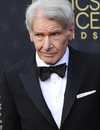
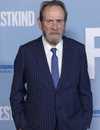
One of the most implausible aspects of The Fugitive is how engaging its narrative is—a triumph standing against the odds of dozens of rewrites and an unfinished script at the start of principal photography. As a result, much of the film’s dialogue was left to Harrison Ford and co-star Tommy Lee Jones—whose show-stealing performance prompted the 1998 spinoff U.S. Marshals.
This improv didn't only extend to The Fugitive's two leads: many of the most iconic lines from Gerard's team of Marshals were ad-libbed, rehearsed, and then shot on the day in order to fill out the stiff and robotic dialogue present in the screenplay.
According to director Andrew Davis, as much as 70% of the film's dialogue likely arose from this process, shining a light on just how unsuitable the working script was.
Moreover, many of The Fugitive's initial screenplays contain outlandish or outright absurd plot points that were rightly cut in favor of the final product. One of these includes a studio-contrived love story between Kimble and Julianne Moore's character—a subplot that would've proven grossly uncharacteristic in the midst of the former's hunt for his wife's killer.
Another earlier draft framed Gerard as the mastermind behind the death of Kimble's wife in a Shyamalan-esque twist that would've ruined his image.
Apart from director Andrew Davis and screenwriter Jeb Stuart, another person to thank for these changes is Ford himself, who took a large—if quiet—role in reworking the dialogue and narrative beats that would ultimately save the film from the embarrassing faceplant it seemed all but poised to take.
Production On The Fugitive Was Utter Chaos

Due to Harrison Ford's limited schedule and a steadfast release date in August '93, The Fugitive had only a fleeting window to film with its star. Beginning principal photography in February, the production team ran into their first hurdle after the famed train wreck stunt—which reportedly cost $1 million—didn't work, forcing them to rely on pre-planned miniatures.
Other setbacks include Ford tearing his ACL while running through the woods, which forced him to walk with a noticeable limp for the rest of production. Tragically, Richard Jordan chose to step away from his role as Dr. Charles Nichols after being diagnosed with an inoperable brain tumor, prompting the studio to recast him with Dutch actor Jeroen Krabbé.
Despite these obstacles, production pressed on, solving dilemmas through daring, often spontaneous filmmaking, such as when they shot the St. Patrick's Day parade sequence without the studio's knowledge, which allowed Kimble to feasibly escape Gerard without shattering the audience's suspension of disbelief. As time progressed, more pieces began to fall into place, save for one major snag: the ending.
The Fugitive's Iconic Ending Was Written At The Last Second

As production approached completion, The Fugitive's lackluster ending—which at that point consisted of a far-fetched chase on Chicago's elevated railway between Kimble and Gerard via police cruiser—remained a serious point of contention for screenwriter Jeb Stuart.
As the story goes, Stuart spent one night brooding over the film's climax before inspiration hit him "like a diamond bullet," (to quote Brando's Kurtz): Kimble could confront Nichols in public and the rest is history.
The Devlin MacGregor hotel standoff, Kimble's swatting of Nichols' hand from his shoulder, the iconic "Provasic" rant: all elements of an expertly-pulled-off climax whose success was not guaranteed but most certainly earned—all through the tireless work of a production that started two steps back and finished 10 steps forward to make The Fugitive the definitive crime thriller.
Source:

- Release Date
- August 6, 1993
- Runtime
- 131 minutes
- Director
- Andrew Davis
- Writers
- David Twohy, Jeb Stuart, Roy Huggins
- Producers
- Arnold Kopelson
Cast
-
 Richard Kimble
-
 Samuel Gerard
- Sequel(s)
- U.S. Marshals

