


Summary
- Year of the Pegasus brings multiple updates, events, and rewards to celebrate Hearthstone's 10th anniversary in 2024.
- New card expansions like Whizbang's Workshop will introduce new cards with engaging synergies.
- The expansion creation process takes about a year, with theme, mechanics, balance, art, and voiceovers to contend with.
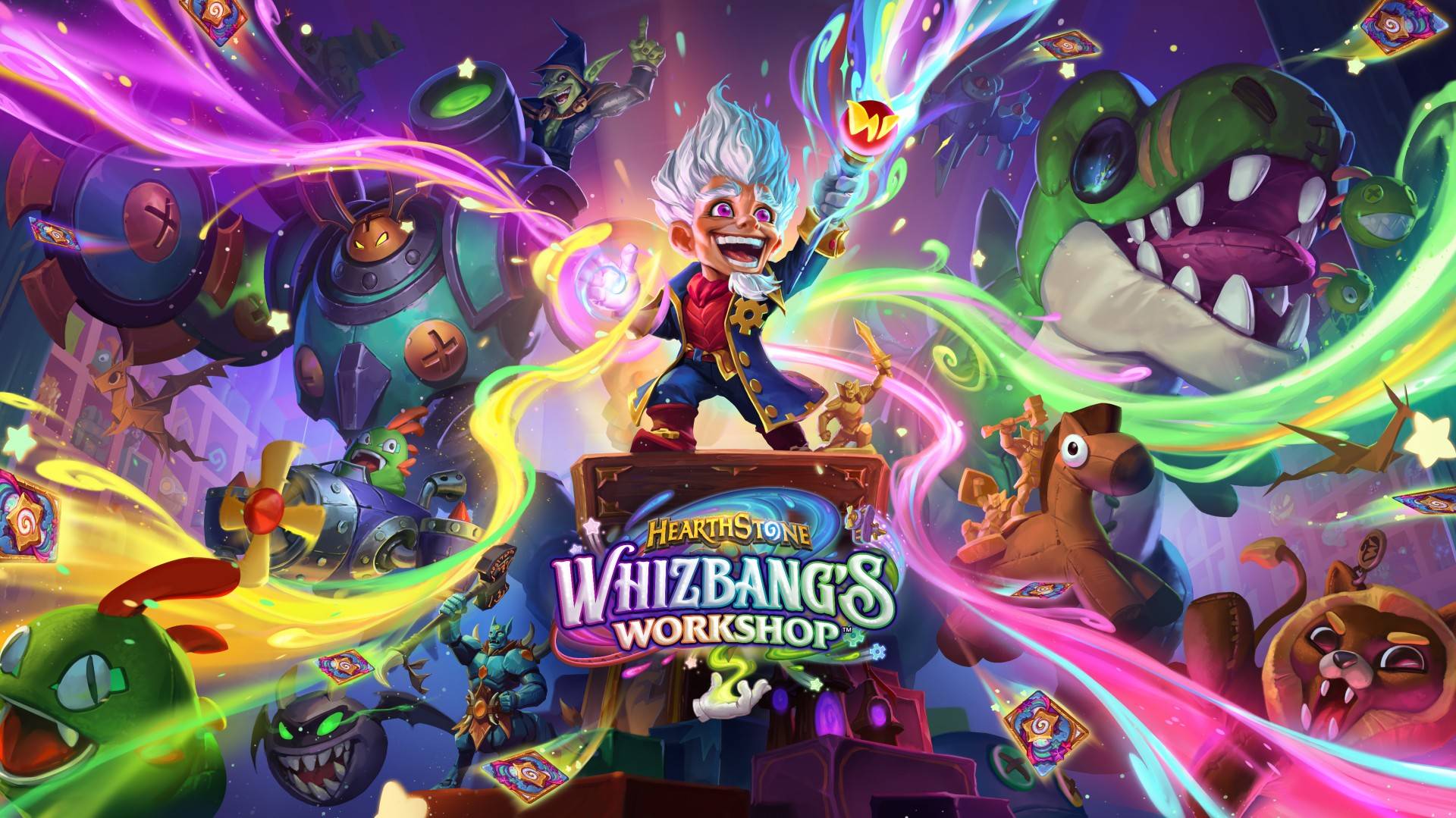
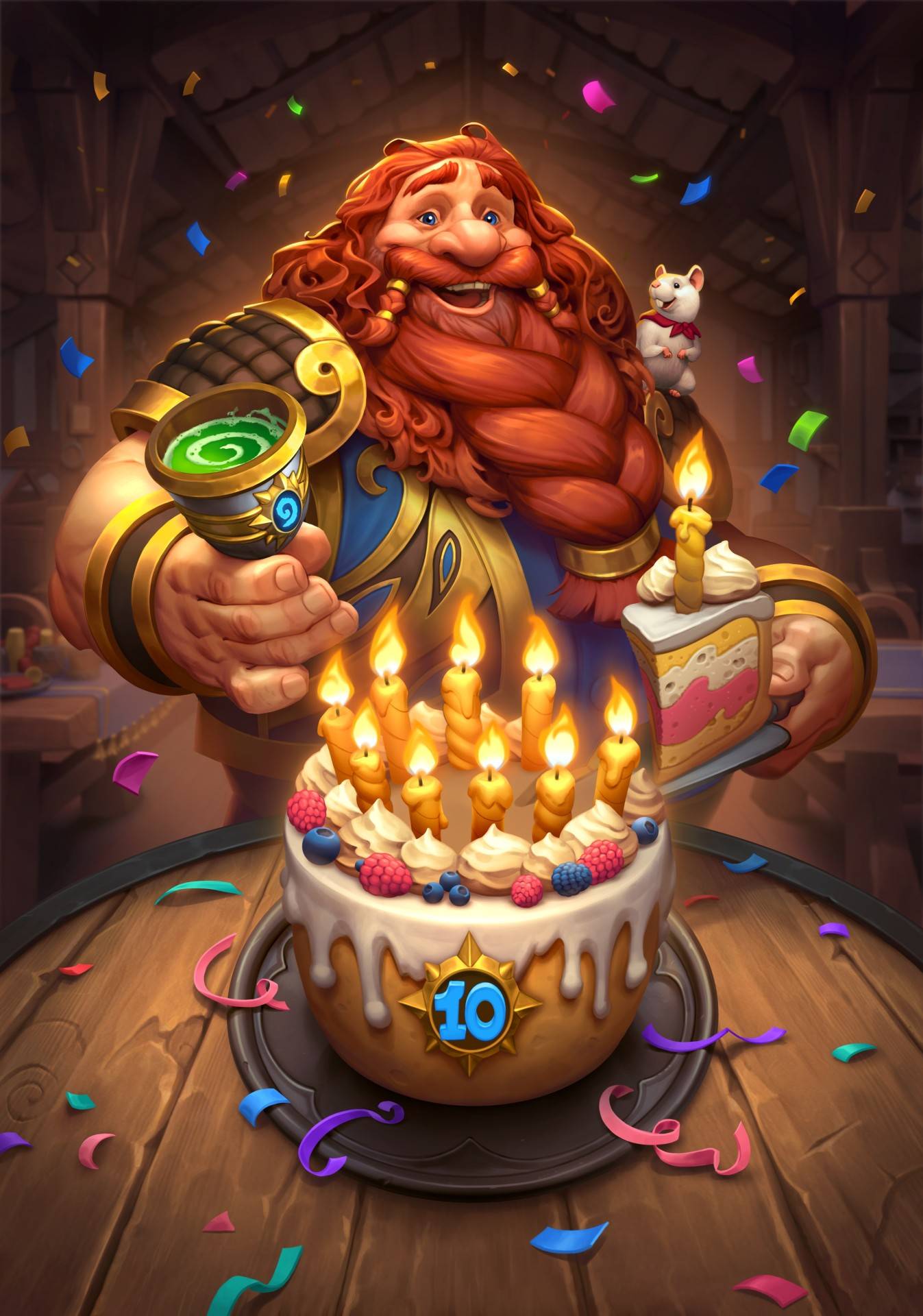
Hearthstone celebrates its tenth anniversary this month, and developer Blizzard has found many different ways to celebrate the deckbuilder's long history. Dubbing it the Year of the Pegasus, over the course of 2024 fans will see several updates, additions, events, and rewards. This year will also have three new card expansions, beginning with the whimsical, toy-themed Whizbang's Workshop later this month.
Ever since its release in 2014, Hearthstone has consistently received multiple expansions every year, all of which have introduced over one hundred thematically-unique cards each. Creating new sets that ingratiate well with the overall game is no simple process, with each one taking about a full calendar year from start to finish. From the music-themed Festival of Legends to the extremely powerful Titans expansion, these releases have consistently given players engaging mechanics and fresh synergies to work with, while also expanding upon the game's lore through gorgeous art and delightful flavor text.
Screen Rant interviewed Hearthstone senior game designer Cora Georgiou and executive producer Nathan Lyons-Smith to discuss the expansion pack process, how the title has evolved, and what the future holds for the deckbuilder.
Cora Georgiou & Nathan Lyons-Smith Talk Hearthstone






Screen Rant: I am very excited to talk about 10 years of Hearthstone. First, I would love to talk about, just from a big picture standpoint, how you guys would describe what the life cycle of an expansion is. How do you decide when it's time for a new one, and how long does it take from conception to completion?
Cora Georgiou: So, after 10 years, we have ironed out a pretty good process, thankfully, for the creation of an expansion. TLDR, it takes about a year from conception to ship for an expansion, and that includes the period of time where we're working with the rest of the team with narrative designers to figure out what expansion we want to make. And then we have usually about four to six weeks of mechanics time where we work on keywords and major mechanics per set.
That's where we make things like Colossal, or Titans, or Excavate. And then from there, we have another several months on initial design where we do first draft of all of the cards in the set. We go through each of the classes and we say, "What text do we want to make this time? What archetypes do we think players are going to like? How do we use the new mechanics in a really interesting way to build these decks and to flesh out what 10 cards in each class are going to look like?"
And when we've done that - usually that's about a 16-week total period - we hand off to final design, they do all of the balance, they do redesign work. If there's any holes at that time, we'll work with them to try to make sure that the set is in a really wonderful state. And then thankfully from there, we still have four more months before the set actually has to go out and we're able to do a lot of fine polish.
We work with the art outsourcing team to get all of the art back for the set. We write the VO and we work with the VO artists, which is awesome. They're so talented and it's so cool getting to hear them every time. It is a joyful and chaotic year, but it is also so much fun. So every time we get to a new set launch, it's like, "Oh my gosh, I can't believe we're here." It's like a holiday every time, because you look back at where you started from a year ago, you're like, "Wow, we did a lot in that time, and now finally the players get to see it," and that is a really cool feeling.
Awesome. Is there anything you have to add to that, Nathan? That was a really comprehensive answer, but I'm just curious.
Nathan Lyons-Smith: This is Cora's bread and butter doing day in, day out. I think the amount of play testing and gathering feedback, super helpful. They do that internally on design team and then every Thursday we've got a play test of something, and sometimes it'll be, "elp us test out these initial mechanics," and then sometimes it's the, "Hey, try and break the game, find bugs or find a broken combination."
And that's also really good fun for the team for them to feel like part of that creation process, even if they're not the ones always creating the content. And so it's always fun to jump in and have those matches against your coworkers then end up in the water cooler chat or boasting and bragging, just because that's Hearthstone.
And zooming in a little bit more to a step-by-step, I know that each expansion starts with a big pitch session where you thematically work out what the new set will be. Can you talk a little bit about what the team is taking into consideration the most during those sessions? Are you going off of old expansions a lot or what the public consensus seems to be at the time or what are you looking for?
Cora Georgiou: It's a lot of factors, and factors that are both subjective and some where we try to be a little bit more objective as well. Each expansion has a set lead; the set lead is usually a designer who are the goal holder, the vision holder for an expansion. So they're going to do a lot of cross-discipline work, a lot of communication work, coordinating between teams to make sure that the vision of the set is maintained even as the set goes from initial to final, engineering, UI, art, all of these different aspects. It's a big job.
So as someone who's working on the set for a year of time, it's important that the set lead is excited about the expansion that we're working on, but it's also a really collaborative effort between the set lead, the rest of the design team. Our narrative design team leadership, of course, needs to be on board and comfortable and excited about the set that we're making. And from there we do look at, "Okay, what's been the general tone of the sets that we've done for the last year? Have we been really whimsical or have we been a little bit darker and more serious? Have we done things that are more taken from World of Warcraft, a little bit closer to the lore, or have we done really very Hearthstone-centric expansions?"
Because we want to make sure that we have a good amount of variety, we want to make sure that we can serve all of our players, and players are excited about different expansion themes - they have different genres that they're really interested in. So just trying to make sure that we have that variety is really important.
Nathan Lyons-Smith: The question I typically ask when we have a set theme is, "Hey, did we go talk to our regional partners about what they think about this setting and theme?" We're global, we have millions of players spread all across the world, and want to make sure that the themes we're putting forward will resonate in a way that does for us here in the States.
And an example of where I thought, "Oh, are we sure?" Actually, it was Showdown in the Badlands. The pitch comes across as we're going to do a Western style expansion. And I thought, "Oh, Western seems a very States-centric experience. Hey, did we go validate that?" And the feedback came back that spaghetti westerns were a lot of early film regardless of where you were in the world - if you're watching earlier films, that's just a lot of westerns.
And so a lot of people ended up watching a lot of westerns and it's more in their culture even though it isn't located where they are, there just was less early film. And so more of a global audience had exposure to that, and set was great, turned out great, really well-loved both mechanically and thematically. And so kudos to the team for continuing to find those fun bits and really have it resonate globally.

Of course another really big thing to come out of the set is keywords. And you mentioned how there's a really big mechanical phase - obviously you're drawing some from the theme of the pack itself to get these keywords, but I'm sure there's a lot more that goes into it as well.
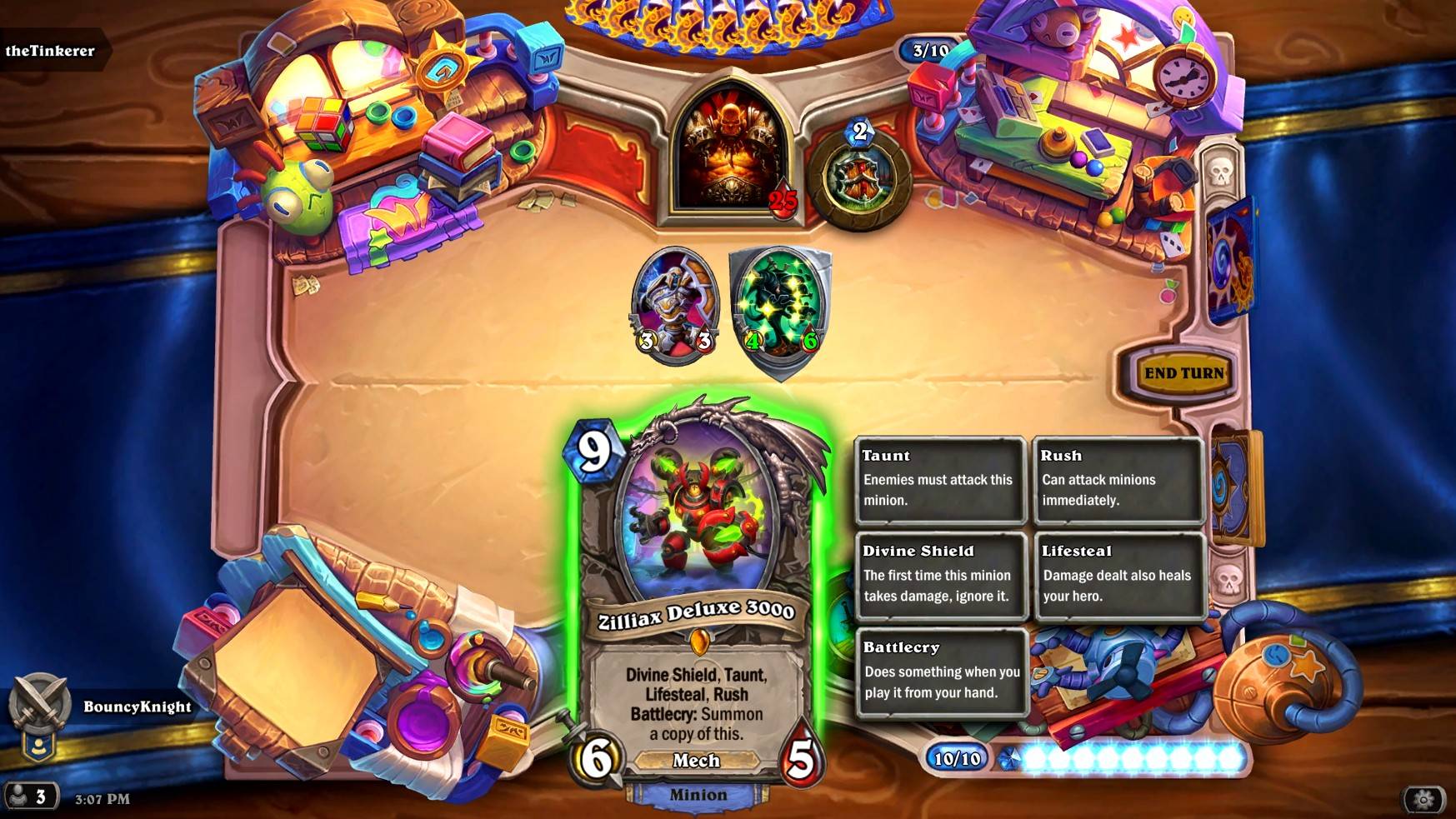
Cora Georgiou: Yeah, we call it blue skies ideation. So blue skies, thinking as big as the sky for all of the things that we want to create. That's when we really get to just be very dreamy and be really creative. And coming out of that, we want to have a couple of questions answered. We want to know: what are the mechanics of the set? What is the keyword we're going to be building with? What are major mechanics? Things like Zilliax, or Titans, or Excavate, or Highlander, because the cards that we're going to make, the decks that we're going to try to make are going to heavily rely on the overarching mechanics of the set.
And it looks different with every expansion. Some expansions, the mechanics come to us really quickly and other times it's a little bit more difficult. I think an example of the mechanics process being really smooth was actually Titans. Forge came up really quickly and pretty much the first version of it - first version I think had variable Forge costs. And we were like, "This is a little complex, what if we try two?" And that stuck. We were thrilled with it. It played really well, players really like it - Forge was a winner, and Titans as well.
The Titans themselves actually were a minion-type mechanic that we built off of things that we had tried previously. So we had a lot of learnings to build off of, things that we knew we'd tried that didn't work quite so well. And we were able to ultimately figure out the version that we liked best pretty quickly, and they ended up being the titans that we know today.
So it's really just getting together as a team, being very collaborative, brainstorming, "Hey, what are things that we are really excited about? What are words that feel very thematic and fitting with this expansion that we're working on? How do we see those translating to gameplay?" And from there, lots of iteration, lots of play testing until something sticks. And then by the end of blue skies, hopefully you have a pretty good picture of what the set's going to look like.
And I know there's a lot to choose from over the past decade, but I'm curious if there are any expansions that stick out to you guys, either because of just how thematically unique they were or because they introduced some really important mechanics?
Nathan Lyons-Smith: I'll go first because Cora probably has a better depth of answering than me. I was so impressed with the team and Titans. I play a lot of other games, and so I'm always excited when we're creating a new card type, and Titans with the options and the theme tying into World Warcraft so well, it just really, really landed for me and also really, really landed for players.
And so we've done a lot of different mechanics over the years, even different card types, but that one in particular just felt like those cards were so powerful relative to other cards, which is appropriate because they're the Titans. And so again, kudos to the team for coming up with that.
Cora Georgiou: I think the Titans were wonderful. I think for me, an example is Sunken City. I think the Colossals are one of the biggest successes we've had in recent memory. Players loved them. They were all pretty much very playable, powerful, but not overly so, not to the point where players, even in the two years since Sunken City came out, where they've gotten frustrated with them. And I think that's really difficult to pull off, because oftentimes power - if you see a card played against you 1,000 times, you can get a little frustrated. And we just haven't felt that so much with the Colossals, which I think is really great. And also Dredge and the Sunken treasures as well.
I think the Sunken Treasures maybe didn't make as much of an impact, but I think it's so clever how well they work with Dredge, and Dredge was created first. So building Sunken Treasures off of that, I just think there's some very clever design there and it's very thematic and feels super appropriate for the theme of the Sunken City. So I'm very happy with that set.
Awesome. And another fan-favorite thing that comes out with every expansion is new flavor text for cards. I would love to hear a little bit just about what that writing side of the process is like, because it's really entertaining, but you are giving little bits of lore at the same time, smattered in there.
Cora Georgiou: It's actually one of my favorite parts of the whole process, mostly because a lot of the difficult work is done. We have these cards, we've balanced them, we've done all of this work, and now we get to just put a little flourish on them, tell a funny joke or give you a little insight into the lore here. So we start the flavor text process by actually breaking down the cards into each of their classes, and we send out emails across the entire team and we say, "Hey, if you have ideas for what the flavor text for these cards could be, please contribute. We'd love to hear your ideas."
And it's a really wonderful way to get the whole team involved and to have people be able to point at something and be like, "I did that. That's really cool. That was my idea." So I think that's just a lot of fun and you get to talk to a lot of people that you might not get to work with every day.
So once we have all of those ideas submitted, we as a card design team will go through. This usually happens on a Friday at 3:00 PM, so it's a little bit of a silly meeting, but the vibes are really good. And we'll go through and we'll pick out the ones that we like best. And if there are any that didn't get any submissions, then we'll do some brainstorming and try to figure out what to do there. But it's just a really fun time where we get to just be a little bit goofy.
And if there are characters like the Titans, where we don't feel it's as appropriate for them to have a silly flavor text, but instead we could have a really awesome key piece of lore here, then we'll go talk to Val [Chu], our narrative lead, or we'll talk to really knowledgeable Warcraft players on the team and be like, "Hey, what do you think we should do here?" Until we're able to find that good fit of silly flavor text and maybe more serious flavor text. So it's a really fun process.
And you mentioned there have been some expansions where stuff just really came together easily and naturally. I'm curious about the flip side of that. Have there been any where it was really just, "These aren't working, what are the mechanics going to be?"
Cora Georgiou: Yes, there absolutely have been. And I will start by saying that's not abnormal. Mechanics get redesigned or get iterated on all the time, even relatively late into the process. It's why we have such a large lead time before expansions go out to our players, because we need that time to adequately play test a thing, really get a feel for it, really experience it and be able to identify, "Hey, these are the things about this that we really like. Here's where we're finding the fun, but here are some issues that we need to be able to overcome." And sometimes you just can't overcome them and you need to start over and that's totally fine.
I will use Murder at Castle Nathria as an example, because I worked on that set quite a bit. Infuse - Infuse looked a lot different for about 18 weeks of the process. There was something that we were trying that we kept iterating on, we're like, "There's something really fun here. We are really interested in this. There's just some problems. We can figure them out. We can figure it out." And eventually we got to a point where we were like, "Maybe we can't figure them out, and that's okay."
And we went back to the drawing board, and we came out with the Infuse keyword, which I think worked really well for the context of the set that it was in. The flavor was good. Ultimately I think it helped the set as a whole and it didn't need to be the shining star because locations were there, and locations were very exciting being a new card type. So that was one that I think it was a little bit more difficult, but ultimately still worked out just fine, and those things happen.

And you mentioned at the beginning that obviously over many years, the process for creating a new expansion has definitely been streamlined and incorporated a lot of lessons from over the years. What are the biggest ways you'd say you've seen the process evolve over time?
Cora Georgiou: Oh, that's a really good question. I think the actual structure of the process and the timeline itself hasn't undergone much change in the time that I've been here. I've been here about four-and-a-half years. So the actual timeline of how long initial design works on a set, how long final design works on a set, that's been cemented before my time pretty much.
I will say that the most significant things that affect the process really are just the designers that we're able to add to the team. The people who get more experience, they lead a set and then they're able to contribute to future sets with just more knowledge and more experience under their belts. And so as you see a group of designers who were a little bit green grow over the course of three or four years, you start to see that comradery build up, and that experience build up, and that foundation of knowledge just expands so significantly that naturally the process just looks a little bit different because the people are different. And as you bring on new people or you see people move on to other opportunities, that dynamic is going to change a little bit.
But I think Nathan can probably attest to this, the people that we have on the Hearthstone team and the dynamic that we've created is really excellent. And I've seen a lot of people come and go in my time and that has never wavered. So I feel very grateful to be a part of that.
Nathan Lyons-Smith: Total plus one to “the team is amazing.” They love the game they work on, a ton of respect for that, but also love and respect for each other and making sure that this is just a fun experience, not just to play, but also to develop. The fun and whimsy that you see in the game is actually a reflection of the fun and whimsy that the team has making the game.
To add maybe a little bit to the answer to your question, we've done improvements in the pipeline of the end-to-end of idea all the way into the game for making cards.
Over the last year actually worked on our sound and audio pipeline and making it a whole lot easier to hook up sound and hook up VO, and the year before that we did a lot of work on the visual effects pipeline, making it easier to hook up effects. And so we can just get through those iterations and finaling of content faster and spend more time on making the fun and the new thing.
And over the years, I'm curious just in terms of player reactions to expansions as they've come out, have there been any really fun community moments or reactions that stand out from the past decade or so?
Cora Georgiou: We're very fortunate in that pretty much every expansion community reaction that I can recall has been very positive. I guess I can use Whizbang's Workshop as an example just because that's very, very front of mind, but the reaction to Zilliax was phenomenal. And I've sat on that for a couple of weeks now since we revealed it. And people aske me originally, "Hey, how are you feeling about Reveal season?" "I think it's going well. I think they like Zilliax."
And now I look back on it and I'm like, "No, they really like it. They really like it." [Laughs] And that's a pretty cool feeling. So even just the level of experimentation and the level of conversation and discourse that I was seeing on different forms of social media of players discussing the Zilliax combinations that they were excited to work with. That level of positivity around a card, there's always positives and negatives. But that was almost purely positive, and I am really happy about that.
Are there any that stand out to you, Nathan?
Nathan Lyons-Smith: Just thinking back the last couple years, I think there's a lot of excitement on the Highlander coming back. People really like that mechanic, and so Reno in Badlands. I guess Renethal was the free drop card, Prince Renethal and Castle Nathria, that changed a lot about the game. And so it was like, "Oh my gosh, what's going on?" And that was a lot of fun.
And then Cora talked about the Colossal Minions, the impact those had and the excitement of, "Wait a second, multiple board space, also, these are big buff minions." It was a lot of fun. We've had a lot of hits and so I just could rattle off the mechanics over the years.
Hero cards, the first time, I think were like, "Wait, what? And you just twisted all of my favorite heroes into Death Knights? What?" And the power of those was really powerful. "Wait, Deathstalker Rexxar does what?" [Laughs] And so just the team's done a fantastic job and continues to go and find that fun, new mechanic and theme that is just really going to keep players excited and engaged.
Cora Georgiou: And from a theme perspective, I'm always so interested to see what the general community consensus is going to be. Because again, using Murder at Castle Nathria, I love murder mysteries. I love thrillers. I love horror, I love all of that stuff. But there was definitely big question in the back of my mind of: "I am a millennial woman, of course I love murder. Does the general public like that too?" [Laughs]
So there was a little bit of concern about that, but seeing how much of the public were so excited about the music aspect of Festival of Legends, and about Showdown in the Badlands and Westerns, having all of these genres, or of Titans and that incredible deep lore from World of Warcraft. It's just always so interesting to see what people like and what people are excited about, and just to keep making more sets that the most people are excited about. I guess that's the goal.
Over these next coming few years, do you guys have any big hopes or visions or ideas in the pipeline that you can share just for where the game goes next?
Nathan Lyons-Smith: That "can you share thing," I appreciate you adding that. I don't know that there's a big bit. At BlizzCon, we had the demo for Battlegrounds Duos and we're really excited about that internally. It did really well on the demo floor. A lot of feedback there. We've iterated a lot on the player to player communication. It's easy when somebody's sitting next to you at BlizzCon, it's a lot harder when we're across the world.
And we did a play test a couple of weeks ago, we have another one next week, so really excited to see how the truly first cooperative experience works out in Hearthstone and take whatever learnings we can and iterate further within Battlegrounds or bring some of what that fun could be to Hearthstone. So I'm excited for what we've got this year and we'll use all of that as learning for what's to come next.
Cora Georgiou: I think even three, five years ago, I never would've thought that a card like Zilliax today would be possible. And so I'm hoping that three, five years from now that I'll look back on Zilliax and I'll go, "Oh, that was just the beginning." What we can do now and what we're doing now is even more than I could ever imagine. So I'm hopeful that it just keeps getting better.
The Whizbang's Workshop expansion will come to Hearthstone March 19.


 OpenCritic Reviews
- Platform(s)
- PC, macOS, iOS, Android
- Genre(s)
- Digital Card Game

Source: Hearthstone/YouTube
