

Summary
- Iwájú is a collaboration between Disney and Kugali that explores class disparity in Lagos, Nigeria through futuristic storytelling.
- The series takes inspiration from real-life Lagos, with authentic dialogue in Nigerian Pidgin, pointing to a new direction for Disney.
- The show's creators discuss merging Lagos traditions with futurism, creating a unique cultural tapestry and potential for future games.
Iwájú, now streaming on Disney+, is a fascinating collaboration between Walt Disney Animation Studios and Pan-African studio Kugali Media. The six-episode miniseries follows Tola Martins (Simisola Gbadamosi), who sets out to explore her country's mainland alongside her friend Kole (Siji Soetan) and pet liard Otin. However, she soon finds herself targeted by a mysterious villain in the process and learns many important lessons about class disparity in her home.
Though it is a futuristic sci-fi story, Iwájú takes inspiration from the real-life location of Lagos, Nigeria. The authenticity of the show seeps through in more than the story and visuals, as even the dialogue is spoken in the English-based Creole language of Nigerian Pidgin. Though the narrative itself may not be unique to Disney's repertoire, the animation and culture enrichment point to a new path forward for the company, exploring different and unexpected avenues of storytelling.
Screen Rant interviewed Iwájú's director Olufikayo "Ziki" Adeola, production designer Hamid Ibrahim, and cultural consultant Tolu Olowofoyeku about how their callout led to a wonderful collaboration with Disney. The trio also discussed extrapolating from daily life in Lagos, Nigeria to create the science fiction reality of their new show, and what their future plans are for Kugali Media.
Iwájú Started As Competition For Disney Before Becoming A Collaboration

Screen Rant: Iwájú is absolutely amazing. It's a sci-fi series set in Lagos, Nigeria that is also kind of a crime story, and I think that there's a universal theme that every family can enjoy together. how did this union between Kugali Media and Disney come about?
Olufikayo "Ziki" Adeola: As you mentioned, Hamid called out Disney. Then shortly afterwards, they reached out to us, and after several months of dialogue, it became clear that there was a lot of synergy. So, even though the original intention was to kick their butts, we realized that Disney Animation as a company really believe in the power of storytelling and believe in empowering storytellers, and they wanted to give us that same opportunity.
Once we felt that they were genuine and authentic in this spirit of empowering storytellers, it was a no-brainer to collaborate with them on this series. And so, they invited us to pitch a few ideas. Iwájú seemed to make the most sense, and the rest was history.
Hamid Ibrahim: To add that a little bit, from the time of the call-out, there was a certain way I saw Disney. And then when you meet the actual Disney and you see what they were planning to do and how much similarities were there, I had to be a professional and look at what's best for the stories we want to tell in that.
If there's this much synergy, there's no sense of, "Because I said this, oh my God. People are going to [say] I sold out, I ended up working with them." I'd be like, "You know what? This is what's best for the stories we want to tell." And it worked really well. I grew a bit mature. If you see that video, and you see me right now, I have a bigger beard. So, there's a bit of maturity that was needed when it came to collaboration being better than competition between each other. Healthy competition and collaboration versus butting heads together.
How Iwájú Compares To Lagos In Real Life

Iwájú translates to "a day ahead." Where did the idea to set the series 100 years into the future come from?
Olufikayo "Ziki" Adeola: The inspiration for Iwájú is Lagos, Nigeria. It's my home. And as a storyteller, I always wanted to tell a story about my hometown. One of the most interesting things I've personally observed about Lagos is the island-mainland divide. So on the island, you have people who are wealthy, by and large. And then on the mainland, the majority of the people there are working class or relatively poor. And I always found it fascinating how the geography literally supports the societal divide, whereas in most other places, you have rich neighborhoods, you have poor neighborhoods, but they're all part of one landmass and intermixed.
Here, there's a really, really clear separation. And it's the kind of setting that you could imagine a sci-fi author creating for an imagined world. But this is real. And so I thought there was a lot of potential here to explore some of these things through the lens of science fiction, which also gives us an opportunity to heighten some of the unique things about Lagos. And more importantly, have fun with it because this is not an essay, this is not a documentary, this is a story that people are supposed to watch, escape, and have a good time. So sci-fi made a lot of sense across multiple boats.
Tolu, can you talk to me about how the series captures the spirit of Lagos?
Toluwalakin Olowofoyeku: Oh, yeah, that's easy. We like to describe Lagos as having an audacity. And if you ever visit Lagos, I guarantee you you're going to keep looking around like, there is no way that is happening, there is no way that is real. I watched that happen to Hamid when he visited here. It was so funny. Hamid was literally looking out the bus like, "Am I tripping?"
Hamid Ibrahim: I actually, literally say the words, "Am I tripping? That's how unbelievable it was. Even if I grew up in Uganda, Lagos is just something else.
Toluwalakin Olowofoyeku: The thing is, because I'm already used to telling my friends that I met [online] quirky things that are happening in Lagos. Like, "Hey, look, this is real. This guy by the side of the road is selling an alligator."
Hamid Ibrahim: That's a real story.
Toluwalakin Olowofoyeku: Yeah, yeah. I took a video and sent it. Someone is selling an alligator by the side of the road... All these things, if we just put these things in the show, they'll think we made it up, but it's actually real. In real Lagos, because the traffic is terrible, there are people running right next to your car selling you things. So, you can buy things in the traffic.
I'll give you examples of things you can buy, and every example I'll give you is real. I'm not exaggerating. You can buy cotton, you can buy a painting, you can buy a dog, you can buy vegetables while driving in traffic. If we take all of this and just exaggerate it by making it futuristic, that is already an amazing setting for a story.
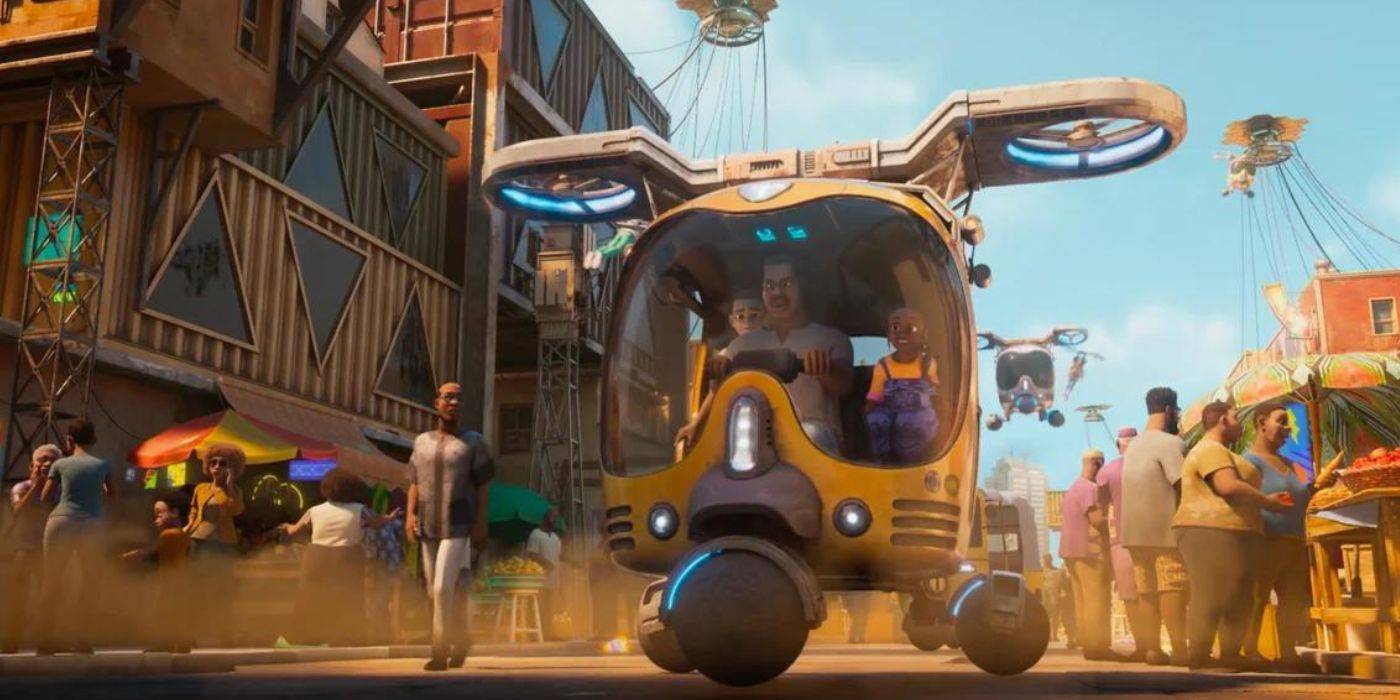
It was just really easy to keep all these elements of Lagos because Lagos kind of already provided all the crazy things. We didn't have to think of too many things. We are just like, how would this look 100 years from now? So if the tech exists 100 years from now, and rich people could afford cars that could fly over the traffic, then that's why we have flying cars because of Lagos traffic. They sell things to people in traffic, so how are they going to sell if the car is up in the air? Why don't we have drones so they can still reach the cars in the air and sell? All those things are taken from real-life Lagos and just exaggerated.
Breaking Down The World & Characters Of Iwájú

Hamid, can you discuss the challenge of fusing Lagos traditions with futurism and creating this beautiful cultural tapestry?
Hamid Ibrahim: Yeah. It wasn't much of a challenge. It was a lot of fun actually, because the way I approached creating that Iwájú world, like the Lagos world, I was very specific about making sure it's grown technology. So it's technology that would exist inside Lagos, because I wanted to preserve the soul of Lagos.
When you watch the show, you feel Lagos as well. Tolu gave the example of the cars. And the reason we have flying cars in this show is because of that versus it being like it's a sci-fi chopper. Nothing that just exists for that reason actually exists inside this show. Everything serves the architecture of the world building in here. So it was pretty much, there was no challenge in kind of merging the two. Rather, it was more like, okay, this is real-life Nigeria. He gave you the example of the car and the traffic and the flying [drones].
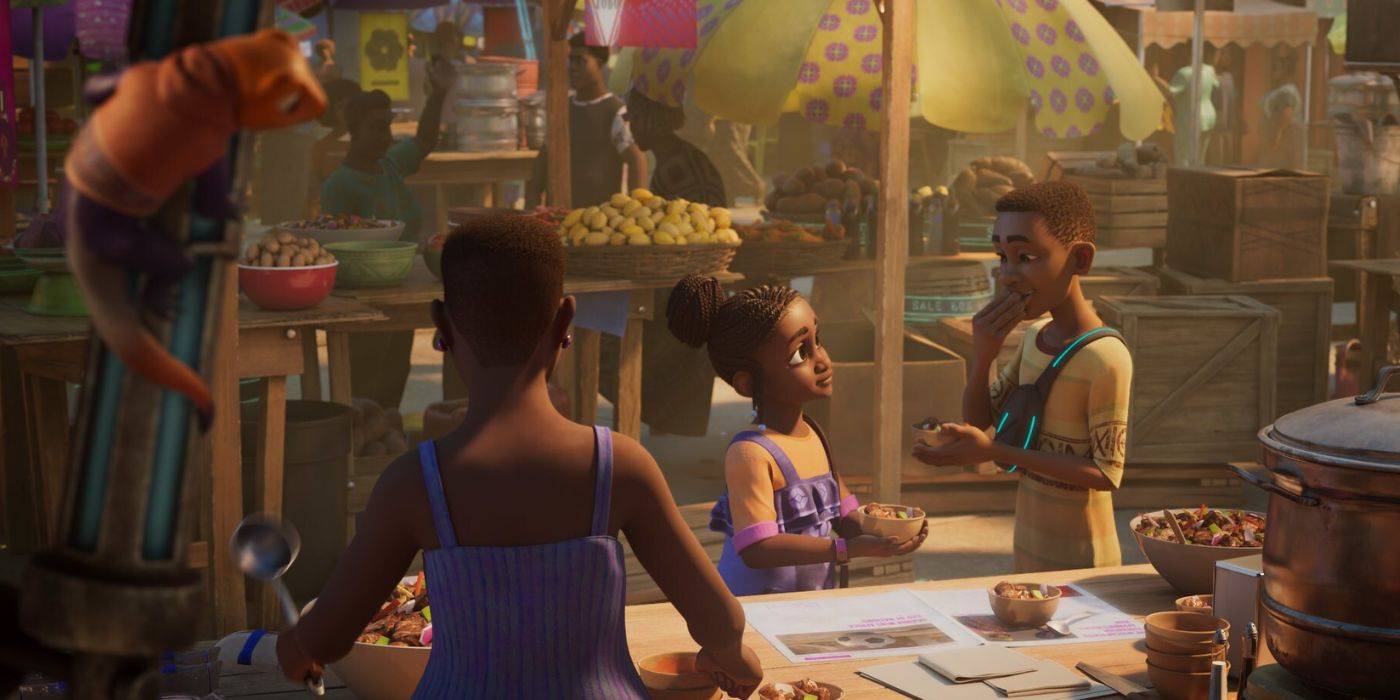
But on the cars themselves, they have spherical wheels because when you're in Legos, people drive like crazy. And the wheel are spherical because that was never able to navigate better. But then if you go in the market scenes, if you look in there, you'll notice that people are carrying things on their head, and there are multiple layers. In real life, people do carry things on their head to sell. But in our world, we give them an exoskeleton so they can carry even more things all the way up, which are heavier, and they can do that a bit more efficiently. Every single element of tech here, apart from two, were kind of grown straight from actual Lagos. So there was no challenge in merging. It was more like, “How do we make this believable world have the soul of Lagos, Nigeria?”
The only new things I would say, which were just out of the blue, would be the paper screens. So you'll notice in the mainland specifically, you'll see a little of paper screens on the ground, which kind of give a flavor and make it look very beautiful. I created that because I wanted us to have something that was very, very new, which would only be in Iwájú. And that's something that's only Iwájú in terms of a futuristic setting, because a lot of things have been played around. People have seen the kind of laser blasting guns and everything like that. I wanted something that would be like, okay, oh, paper screens. Oh, like you watch you and they're cheap. Everybody uses them, they're everywhere.
And if you have a keen eye, this is an example I'll give you in terms of growing the world. When Kole is with the mom, you can see the way they lit the room. There's actually a bag and it's filled with paper screens and a bottle filled with paper screens, because the paper screens are cheaper than paraffin and light. That's evolved into kind of fitting into this wall. So they just collected the paper screens, ball them up when they see that power inside them and they put them inside a bag and just hung them up. And that's absolutely unique. You won't see it anywhere in any sci-fi world.
Ziki, let's talk about our main characters for a second. I love the relationship that we see between Tola and her father Tunde throughout the course of the series. Can you talk to me about their dynamic through the series and how we see it kind of grow? And also, Tunde's journey of connecting with his past?
Olufikayo "Ziki" Adeola: I'd be happy to. The relationship between Tola and Tunde, I think, is a relationship that the vast majority of Nigerians from my generation and probably younger can identify with. Because oftentimes, Nigerian parents can be strict, they can be very hard on their children. We know it ultimately comes from a place of love, and I think that also shows in Tunde's character, but it creates this sense that you constantly have to prove yourself, and that's one of the primary emotional drivers of Tola's actions. And also, I think because of the culture, there's also a distance between parents and child. At least I find here in the west, parents and child can be a lot more chummy, so to speak, than you tend to find in Nigeria. That chasm is something Tola wants to breach in terms of also knowing about her father's past.
And so with Tunde, he also has experienced a lot of hardship in his past. And that actually drives his behavior because part of why it's hard on his daughter is because he had to work hella hard to actually get to where he is. And so he thinks that's the only way to continue to maintain his prosperity. And so he is trying to impart that worldview onto Tola. But in doing so, he sort of completely lost touch with where he's come from. And so I think as they both journey together, Tola helps to remind Tunde that, yes, of course it's okay to work hard, but that's not the only thing that's important in life. Family and relationships are important, and having empathy for others is also important. And I think similarly as well, Tola also learns that her father does come from a good place in the sense that he loves her. And responsibility is important because she is irresponsible, and that's part of what drives her into trouble, and that's why she grows. That's part of why she grows as a character as she learns these things.
Where The Future Lies For Iwájú

I think that this series lends itself so well to other mediums like a video game. And I know that Tolu, you're into video games. Could you see this becoming a major console system?
Toluwalakin Olowofoyeku: Totally. I would love the opportunity to do more games set in this world. Because we've already done one, it's launching on the same day as the series. It's called Iwájú: Rising Chef. And it's a cooking game for Android and iOS. You must have noticed the focus on food in the series. So we dive even deeper into that. We dive even deeper into the game because now you get to experience a lot of different Nigerian meals. But yeah, I agree with you. I hope somebody somewhere is listening. I think people want more Iwájú video games.
Star Wars: Visions told different Star Wars tales from animation studios from around the world. Is that something that you guys would be interested in doing, or have you all guys already started cooking up ideas for Lucasfilm or anything like that?
Hamid Ibrahim: Not specifically for Lucasfilm, but as a company, Kugali has a very bold vision and we're definitely driving to doing bigger and better things. As I say, our company ethos, it can be summed up to an acronym, EIQE. E is generally growing the entire creative economy of Africa. I is for innovation, i.e. this show itself, right? It's the first time Disney is doing something like this with anybody in the world, and we'd like to lead versus follow. And then Q is high-quality storytelling.
As long as we can hit those marks and keep it as authentic as possible to the African experience, we're willing to do anything we can and tell as many stories as we can so the world can enjoy these stories. Because these stories, not only is it good for Africa itself, but adding a new kind of story to all the stories that exist out there, I think it solves the general storytelling kind of world in a bigger way.
About Iwájú


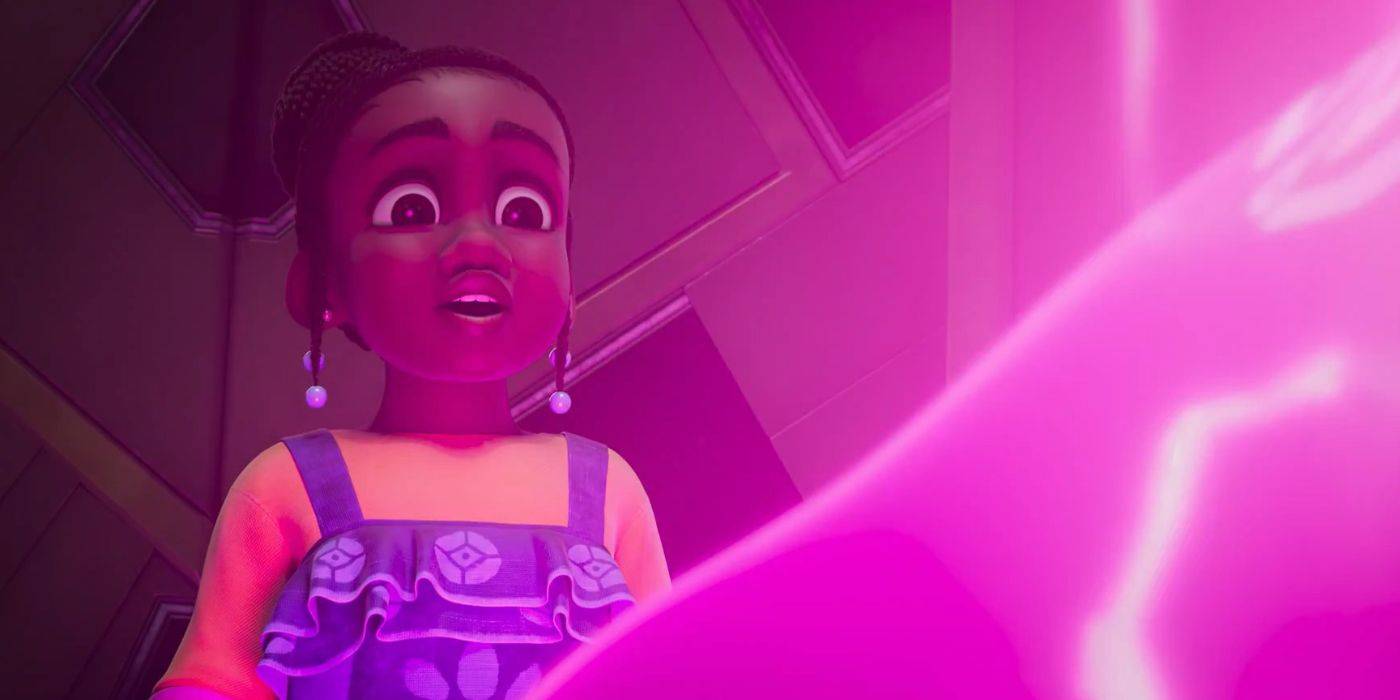
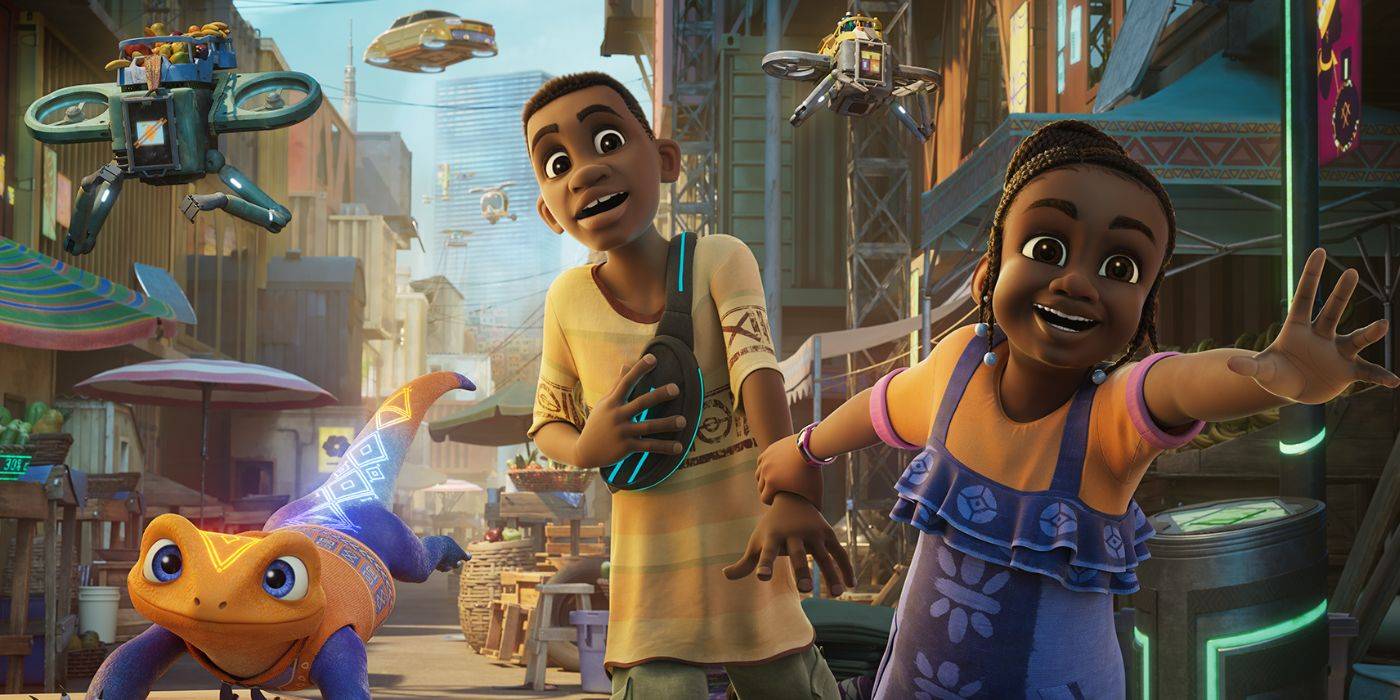
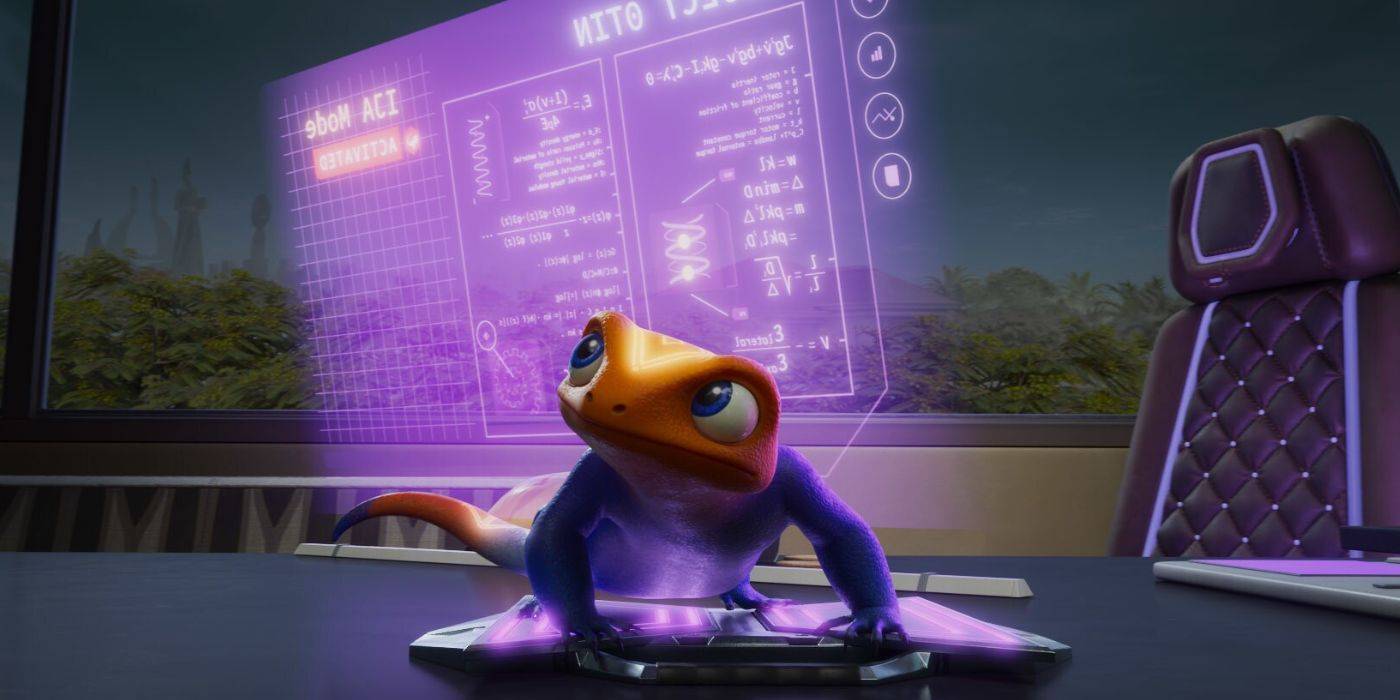

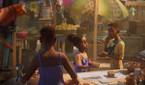
In a first-of-its-kind collaboration, Walt Disney Animation Studios teams up with Pan-African comic book entertainment company, Kugali, for an original animated series set in a futuristic Lagos, Nigeria. The exciting coming-of-age story follows Tola, a young girl from the wealthy island, and her best friend, Kole, a self-taught tech expert, as they discover the secrets and dangers hidden in their different worlds. Kugali filmmakers— including director Olufikayo Ziki Adeola, production designer Hamid Ibrahim and cultural consultant Toluwalakin Olowofoyeku—take viewers on a unique journey into the world of “Iwájú,” bursting with unique visual elements and technological advancements inspired by the spirit of Lagos.
All episodes of Iwájú are now available to stream on Disney+.
Source: Screen Rant Plus


