


Adapting beloved books into live-action films or television series has always been one of the most difficult endeavors in the entertainment industry. Translating the depth, world, and characters from page to screen is not an easy feat. While TV shows like Game of Thrones (the first five seasons) and films like Peter Jackson's The Lord of the Rings trilogy have done an impeccable job of bringing their source material to life, others mishandle their literary counterparts, resulting in stories that feel like hollow echoes of their inspiration.
The reasons adaptations fail are as varied as the stories themselves. Some novels are particularly dense, with sprawling narratives that encompass different elements. As such, filmmakers and TV show creators attempt to condense these stories to fit a runtime, an endeavor that rarely works. Other times, the source material's core appeal is misunderstood, resulting in a film or series that replaces nuanced themes with generic plots.
While taking creative liberties in page-to-screen adaptations is important, there are times when filmmakers take this too far, alienating devoted readers and distorting the story. At the same time, copying books scene by scene without considering the narrative consequences can also backfire, resulting in lifeless storytelling that fails to capture the spirit of the original work.
The School For Good And Evil (2022)
Based On The School For Good And Evil By Soman Chainani

Netflix’s adaptation of The School for Good and Evil failed to do its literary inspiration justice. Despite boasting a star-studded cast that included Charlize Theron, Michelle Yeoh, and Kerry Washington, the Netflix film suffered from pacing issues and terrible dialogue. Sure, the costumes were great, but the movie missed the essence of what made the original novel special.
Some changes to the source material, such as combining Rafal’s plans to defeat Good, were baffling, given that the events unfold gradually in the books. Since the movie ended on a cliffhanger, it begs the question of how his story would be handled if a sequel were ever made.
The film adaptation also simplifies key factors of Sophie’s descent into evil. In the film, when her hair is cut, she simply cries about it and goes on with her day. In the novel, she commits her first murderous evil act. By watering down Sophie and rushing her key arcs, the film lost the depth and originality that made The School for Good and Evil such a standout in the first place.
Shadowhunters (2016-2019)
Based On The Mortal Instruments Series By Cassandra Clare

Initially, Cassandra Clare’s Mortal Instruments series was adapted into a movie that many critics and audiences disliked. Fortunately, the author’s story was given a second chance to correct the film’s mistake in Freeform's 2016 TV show, Shadowhunters. Although the Shadowhunters series fared much better than the movie, it wasn’t a perfect adaptation.
The TV show, as expected, deviated greatly from the source material, which allowed it to explore avenues that were not possible in the film. However, changes such as the characters' ages somewhat distorted Clare’s work because The Mortal Instruments books are a coming-of-age story. With Clary being 18 instead of 15 as she is in the books, audiences lost the opportunity to see her grow. Thankfully, Shadowhunters did improve from its first season's bad CGI and questionable dialogue.
Dinotopia (2002-2003)
Based On Dinotopia By James Gurney

Based on the book by James Gurney, Dinotopia was initially adapted into a three-episode miniseries, which received critical and audience acclaim and won an Emmy Award for Outstanding Special Visual Effects for a Miniseries, Movie, or Special. Following the limited series’ success, ABC commissioned a TV show that served as a sequel.
Whereas Dinotopia's miniseries was a smash hit, the TV show wasn't as lucky. Surprisingly, none of the limited series' cast returned to star in the TV show, a decision widely seen as detrimental to the sequel's success. The ABC show also swapped the utopia depicted in Gurney’s graphic novels for one filled with unnecessary conflict, making it feel like a hollow interpretation of the source material.
The Golden Compass (2007)
Based On The Golden Compass/Northern Lights By Philip Pullman

The Golden Compass is one of the most frequently cited examples of a big-budget adaptation that missed the essence of its source material. Philip Pullman’s His Dark Materials saga is one of the most intriguing works in the genre, with a dense story and a staggeringly complex world. The movie, however, completely missed the point of Pullman’s books.
HBO and BBC's three-season TV series His Dark Materials (2019-2022) is a much more faithful adaptation of Philip Pullman's famous original trilogy.
In the novels, Pullman heavily criticized organized religion. The movie opted for a more straightforward good-versus-evil storyline instead of fully exploring one of the source material’s core themes. Perhaps one of the biggest mistakes the film adaptation of The Golden Compass made, however, was the ending. Of course, having different conclusions in movies and TV shows is commonplace; still, these changes should only be made if they add something important to the story, rather than being wholly unnecessary.
The Dresden Files (2007-2008)
Based On The Dresden Files Books By Jim Butcher
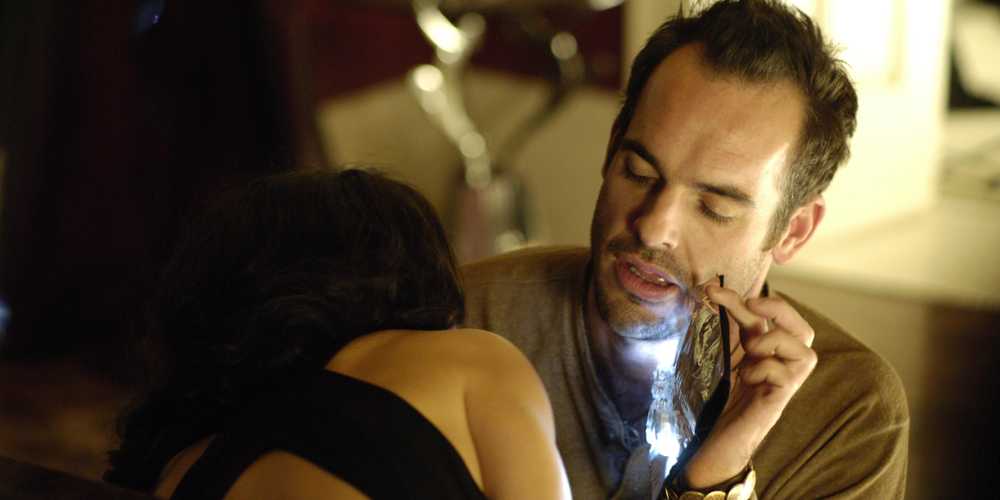
The Dresden Files is one of those fantasy shows that had the opportunity to be one of the best series in the genre. However, the series made changes to Jim Butcher’s novels that were simply unacceptable. That’s not to say that the TV show was an utter failure. It had charm, a strong lead performance, and a fun tone. As an adaptation, however, it diverged so heavily from the books that it ended up feeling like a different story wearing the same name.
It never bodes well for a series when it drastically changes its lead character, but that's what happened in The Dresden Files. The titular character is socially awkward, broke, and an overworked wizard-detective in the novel, whereas the TV show makes him more relaxed and less destructive. These differences aren’t world-shattering, but they made the series feel less like a noir detective story.
Percy Jackson And The Olympians: The Lightning Thief (2010)
Based On The Percy Jackson And The Olympians Books By Rick Riordan

When Percy Jackson and the Olympians: The Lightning Thief isn’t compared to its literary counterpart, it holds up as a decent enough adventure flick. The cracks begin to show when the film is seen for what it is: a weak adaptation that alters core themes and characters of Rick Riordan’s work. One of the biggest criticisms rightfully aimed at The Lightning Thief is how it aged the story's lead trio.
Disney+'s Percy Jackson and the Olympians series is a much stronger adaptation of Riordan's work; the author is also directly involved as a co-creator. Season 3 is in the works now.
The Percy Jackson novels begin when Percy and Annabeth are 11 or 12 years old. The movie, however, turned them into full-fledged teenagers. This change fundamentally altered their characters, because it meant that storylines like Percy and Annabeth’s romance, which were supposed to develop organically, were rushed. The movie also toned down Percy's sarcasm and impulsivity, core aspects of his personality in the books.
The Shannara Chronicles (2016-2017)
Based On The Shannara Books By Terry Brooks

Terry Brooks' Shannara novels are not as famous as some other novels in the genre. However, they are still decent and have a unique setting. The first entry in the Shannara series leaves a lot to be desired, but the second novel, The Elfstones of Shannara, is much better. Understandably, MTV’s adaptation of Brooks’ work used The Elfstones as the primary inspiration for the TV series.
The main issue with the TV version of The Shannara Chronicles is that it misses the point of the books. Brooks' novel is an epic, adventurous fantasy tale. The series feels more like a modern YA-style story filled with typical teenage drama. The complex history of the Four Lands, the consequences of the Great Wars, and the deeper political structures of different races are substituted for a world that doesn’t even resemble Brooks’ post-apocalyptic fantasy.
Under The Dome (2013-2015)
Based On Under The Dome By Stephen King

Stephen King, one of the most prolific writers of our time, has had several of his literary works adapted for film and TV. Some of his novels, like The Outsider, inspired perfect adaptations, while CBS's Under the Dome completely missed the mark. Under the Dome changed far too much from the source material.
The biggest issue with the Under the Dome show is that it stretched the story far beyond what it was supposed to be. Although this presented an opportunity to explore realistic conflicts, the series failed to use this to improve the story. Even Stephen King himself had thoughts on this adaptation, stating that it went "entirely off the rails."
Earthsea (2004)
Based On The Earthsea Books By Ursula K. Le Guin

Ursula K. Le Guin's original Earthsea trilogy is one of the most brilliant fantasy sagas ever written. However, those who have only seen Syfy's 2004 limited series wouldn't be able to tell. At the time, the show was highly anticipated given the groundbreaking nature of its source material, but unfortunately, it didn’t live up to the audience's expectations.
Le Guin’s novels are intentionally calm, reflective, and slow-paced. The TV series turned into a run-of-the-mill story of good and evil. The show faced some major backlash when it aired and was accused of whitewashing, too, because it cast a white actor to play the role of a character who was canonically described as having "red-brown skin." Even Ursula K. Le Guin herself publicly criticized the adaptation, noting that it failed to understand the spirit and intent of her books (via Slate).
The Wheel Of Time (2021-2025)
Based On The Wheel Of Time Books By Robert Jordan

Based on Robert Jordan's (and Brandon Sanderson's) 15-book series, Prime Video's The Wheel of Time is considered a flawed adaptation because of the way it compresses the source material. Jordan’s story unfolds gradually over thousands of pages, yet the Prime Video fantasy series condenses major character arcs and plot points into eight episodes per season.
Prime Video canceled The Wheel of Time after three seasons.
Because the TV show tried to do too much too fast, several parts of Jordan’s world were not fully realized. For instance, the Aes Sedai hierarchy and Ajahs are introduced quickly without the same depth of political nuance, whereas The Wheel of Time books take time to lay out their intricate history. Prime's The Wheel of Time isn’t all bad; it's just uneven, because it prioritizes pacing and modern TV structure over the slow, intricate storytelling that made the original book series so compelling.
