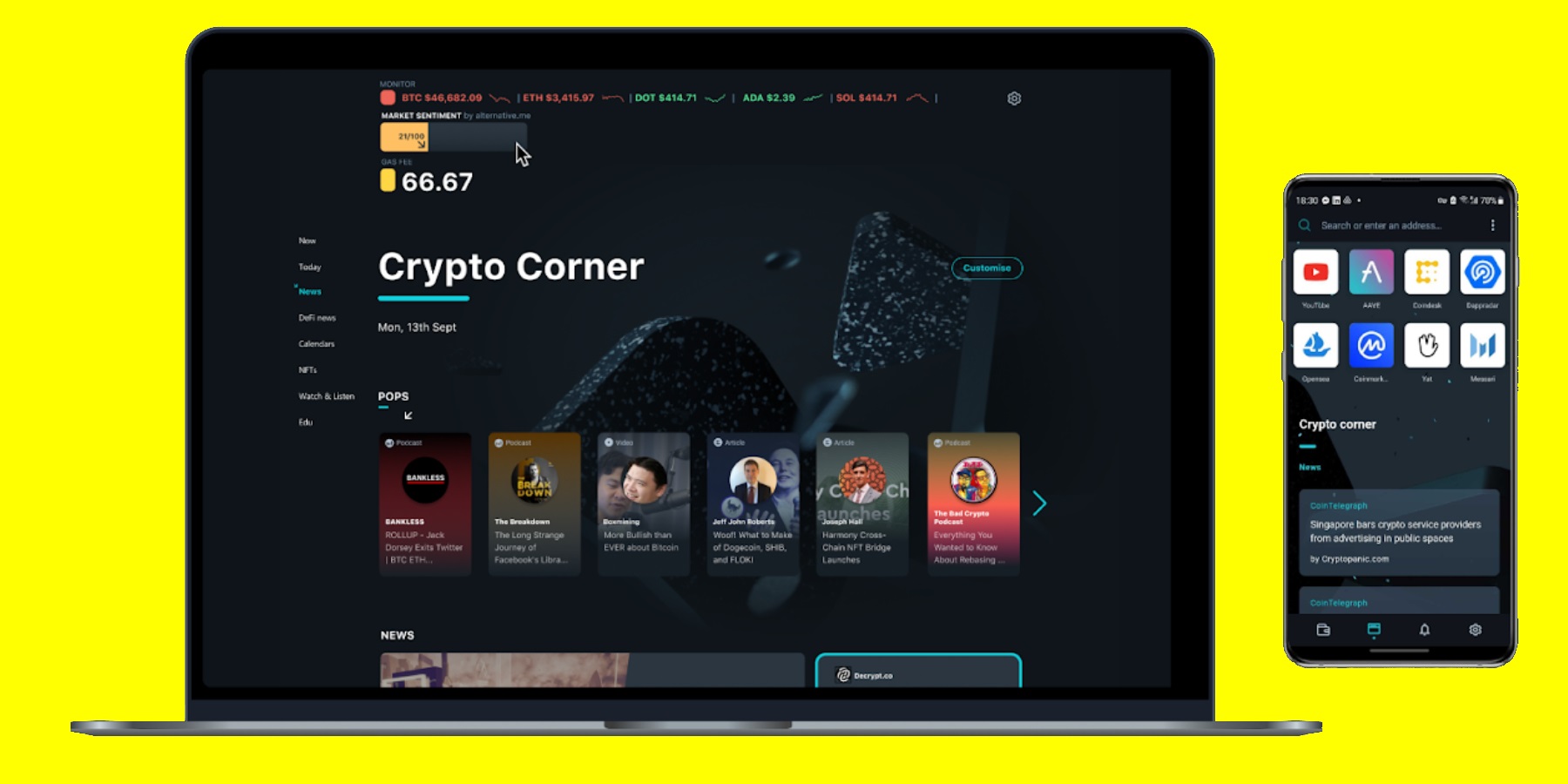
Opera has launched a Web3-focused internet browser for crypto enthusiasts that comes with an integrated crypto wallet and is designed to work with decentralized apps. The current internet infrastructure is said to be Web 2.0, a universe of interactive websites like Facebook and YouTube where content generated by users is hosted. However, these platforms are owned by rich corporations, and the content-creating user has no stake in them, even though they can make money off their content.
Web3 aims to move the entire internet infrastructure to the blockchain, the underlying technology for cryptocurrencies like Bitcoin and Ethereum. The core idea is to migrate online services to distributed networks of computers that are not owned by a single entity. Gavin Wood, the co-founder of Ethereum and who also coined the term Web3, previously summed it up as a “secure social operating system.” Or as Web3 evangelists preach, a democratized internet free from corporate control. The technology is still in its infancy, and even the likes of the “Technoking” Elon Musk and Twitter’s ex-CEO Jack Dorsey sound skeptical about it. Opera, on other hand, appears to be quite sold on the idea.
The maker of the eponymous Opera browser has announced the Crypto Browser Project, a web browser for mobiles, Windows, and Mac ecosystems. The company is calling it a dedicated Web3 browser and claims that it serves the needs of blockchain enthusiasts with a browsing experience tailored for them. To that end, it will provide deeper integration for decentralized apps. The browser has a dedicated Crypto Corner that serves everything from the latest cryptocurrency news and industry event alerts to educational content and community recommendations. However, that’s just scratching the surface of Opera’s Web3-focused browser.
A Browser That Means Business

The Opera Crypto Browser also comes with a native non-custodial crypto wallet, an important aspect of the crypto world. A custodial wallet is one in which the private keys for sending or receiving crypto coins are managed by a third-party or service provider. That means a third-party has total control over a person's funds, and they only authorizes transactions. A non-custodial wallet puts the security keys in the hands of the user, which means they also have full control over their crypto holdings. As Opera's new Web3-focused browser offers a native non-custodial wallet, users can access their crypto funds and sign-in to decentralized apps from within the browser. No third-party software or extension is needed.
Opera’s crypto browser also has a secure self-monitoring clipboard that will let users safely copy-paste sensitive information. The company is also porting over a bunch of features from its regular web browser, such as a native one-click free VPN, in-built ad-blocker, and automatic tracker disabling, among others. For the unaware, tracking user web activity and collecting that data is a huge business for ad clients. Facebook offers one of the most widely used tracking tools called Facebook Pixel, and its use has been documented comprehensively on multiple occasions in the past. Opera’s Crypto Browser is now available to download as an open beta on Windows, Mac, and Android, while an iOS version will be released in the coming weeks.
Source: Opera