


Charles M. Schulz spent nearly half a century proving that a newspaper comic strip could be hilarious, thoughtful, and surprisingly profound all at once. While Peanuts introduced unforgettable characters like Charlie Brown, Lucy, Linus, and Woodstock, no member of the gang evolved more dramatically than Snoopy. What began as an ordinary beagle gradually turned into one of pop culture's most imaginative characters, capable of becoming anything from a World War I fighter pilot to a bestselling novelist, all without ever leaving the roof of his doghouse.
That imagination is exactly why so many Snoopy strips remain timeless. Schulz rarely relied on elaborate setups or lengthy dialogue. Instead, he packed memorable jokes, relatable emotions, and subtle observations into just a few panels. Decades after they first appeared in newspapers, these seven classic Snoopy comics still showcase why Peanuts is still one of the greatest comic strips ever created.
7 Snoopy's Best Response Was Simply Ignoring Lucy

Lucy Van Pelt built much of her reputation on telling everyone exactly what she thought, whether they wanted to hear it or not. She challenged Charlie Brown's confidence, questioned Linus' beliefs, and rarely passed up an opportunity to remind someone of their shortcomings. In one unforgettable Snoopy strip, she turns her attention to the beagle while he peacefully naps atop his doghouse, deciding he needs an unexpected lesson about his place in the universe.
Lucy bluntly informs Snoopy that he is nothing more than a tiny, insignificant speck in an unimaginably large cosmos. The speech sounds like something designed to send Charlie Brown spiraling into another crisis of confidence. Instead, Snoopy barely acknowledges her remarks. He opens an eye, listens for a moment, and quietly settles back into his nap as though nothing worth discussing had been said.
That simple reaction transforms the entire comic. Rather than trying to outsmart Lucy or argue with her, Snoopy wins by refusing to participate at all. Schulz turns what could have been a gloomy philosophical conversation into a perfect visual joke, proving that sometimes the funniest response is no response whatsoever. The strip also highlights one of Snoopy's greatest strengths: he rarely lets someone else's negativity interfere with his own peace of mind.
6 Snoopy's Funniest Identity Crisis Still Works Today

One of the funniest recurring aspects of Snoopy's personality is that he rarely sees himself as an ordinary dog. He walks on two legs, writes novels on a typewriter, argues over dinner plans, and imagines careers that stretch far beyond anything expected of a household pet. That perspective leads directly to one of Peanuts' cleverest punchlines when Snoopy considers entering a dog show.
Rather than worrying about his appearance or his chances of winning, Snoopy immediately dismisses the idea because, in his mind, he doesn't own a dog. The logic is absurd to readers but perfectly reasonable to him. Since he views himself as the human participant, entering a competition without a canine companion suddenly seems impossible.
Schulz's joke works because it never explains itself. Readers already understand Snoopy's fantasy life, allowing the comic to trust them to connect the dots. It's also a surprisingly insightful look at self-perception. Snoopy has become so committed to his imaginary identity that reality barely enters the equation. Few comic strips have captured that level of character consistency while still delivering such a strong laugh in only a handful of panels.
5 Snoopy's Most Dramatic Performance Was Over a Simple Pat

Charlie Brown's affection for Snoopy has always been genuine, but it isn't always appreciated. One memorable early Peanuts strip begins with nothing more than Charlie Brown reaching down to pet his beloved dog. It's an innocent gesture that quickly turns into one of Snoopy's funniest displays of theatrical exaggeration.
Instead of happily accepting the attention, Snoopy dramatically slumps over as though the brief pat has completely drained his strength. His exaggerated expression immediately convinces Charlie Brown that something has gone terribly wrong. Horrified, Charlie Brown slowly walks away believing he has somehow injured the dog he cares about more than anything else.
Much of the humor comes from Schulz's expressive artwork rather than the dialogue itself. Snoopy's exaggerated body language tells readers he's putting on a performance, while Charlie Brown's devastated reaction shows just how easily guilt overwhelms him. The strip also comes from an interesting period in Peanuts history, before Snoopy's thoughts were consistently presented through thought bubbles. Even then, his mischievous personality was already unmistakable.
4 The Flying Ace Adventure That Changed Snoopy Forever

Among Snoopy's many imaginary identities, none became more iconic than the World War I Flying Ace. Perched on top of his doghouse, which transformed into a Sopwith Camel fighter plane in his imagination, Snoopy launched countless missions against his legendary enemy, the Red Baron. Those adventures became some of the defining stories of Peanuts and expanded what readers expected from a newspaper comic strip.
Charles Schulz drew inspiration from his own military experience and lifelong fascination with early aviation history. Having served in the U.S. Army during World War II, he understood both the excitement and isolation associated with military service. Rather than creating a realistic war story, he filtered those ideas through Snoopy's endlessly creative imagination, resulting in adventures that balanced humor, heroism, and loneliness.
The Flying Ace storyline eventually grew beyond the comics themselves. It became one of the highlights of It's the Great Pumpkin, Charlie Brown, introducing generations of television viewers to Snoopy's airborne fantasies. Even decades later, images of Snoopy wearing flying goggles and a scarf remain among the most recognizable visuals in the franchise, proving just how influential those strips became.
3 Snoopy's Brother Proved Peanuts Could Be Wonderfully Absurd

Snoopy may have become the undisputed star of Peanuts, but Charles M. Schulz occasionally shifted the spotlight to the beagle's equally memorable siblings. None stood out more than Spike, the thinnest and most eccentric member of the family. Living alone in the desert, Spike occupied a world that felt completely different from Charlie Brown's suburban neighborhood, giving Schulz an excuse to tell jokes that leaned into surreal, offbeat humor.
One of Spike's funniest appearances revolves around his only regular companion, a towering cactus that he treats like an old friend. In the strip, Spike casually asks the cactus to pick up a pizza if it happens to go into town. After making the impossible request, he pauses to reflect on his situation, admitting to himself that he leads a "really, really, really, really stupid life." It's a wonderfully self-aware punchline that acknowledges the ridiculousness without spoiling the joke.
Spike never appeared as frequently as Snoopy, but that's part of what made his comics so memorable. Every visit to the desert felt unpredictable, with Schulz embracing strange ideas that wouldn't have fit elsewhere in Peanuts. Spike's loneliness, odd optimism, and willingness to hold conversations with a cactus combined to create some of the strip's most delightfully bizarre moments, proving Schulz could make readers laugh even in the quietest settings.
2 Snoopy's Practical Approach To Love Never Gets Old

Romance was another recurring part of Snoopy's imagination, especially when his thoughts turned to the elegant poodle Fifi. Unlike Charlie Brown's endless struggles with the Little Red-Haired Girl, Snoopy often approached love with surprising confidence. One particularly clever strip begins with him sitting down to write what appears to be a heartfelt love letter before taking a completely unexpected direction.
Snoopy opens by explaining that it's impossible to describe just how much he loves the recipient. Readers naturally expect an emotional declaration to follow, but instead he reaches a different conclusion altogether. If the feeling truly can't be put into words, he reasons, there's little point in trying. The letter effectively ends before it ever becomes the sweeping romantic confession audiences anticipate.
The humor comes from Schulz flipping a familiar storytelling convention on its head. Love letters usually become increasingly dramatic as they continue, but Snoopy's unwavering commitment to literal logic produces a far funnier outcome. It's a perfect example of how Schulz found comedy in everyday situations by allowing his characters to think in unexpected ways. Even readers who've struggled to express their own feelings can appreciate the truth hidden beneath the joke.
1 Five Simple Words That Defined Peanuts

Few comic strips have produced a line as enduring as "Happiness is a warm puppy." Originally published as a daily Peanuts strip before inspiring the bestselling 1962 book of the same name, the phrase quickly became one of Charles Schulz's most recognizable creations. More than sixty years later, it remains closely associated with both Snoopy and the series itself.
Part of its lasting appeal lies in its remarkable simplicity. Lucy, who often spends her time criticizing everyone around her, hugs Snoopy and quietly concludes that true happiness is simply holding a warm puppy. There's no elaborate joke or complicated setup—just a brief, sincere observation that instantly resonates with anyone who has experienced the comfort of spending time with a beloved pet.
The strip also captures what made Peanuts so special throughout its nearly fifty-year run. Schulz understood that life's biggest emotional moments often emerge from ordinary experiences rather than extraordinary events. Amid all the baseball losses, failed kites, and endless disappointments, he reminded readers that genuine happiness could still be found in life's smallest pleasures. That message has never stopped feeling relevant, which is why this simple Snoopy comic remains one of the most beloved newspaper strips ever published.
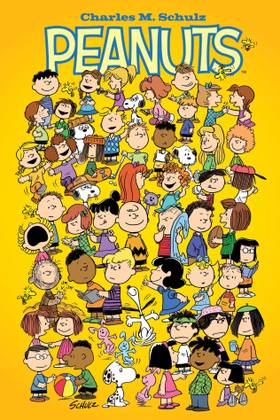
- TV Show(s)
- Peanuts, Peanuts, The Snoopy Show
- First Film
- A Boy Named Charlie Brown
- Cast
- Christopher Shea, Kathy Steinberg, Bill Melendez, Sally Dryer, Peter Robbins, Noah Schnapp, Hadley Belle Miller, Mariel Sheets, Lisa DeFaria, Venus Omega Schultheis
- Created by
- Charles M. Schulz
- Movie(s)
- A Boy Named Charlie Brown, Snoopy, Come Home, Race for Your Life, Charlie Brown, Bon Voyage, Charlie Brown (and Don't Come Back!), The Peanuts Movie
- Comic
- Peanuts
