


PlayStation was once on top of the world, but now, after a string of extremely poor decisions, it feels as if it may be on the decline. It is perhaps a little alarmist of me to assume as much, and perhaps the lack of wonder one experiences as they get increasingly older has a hand in my rather gloomy outlook, but we hear almost exclusively negative news when it comes to PlayStation and its surprising lack of exclusives. This era of PlayStation has been riddled with disappointments, enough to overshadow the few truly exceptional experiences that have been peppered throughout.
I recently wrote about how it is the end of an era for Xbox, and I stand by that claim. However, I feel as if much of the criticisms I levied at Xbox also apply to PlayStation, in large part thanks to the latter's constant mistakes and inability to offer a comprehensible plan for the future. It is time for this era of PlayStation to end, much like it is for Xbox, even if Sony is playing coy about what piece of hardware we'll get to enjoy after the PS5 finally dies.
It Is Time For The PS5 To Finally End
Sony Must Move On

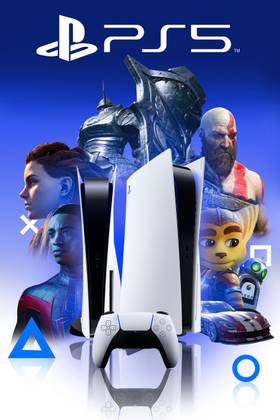
The PlayStation 5 era has, from the very start, been a mixed bag. Its launch lineup was made up of a live service title absolutely everyone has forgotten about and a Ratchet and Clank sequel that, while impressive technically, has left a resoundingly uninspiring legacy behind. Since then, there have been so few dedicated PS5 exclusives, in large part due to the heavy reliance on the PS4 in the console's early years, and an overabundance of remasters and remakes that no one asked for or wants.
That is generalizing a little - I for one thoroughly enjoyed the unfortunately failed Horizon Zero Dawn Remastered - but it is hard to point to a specific experience that warrants buying a PS5 exclusively. Even the handful of games on there are only worth it for those utterly dedicated to the brand, as, despite bagging Game of the Year, Astro Bot, for example, isn't worth shelling $400 for. Of course, there are some masterfully made first-party titles, but the majority of them are either on PS4, PC, or both, making the PS5 feel a tad redundant.
Sony announced several titles far too early - Marvel's Wolverine fans are being extremely patient - and then canceled several projects, many of which fell under its failed attempt at a live service push. Let's not forget the PS5 era saw the release and removal of Concord, PlayStation's $400 million disaster, within just two weeks. Furthermore, as if to make up for a lack of exclusives, the PS5 pumped out far too many remasters, including The Last of Us, The Last of Us Part 2, Horizon Zero Dawn, Marvel's Spider-Man, Ghost of Tsushima, and Until Dawn.
None of this is to say that the PS5 era has been an unmitigated disaster - the third-party support has helped significantly - nor that Sony has lost its touch, at least yet. Rather, it is clear that the PS5 was a failed experiment, a piece of hardware meant to house Sony's unbridled ambitions that were sadly never realized. Sony is learning its lesson and has had some success on the PS5, but it is clear that it is ready to move on to the next console and the next era, especially as it begins to copy Xbox.
Sony Has Begun Porting To Its Rivals
Helldivers May Just Be The Start

Much like Xbox, PlayStation is slowly moving towards porting its first-party titles to other platforms. Case in point is the PlayStation-produced Helldivers 2, the first PlayStation exclusive to be released on Xbox - even if it took a year. From initial figures, it is clear that this move was immensely successful as the game's player count skyrocketed post its Xbox launch. This success will almost certainly see PlayStation want to repeat it in the future, if only by porting its legacy titles like Marvel's Spider-Man and The Last of Us.
Sony is sitting on an enormous back catalog of games that could not only get a whole new life on a different console, but also generate an entire generation's worth of revenue by no longer being exclusives. It isn't as if people are buying the PS5 to play The Last of Us, as, if you really wanted to, you've likely played it and its sequel already - they're on PC as well. However, those who can't afford two consoles or just have a passing interest would finally be able to play it if Sony released these older titles onto Xbox.
It is also possible that smaller titles like the recently released LEGO Horizon Adventures may go multi-platform on day one. Regardless, we're entering a new era that could see the death of exclusives, at least as we know them today. It is unlikely that PlayStation will relinquish all of its exclusives, as they are the sole reason to buy its new consoles, but it will be hard to look at the success Xbox is having and not wish to copy that in the future. Either way, Sony needs to adjust its strategy moving into the PS6 era.
Sony Must Change Its Strategy
It Can't Rely On Remasters And Remakes

Sony's failed live service push will undoubtedly begin to wind down as it focuses both on its stronger, more financially reliable single-player narrative-driven offerings and a handful of quality live service titles that undergo far more rigorous testing than the likes of Concord. It will also likely reduce the number of remasters it pumps out, if only due to the failure of games like Until Dawn and Horizon Zero Dawn Remastered. Both of these moves would be a step in the right direction, especially if the PS6 is to have a longer-lasting legacy like the PS4.
Additionally, Sony needs to hone in on smaller, lower-budget titles that don't take as long to produce as the $300+ million games like Marvel's Spider-Man 2 and Wolverine. These not only provide more exclusives - and thus more reasons to buy a PS6 - but also help to keep PlayStation's numerous studios in business while flexing their creative muscles and putting out unique experiences. These games could also make use of the PS6's alleged handheld mode, much like how Switch 2 games take advantage of its unique functionalities.
Ultimately, more games, a reduced focus on high-risk experiences in the live-service genre, and fewer remasters will lead to a better experience for all. PlayStation took a gamble with the PS5, one that didn't pay off but was nevertheless an important lesson. Its failures should help influence the development of the PlayStation 6 as well as its future. It is time for Sony to abandon the PlayStation 5 and move on to greener pastures where it can return to what it does best.
- Brand
- Sony
- Original Release Date
- November 12, 2020
- Original MSRP (USD)
- $499, €499, £449, ¥49,980 (Base) / $399, €399, £359, ¥39,980 (Digital),
- Weight
- 4.5 kg (9.9 lb)
- Storage
- 825 GB NVMe SSD
- Operating System
- Orbis OS
