If you told someone that comedy legends Seth Rogen and Evan Goldberg would be involved in creating a dark and gory television show five years ago, you would probably be laughed at. No one could believe that Rogen and Goldberg could bring Preacher, a very controversial comic, to the small screen.
But they did. They brought on Breaking Bad writer Sam Catlin to help bring the show to life. Like with every adaptation, changes had to be made in order to tell a smooth story. When they approached Preacher writers Garth Ennis and Steve Dillion about adapting the story, they said that the whole comic series could probably be told in about 45 minutes. So they went over and approved all of the changes that the Catlin, Rogen, and Goldberg were going to make. Characters’ personalities were changed and certain events were added and erased. They were able to tell their own story without relying too much on the source material. However, to comic book readers, there were some changes that stood out more than anything else.
Here are the 15 biggest differences between the Preacher comics and television show
15. Cassidy's Introduction

Compared to how he’s introduced in the show, Cassidy’s introduction in the comics is pretty tame. When her hit-man job goes awry, Tulip desperately tries to find a getaway vehicle. She comes across Cassidy’s truck and threatens him at gunpoint to give it to her. Cassidy decides to reason with her and helps her get away. When they find themselves in Annville, they coincidentally bump into Jesse who had just blown up the church.
At the beginning of the television pilot, we see him as a bartender on a plane, cracking jokes with some high class businessmen. Suddenly, a bloodbath occurs when Cassidy discovers that the businessmen are actually vampire hunters who are out to kill him. After his bloody showdown, Cassidy finds himself working in Annville as a repairman (and a pretty bad one at that). He’s known as the village idiot who sleeps all day and steals the communion wine from the church.
Now, Cassidy and Tulip’s first meeting is more interesting. Trying to teach a sexist guy a lesson, Tulip breaks into one of the brothel’s rooms and throws him out of a window—only to find out it was Cassidy instead of her actual target. From there, they become friends only for Cassidy to fall for her shortly after. While Cassidy does eventually fall for Tulip in the graphic novel, the writers decided to speed up that process to conjure up a more tension between Jesse, Tulip, and Cassidy.
14. Carlos

Even though Odin Quincannon is the main villain of the first season, Carlos is the reason why Tulip came back to get Jesse in the first place. According to Tulip, he is a “rat bastard, money-stealin’, child-killin, life-ruinin’ son of a bitch.” Due to his jealousy of Jesse and Tulip’s happiness, he caused one of their bank robberies to go sour which, in turn, caused Tulip to miscarry her unborn child.
Tulip is dead set on getting her revenge while Jesse just wants to move on with his life. Even when Tulip serves Carlos up to him on a plate, Jesse just sets him free (only to brutally beat him up soon after). He’s merely a device to explain the tension between Jesse and Tulip and seemed about as interesting as the townspeople. Since Tulip and Jesse accidentally bump into each other in the comics, there was no reason to have someone like him exist.
Even though he was beaten senselessly in Annville, it is unknown whether or not he was still there when it exploded. He could very well come back anytime to get his own revenge on the couple.
13. Emily Woodrow

While most of the townspeople merely exist as background characters, the writers spend a good amount of time developing Emily Woodrow, Jesse’s number one helper with the church. She’s always pulling the extra legwork and is clearly more invested with gaining more attendees than Jesse is. Even though they never pursue any feelings, it’s clear that Emily is supposed to be one of the more moral romantic choices for Jesse. Compared to Tulip, she’s a proper, white woman who is more dedicated to God than anything else. She is constantly keeping the church afloat by running all of the errands while Jesse is in a drunken stupor.
With both of his troubled past and his moral present tugging at him, we see Jesse struggling to choose what life he really wants. Emily symbolizes the perfect family and home-life, while Tulip is the rugged bad girl. Even though there wasn’t much else to her character, the writers did a good job in trying to showcase Jesse’s religious struggle. While Emily tried to push him closer to God, his doubt soon took over, and his faith (along with herself) died in the process.
12. The Death of Annville

In the graphic novel, Annville’s presence only lasts a few pages before it gets completely obliterated by Genesis. It leaves Jesse with nothing to look back to and so he starts his road trip right away. Since Jesse was barely shown preaching, Catlin and Rogen wanted to expand on Annville’s arc to give more depth to his character and show his eventual downfall.
At the end of the season, Annville finally meets its tragic end, but not directly because of Genesis. Instead, it’s due to a methane leak at Odin Quincannon’s meat plant. Compared to a holy explosion, it may seem a bit out of nowhere, but it surprisingly works. For the past eight episodes, we’ve gotten to know this town and the odd individuals that inhabit it. Their tragic deaths are used to show Jesse’s selfishness with his power. If he didn’t involve himself in people’s lives, then none of this would have happened. But instead, his obsession with this higher power makes his neighbors go insane and meet their untimely death.
11. The Loss of Cassidy's Glasses

Okay, okay, this may seem like the most trivial nitpick, but for comic book readers, it’s a huge deal. Throughout the whole comic series, Cassidy never took off his glasses. At first, readers simply thought he had the bad boy stereotype going on, but they kept wondering what he was hiding under those shades. It wasn’t until the second to the last issue that we finally see what’s under his glasses: deep red eyes from years of substance abuse and witnessing terrible things. It’s a state of vulnerability for Cassidy and brings in the question: Is he a man or is he a monster?
Of course, on a television show, it’s intriguing to see Joseph Gilgun’s acting ability, but it would have been nice if the writers kept that little tidbit. It was one of the biggest recurring mysteries in the series and also ended up being heavily symbolic in the end. Regardless, the writers will certainly be able to cook something else up for Cassidy—especially with the existence of this vampire hunting organization.
10. Fiore and Deblanc's Introduction

Ennis created his version of Heaven with its own hierarchy of angels. He showcased the tension and conflict between the Seraphi and Adephi and how the latter feel under-appreciated even though they do most of the work. We saw this conflict mainly through Fiore and DeBlanc’s eyes. Jesse and Fiore and DeBlanc meet up a few times, but they never went down onto Earth to personally hunt for him.
The writers had a little more fun with Fiore and Deblanc in the show. In the pilot, they look like bounty hunters and possible villains, but they’re anything but. They’re oddly adorable with their empty threats and their attempt to understand humans and their culture.
They’re like the Kenny of Preacher, constantly getting run over by cars or shot in the face. Though, they always spawn back just moments later. The hilarious hotel fight scene in “Sundowner” brilliantly showcases their ability to clone back right after dying (and they kill each other to come back faster). They went from simple background characters to some of the best comic relief in the show.
9. Sheriff Root

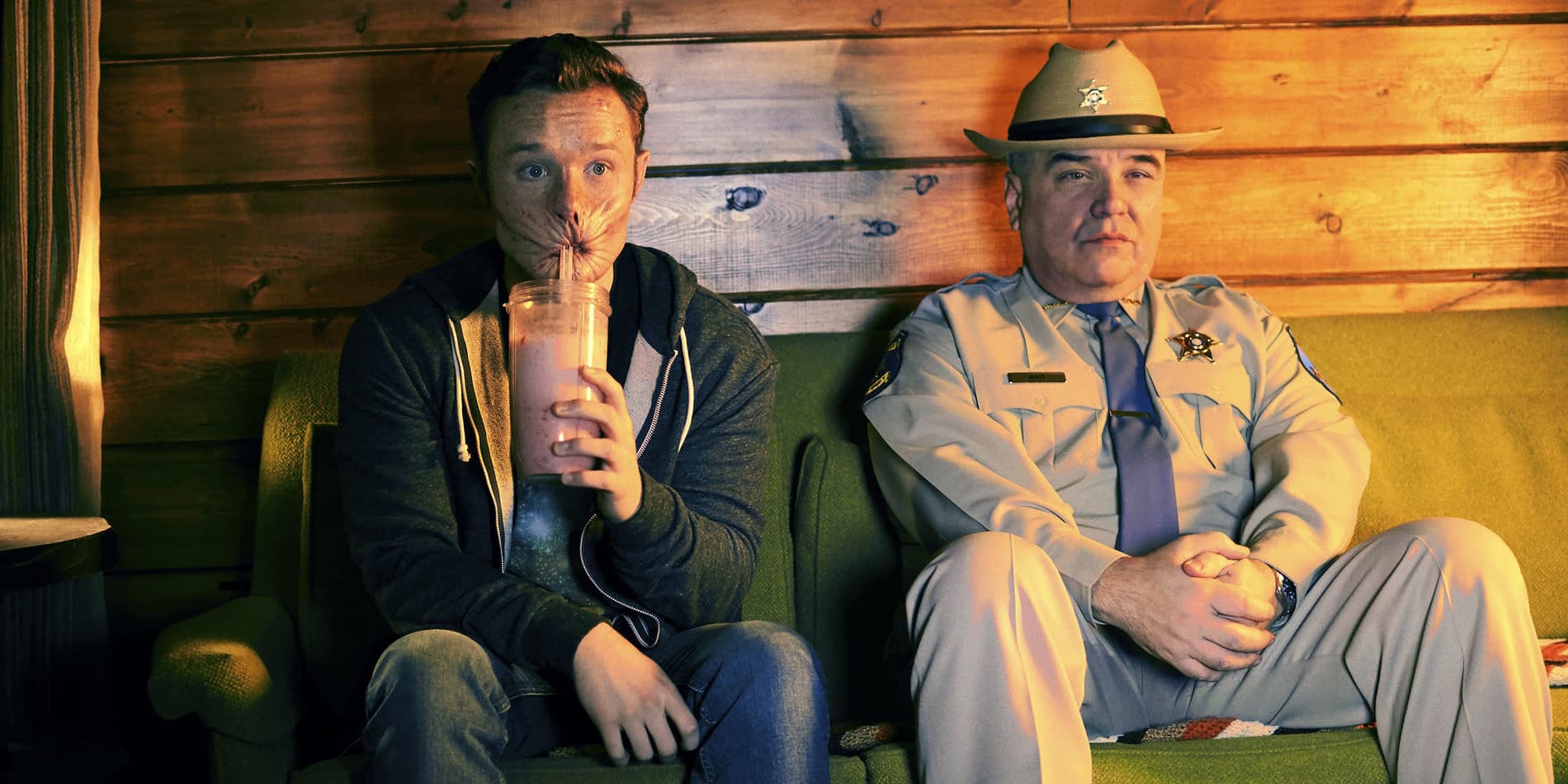
When Sheriff Root is first mentioned in the pilot, everyone was expecting the racist, homophobic cop who existed in the comics. However, the show version of Root is a bit more sympathetic. It’s obvious that he cares about this town and the people in it, and it’s hard not to feel sorry for him. One instance that showcases this is when he talks to Fiore and Deblanc about a missing child case. The quiver in his voice illustrates his own miserable time with his now-deformed child. His son, Eugene, committed a terrible crime and Root gets the brunt of the abuse. While, in the comics he treats his son like gum that is stuck under his shoe, he’s conflicted about him in the show. He wants to love and forgive him, but doesn’t know if he can.
Catlin’s decision to humanize him brought a whole different view to the table. While it was fun to see Root get his come-uppance in the comics, it was depressing to watch him juggle his job and his family life.
8. The People of Annville

Ennis doesn’t waste any time getting the story started in the graphic novel. Within the first few pages, Genesis makes its way into Jesse and causes an explosion, destroying all of Annville with it. From there, Jesse, Tulip, and Cassidy already begin their adventure, leaving Sheriff Root and The Saint of Killers to chase after them.
However, Rogen and Goldberg wanted to build up a deeper connection to Annville, so they created an entire community. Jesse spends the first season “saving” people such as Donnie, the domestic abuser, and Linus, the bus driver who has sexual urges for little girls. All of these characters have different personalities but all share one common trait: they are intimidated by Jesse. They think he is some holy prophet who is there to save them all, but it has quite the opposite effect. Jesse’s gift leaves them all insane and wondering where their real God is.
7. The Pilot's Opening Scene

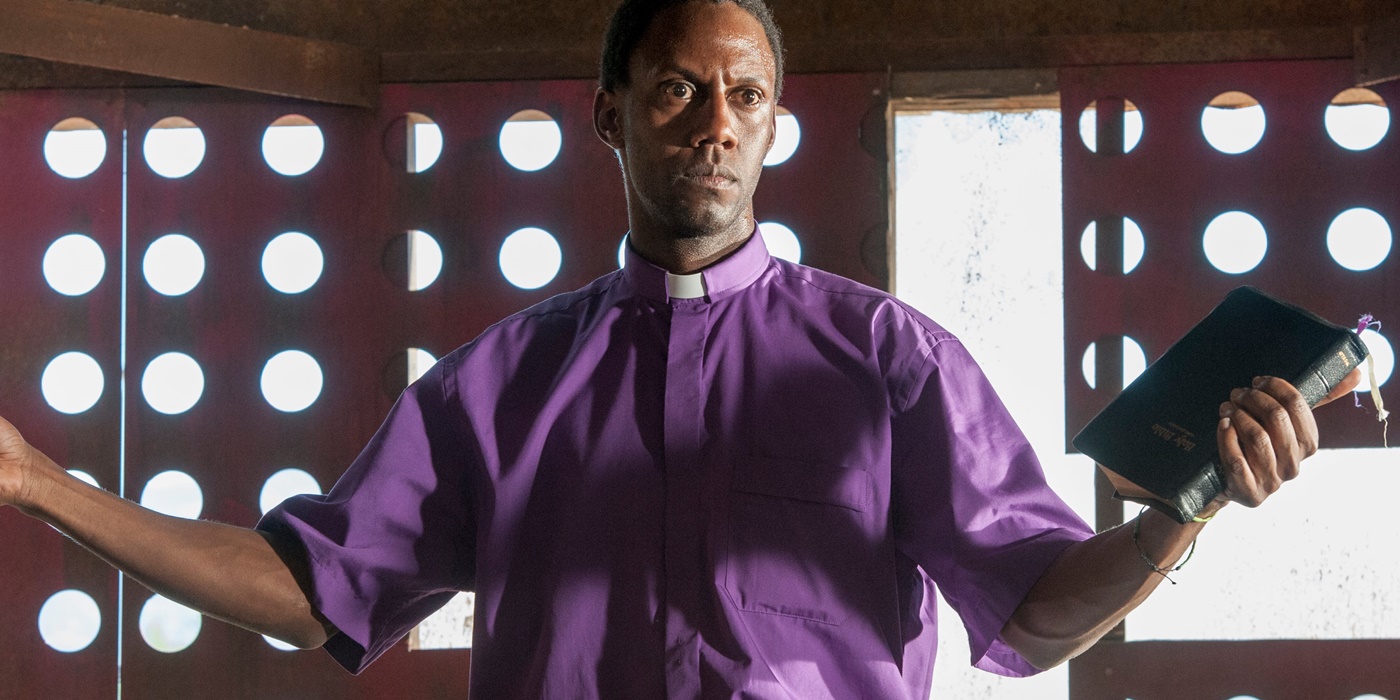
Catlin, Rogen, and Goldberg certainly know how to start a show off with a bang. The pilot starts off with Genesis headed towards Earth and finding its way into an African preacher during his sermon on the Book of Revelations. For a brief moment, Genesis inhabits this man’s body and he thinks he’s the new prophet-- until he violently explodes seconds later. Just from that scene alone, we know what we’re getting into with Preacher. It already proves that it’s going to be a mixture of comedy and horror, with no restraint on the blood and guts.
However, the writers decided to take it one step further. It’s heavily insinuated that Genesis tries inhabiting multiple religious individuals before settling on Jesse. Rogen and Catlin explained that they were thinking of exploring Judaism or Islam until they settled on Scientology—more specifically, on Tom Cruise. In episode 3, it’s casually mentioned on the news that Cruise had died from spontaneous combustion, spurring a shocking wave throughout the watchers. It was certainly a risky joke to take, but it proved that the writers weren’t afraid of any ramifications.
6. Tulip's Appearance and Personality

Before the show even aired, the casting of Ruth Negga for Tulip O’Hare was a big no-no for the racist comic book readers. The reason? Because she is black, while the comic version of Tulip was a white blonde girl. Readers keep groaning about how it wasn’t true to the comic material, and that AMC was going to ruin Preacher by going down the “PC” route. Thankfully, Negga is killing it as Tulip and is quickly making people’s top ten lists of kickass women in television.
Now, comic Tulip is quite the firecracker, but her personality is nothing compared to Negga’s portrayal of the character. She is impulsive and consistently tries to get Jesse to abandon his post at the church. In the comics, she wants nothing to do with him because she thought he abandoned her years back. Now, she’s destroying children’s art projects and demanding that Emily stay away from her “boyfriend.” But she’s not doing this because she’s some crazy ex-girlfriend. She wants Jesse to help her take revenge on the guy who ruined their relationship. So even though she seems angry and stubborn all the time, she’s doing it both for Jesse and her own specific sense of justice.