


Who doesn’t love a good grappling hook? Recent pixelated platformer Sanabi serves up swinging gameplay and cyberpunk style, with a surprisingly dense narrative that can't get out of its own way. There are some unquestionably good vibes to be had in just swinging and parkouring around gun-toting robots and bottomless pits, but the game’s script was in desperate need of another pass, resulting in constant pacing issues that intrude on the playable content.
The primary touchstone and inspiration for Sanabi must be 2019’s one-hit-death action masterpiece Katana Zero. As in that game, players take on the role of a nimble veteran embroiled in a heady plot full of sharp turns under the thunder of a persistent synthwave soundtrack, picking apart their fractured memory after forging a relationship with a mysterious young girl.
An introductory sequence satisfies two objectives: getting players used to the controls and setting up a devastating loss for the unnamed protagonist. Sometimes referred to as “the general,” he sets off on a infiltration mission of revenge into the vast cyberpunk metropolis known as Mago, run by an all-seeing corporation of the same name, a nightmarish mix of Amazon and Tesla. His only lead for the perpetrator of the crime is the mysterious word “Sanabi,” and his only weapon is a massive grappling hook prosthetic known as the “chain arm.”
Visual Do’s & Don’ts


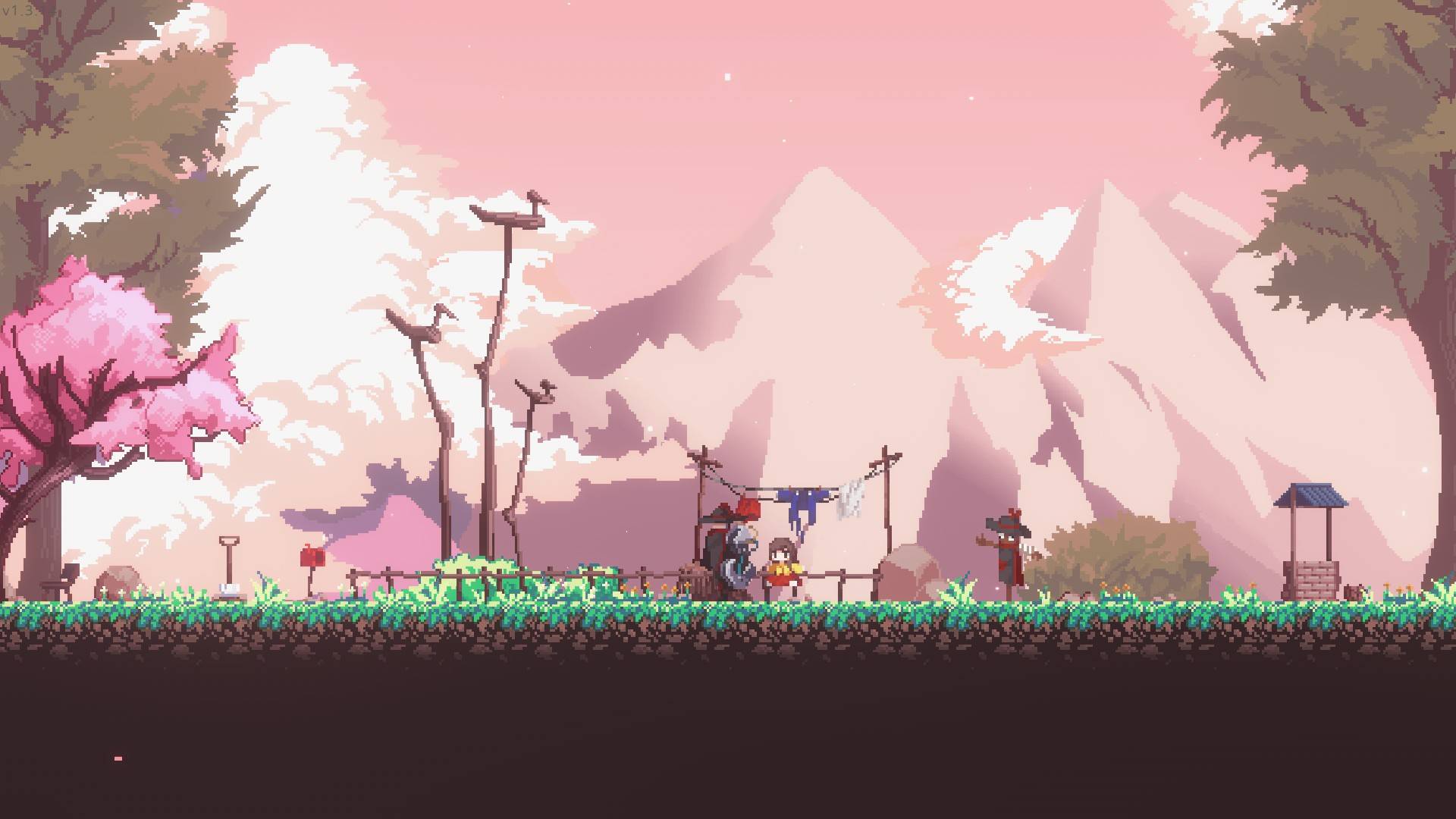
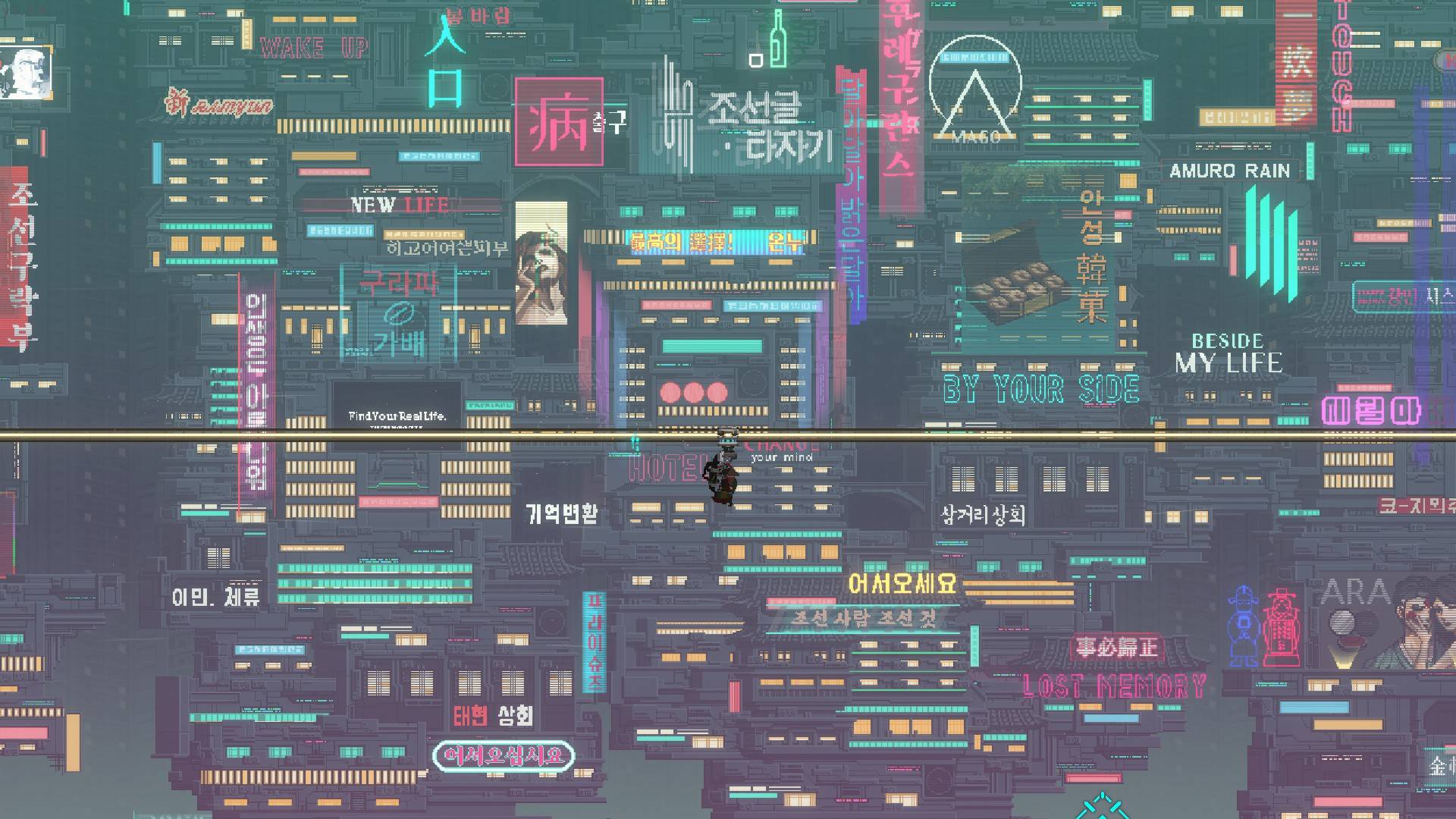
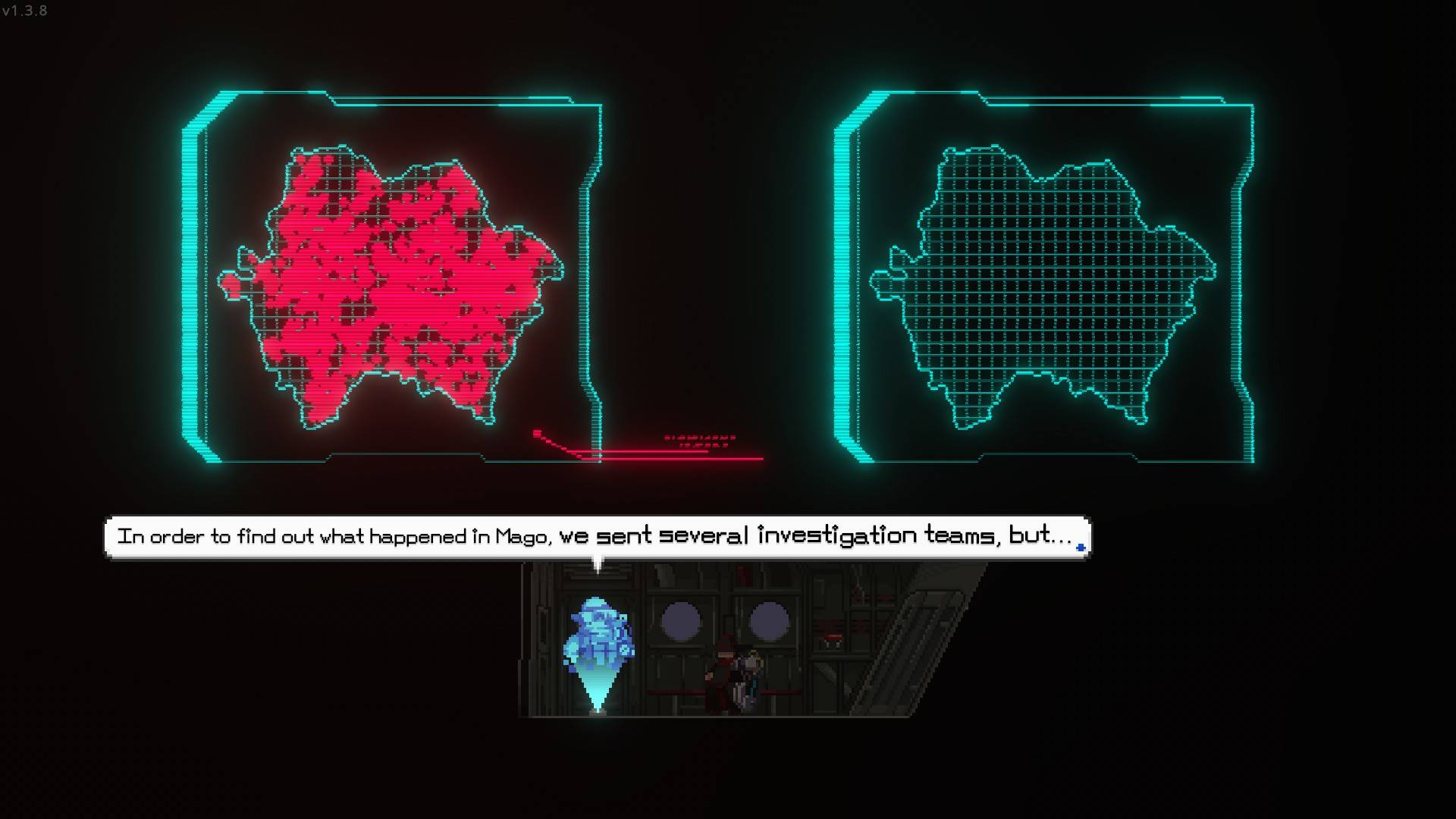
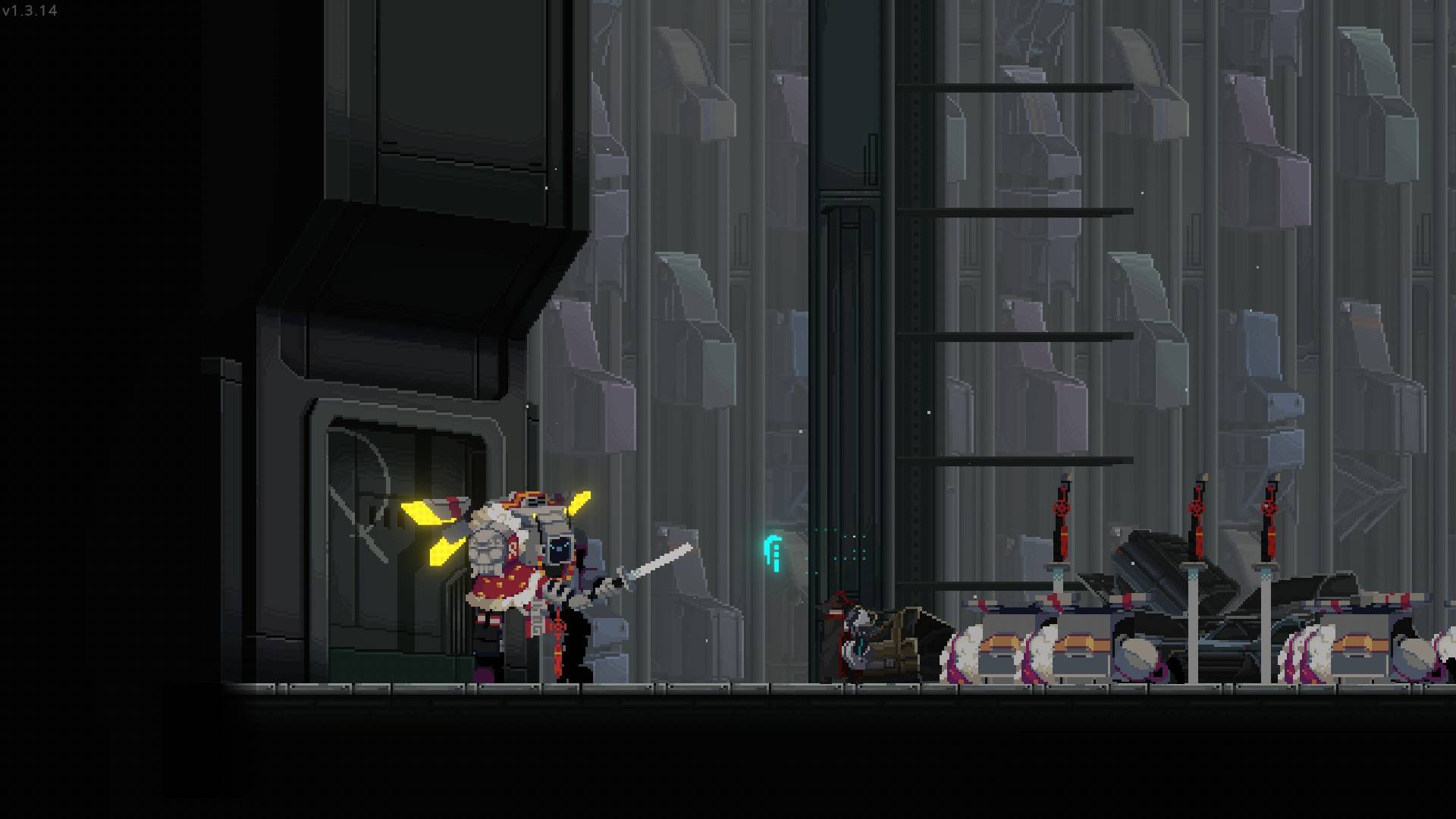
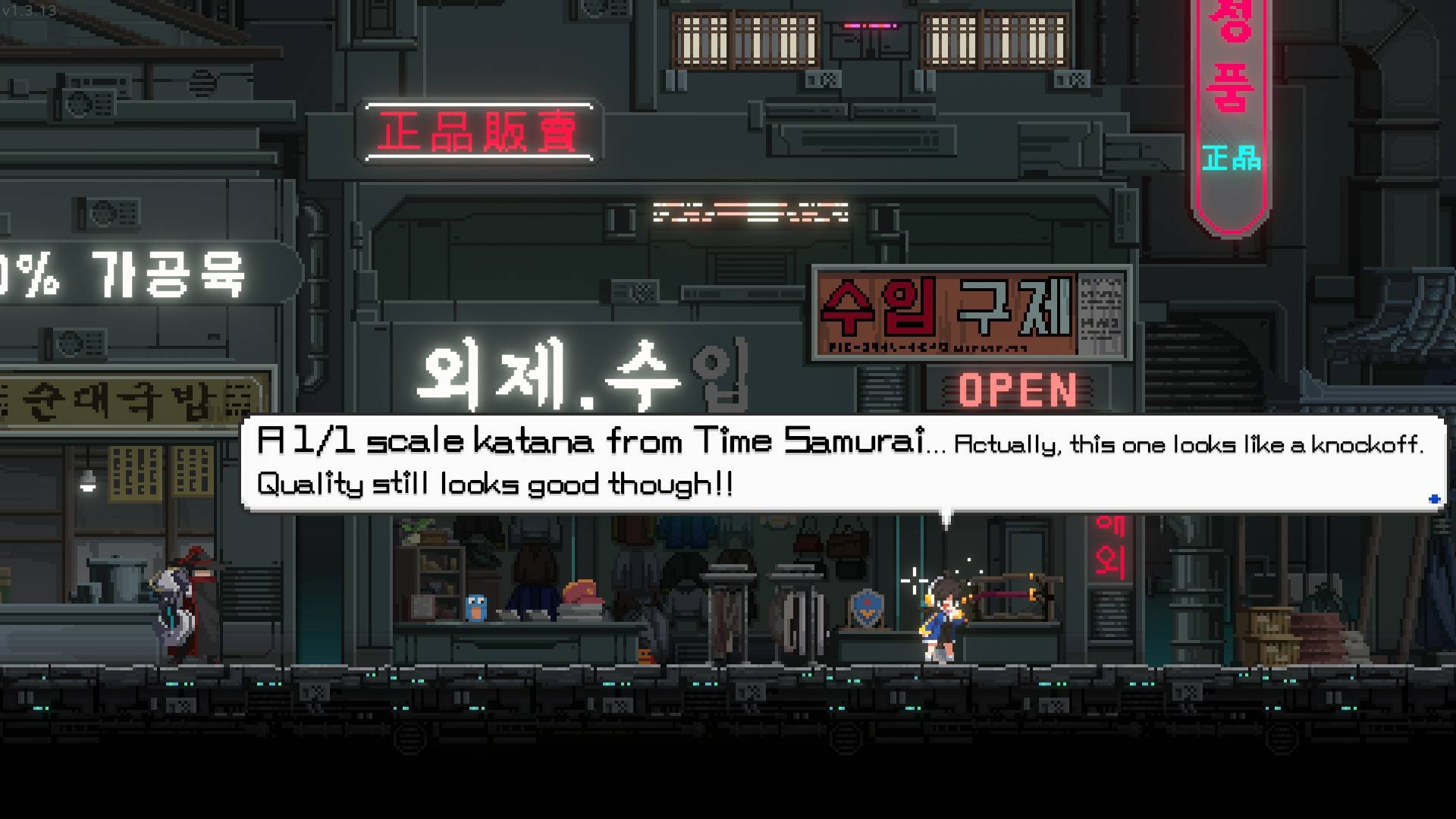
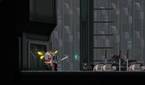
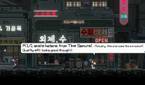
The game’s stylish and densely detailed pixel art greatly varies in terms of quality and effect throughout. At times, the presentation is weirdly flat, with plain washed-out backgrounds and a feeling of blank emptiness. Then, at other times, it’s incredibly busy and distracting, with scrolling backdrops layered with crowded advertisements of Japanese women drinking beverages and other genre-consistent neon noise.
There are some beautiful lighting effects in Sanabi which reflect warm color off of pixels and textures in closeups, and the camera loves zooming in and out to express a sense of lonely enormity. Sanabi's small cast feature numerous animation tics that make them come alive on the screen, but the art team also opted to mirror all the character sprites, making the protagonist’s chain arm instantly swap sides when turning left or right, a weirdly chintzy design decision that is hard to get used to.
This represents a sample of the graphical give and take, but it's a quality which extends to various other elements of the game. It all looks fantastic when stitched end to end in a trailer, but the collective vision becomes compromised on closer inspection while playing through Sanabi’s five or six hours and taking it all in as a whole.
Action Speaks Louder Than Words

Rarely has a game so fully proven the storytelling maxim of “show, don’t tell.” Sanabi’s characters breathlessly blather and comment at every opportunity, always chewing through ten sentences to communicate a detail which could have been delivered in one. The script amounts to a heavy, wordy melodrama which wields ellipses to thicken exchanges packed with redundant questions and throwaway banter. “What do you mean?” “What do I mean? You don’t know what I mean?” “Yes, tell me...” And so on.
Dialogue usually needs to be clicked through to progress, and there’s no way to hasten or skip individual sections of the many, many cutscenes in the game, which grinds the pacing down to a halt after every few minutes of gameplay. Most cutscenes can be skipped over entirely by holding the start button for a few seconds, but anyone interested in how the story progresses – and there are some high points here, amid the most obvious twists – will want to stick through it, while waiting for the next action sequence to release the clutch.
Friendly Neighborhood Grappling Man

When the reins are off, Sanabi’s gameplay sees players swinging and leaping through broad environments, and the grappling hook mechanics are generally well done. Pushing the left trigger adds some oomph to a swing, which can help maintain a steady flow state from ceiling to ceiling or push the general up into a full arc onto the platform above. While the gear itself never significantly changes, the protagonist conveniently remembers a few new tricks at specific story points, like a late-game dash ability which can be used to smash into enemies or kickstart movable platforms.
Enemies are eventually introduced into the mix, mostly robot soldiers and drones which can be hooked from a great distance and automatically dispatched on contact. Greater combat complexity includes protected robots which need to be bounced into hazards, shielded cybernetic samurai who can only be latched onto during specific openings, and a few other variations. For all its militaristic narrative context, combat is mostly overshadowed by the time spent nonviolently platforming, but some later levels manage to successfully combine the game's mechanics to fulfill its concept.
The handful of boss fights are mostly successful as well. Each of them comprises a puzzle boss scenario which might need a few failures to solve, but they similarly find the game firing on all cylinders, requiring full command of the chain arm’s movement to stay out of harm’s way and strike on cue. Even in light of these more complicated fights, Sanabi's action is pared down and simplistic, and the game would have been better served with a more fleshed-out and nuanced combat component.
Final Thoughts & Review Score

Sanabi can feel like an exercise in frustration, a game which always presents counterarguments to its best qualities. The platforming is solid, but entire swaths of each level feel like filler, lacking any interesting or challenging terrain to master. The narrative is stacked with worldbuilding detail and plot twists, but it’s surrounded by incessant rambling and pregnant pauses which weigh down every interaction. The pixel graphics are finely rendered and usually well animated, but contrast with the simpler environments and the mirror-flipped sprites.
It makes for an experience which begs for an editor in almost every aspect of its design, but it still might be worth a look. The best parts of Sanabi present a convincing blend of gameplay and theatrics, and the soundtrack, while lacking the finer and more intricate compositions found in Katana Zero, has a few solid themes as well, and matches well with the downcast notes in the latter chapters.
If that story doesn’t gel with the player, however, they’ll likely find themselves distracted after the opening hours. Sanabi is heavier-handed than the general’s chain arm, but anyone taking in by its sense of style will find plenty more where that came from, grappling through yet another video game Neo-Tokyo.
Source: NeoWiz/YouTube
Sanabi is out now on PC and Nintendo Switch. A digital PC code was provided to Screen Rant for the purpose of this review.
