


For every groundbreaking or beloved sci-fi TV show, there’s a graveyard of canceled concepts, uneven finales, and ambitious ideas that never quite delivered. Even among the most iconic titles, truly perfect sci-fi shows - the kind that never dip in quality, fumble their storylines, or fall victim to bloated seasons - are incredibly rare. Sci-fi is built on risk, and not every high concept can stick the landing across multiple seasons.
However, there are exceptions. Among the many smart, stylish, and influential science fiction shows out there, a few stand above the rest as consistently brilliant from episode one to their final credits. Whether because of their airtight writing, bold storytelling, or emotional arcs, these series managed to defy the odds. They aren’t just great sci-fi - they're perfect examples of how incredible the genre can be when everything goes right.
9 Farscape (1999-2003)
A Bold And Bizarre Space Opera That Never Lost Its Heart

- Release Date
- 1999 - 2003-00-00
- Network
- Nine Network, SyFy
- Directors
- Tony Tilse, Rowan Woods, Andrew Prowse, Ian Watson, Peter Andrikidis, Geoff Bennett, Catherine Millar, Pino Amenta, Brian Henson, Ian Barry, Brendan Maher, Karl Zwicky, Kate Woods
- Writers
- Justin Monjo, David Kemper, Richard Manning, Carleton Eastlake, Gabrielle Stanton, Harry Werksman, Matt Ford, Naren Shankar, Sally Lapiduss, Mark Saraceni, Ro Hume, Babs Greyhosky, Ben Browder, Christopher Wheeler, Doug Heyes, Jr., Lili Taylor, David E. Peckinpah, Nan Hagan, Emily Skopov, Michael Miller, Peter Neale, Sophie C. Hopkins, Steve Worland, Tom Blomquist
Cast
-
 Ben BrowderJohn Crichton
-
 Claudia BlackAeryn Sun
- Creator(s)
- Rockne S. O'Bannon

Farscape didn’t just subvert expectations - it warped them. This Australian-American co-production followed astronaut John Crichton (Ben Browder), flung across the galaxy through a wormhole and stranded aboard a living spaceship with escaped alien prisoners. The show’s wild mix of puppetry (courtesy of The Jim Henson Company), edgy humor, and mind-bending story arcs helped it stand apart from the cleaner sci-fi of its time.
From its twisted villains to its unflinching emotional depth, every season doubled down on character growth and serialized storytelling.
What makes Farscape one of the most perfect sci-fi TV shows is its refusal to compromise its vision. From its twisted villains to its unflinching emotional depth, every season doubled down on character growth and serialized storytelling. It walked the tightrope between camp and pathos with complete confidence.
Even in its cancellation, Farscape went out swinging. The 2004 miniseries The Peacekeeper Wars served as a satisfying conclusion, wrapping up its narrative threads in a way that honored its chaotic brilliance. Few sci-fi shows are this daring, and fewer still pull it off from start to finish.
8 Battlestar Galactica (2004-2009)
A Gritty Reboot That Delivered Political Intrigue And Powerful Drama


Battlestar Galactica
- Release Date
- 2004 - 2009-00-00
- Network
- SyFy
- Showrunner
- Ronald D. Moore
- Directors
- Wayne Rose, Michael Nankin, Rod Hardy, Sergio Mimica-Gezzan, Edward James Olmos, Robert M. Young, Jeff Woolnough, Félix Enríquez Alcalá, Jonas Pate, Allan Kroeker, Anthony Hemingway, Jean de Segonzac, Marita Grabiak, James Head, Paul A. Edwards, Gwyneth Horder-Payton, Brad Turner, Ronald D. Moore, Bill Eagles
- Writers
- Carla Robinson, Michael Taylor, Bradley Thompson, David Weddle, Jane Espenson, Mark Verheiden, Michael Angeli, Anne Cofell Saunders, Jeff Vlaming, Michael Rymer, Dawn Prestwich, Nicole Yorkin, Seamus Kevin Fahey
Cast
-
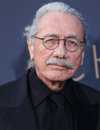 Edward James OlmosWilliam Adama
-
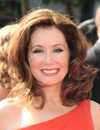 Mary McDonnellLaura Roslin
- Franchise(s)
- Battlestar Galactica
- Creator(s)
- Glen A. Larson, Ronald D. Moore
Ronald D. Moore’s reimagining of Battlestar Galactica was more than just a revival - it was a complete reinvention. Turning a dated space opera into a tense, grounded epic about survival, identity, and morality, the series centered on the last remnants of humanity fleeing the robotic Cylons after their near-extinction event.
It wasn’t just science fiction; it was a character study in the guise of a space war.
The 2000s Battlestar Galactica reboot wasn’t afraid to challenge its audience. Its exploration of terrorism, religion, and political corruption made it feel eerily prescient, while its tight pacing and layered performances kept it emotionally resonant. Even when the stakes were cosmic, the human cost was always front and center.
What makes the Battlestar Galactica reboot a perfect sci-fi TV show is its fearlessness. From its unforgettable miniseries opening to its polarizing (but thematically sound) ending, every twist and turn felt earned. It wasn’t just science fiction; it was a character study in the guise of a space war.
7 Terminator: The Sarah Connor Chronicles (2008-2009)
A Short-Lived But Incredibly Sharp Expansion Of A Legendary Franchise

- Release Date
- 2008 - 2009-00-00
- Network
- FOX
- Showrunner
- Josh Friedman
- Directors
- David Nutter
- Writers
- David Nutter, Josh Friedman
Cast
-
 Lena Headey
-
 Thomas Dekker
- Franchise(s)
- Terminator
Terminator: The Sarah Connor Chronicles could have been a forgettable spin-off, but instead, it delivered one of the most compelling sci-fi dramas of the 2000s. Set after the events of Terminator 2: Judgment Day, the first Terminator TV show followed Sarah Connor (Lena Headey) and her son John (Thomas Dekker) as they tried to stop the rise of Skynet with help from a reprogrammed Terminator named Cameron (Summer Glau).
The Sarah Connor Chronicles didn’t rely on big-budget spectacle (despite having it in abundance).
It was a rich tapestry of themes like fate, trauma, and the paranoia of living with a ticking apocalypse. With moody cinematography, complex relationships, and surprisingly philosophical musings, The Sarah Connor Chronicles brought surprising emotional depth to its action-packed premise.
Though it only lasted two seasons, the show maintained exceptional quality throughout. Its ability to deepen the Terminator mythos while carving its own path makes it a perfect sci-fi TV show that never overstayed its welcome - and arguably ended too soon.
6 The Outer Limits (1995-2002)
A Revival That Proved The Anthology Format Could Be More Than Nostalgia

- Creator(s)
- Leslie Stevens
The 1990s version of The Outer Limits picked up where the 1960s original left off, but it didn’t just recycle old ideas. This reboot used its anthology format to tackle bold, often unsettling sci-fi concepts with impressive consistency. While it didn’t have recurring characters, its thematic cohesion and moral ambiguity made it one of the most thought-provoking shows of its time.
Its ability to explore everything from transhumanism to time travel, without dumbing anything down, gave it a level of maturity rare for network TV.
Each episode of The Outer Limits played like a mini-movie, often starring big-name guest actors and showcasing solid production values. The show's dark tone, ethical quandaries, and mind-bending twists earned it a cult following, especially with episodes like “A Stitch in Time” and “The Human Operators.”
As one of the few perfect sci-fi TV shows that has an anthology format, The Outer Limits maintained a high bar over seven seasons. Its ability to explore everything from transhumanism to time travel, without dumbing anything down, gave it a level of maturity rare for network TV.
5 Orphan Black (2013-2017)
A Sci-Fi Thriller Elevated By One Of TV’s Greatest Performances

- Release Date
- 2013 - 2017-00-00
- Network
- Space, BBC America
- Directors
- Ken Girotti, T.J. Scott, David Wellington, Grant Harvey, Helen Shaver, Aaron Morton, Brett Sullivan, Chris Grismer, Peter Stebbings
- Writers
- Aubrey Nealon, Karen Walton, Tony Elliott, Peter Mohan, Sherry White, Jeremy Boxen, Kate Miles Melville, Greg Nelson, Jenn Engels, Nikolijne Troubetzkoy
Cast
-
 Sarah / Cosima / Alison / Helena / Rachel
-
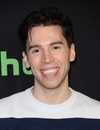 Jordan GavarisFelix 'Fee' Dawkins
Tatiana Maslany (who later joined the MCU to lead the Disney+ show She-Hulk) gave a career-defining performance in Orphan Black, playing over a dozen genetically identical clones with distinct personalities. However, Orphan Black was more than just a showcase of Maslany’s incredible range - it was a fast-paced conspiracy thriller that explored identity, autonomy, and bioethics through the lens of human cloning.
The series is a perfect sci-fi TV show because it kept its core mystery engaging without collapsing under its own mythology.
From the moment Sarah Manning (Maslany) sees a woman who looks exactly like her jump in front of a train, Orphan Black never lets up. The story expands into secret scientific organizations, corrupt corporations, and dangerous factions all trying to control the clones’ fate, while keeping the emotional stakes grounded.
Orphan Black is a perfect sci-fi TV show because it keeps its core mystery engaging without collapsing under its own mythology. It balanced dark humor, action, and emotional resonance across five tight seasons, delivering a satisfying and earned finale that stuck the landing.
4 Fringe (2008-2013)
What Started As An X-Files Riff Became A Genre Masterpiece

Fringe
- Release Date
- 2008 - 2013-00-00
- Network
- FOX
- Showrunner
- Jeff Pinkner
- Directors
- Brad Anderson, Fred Toye, Jeannot Szwarc, Charles Beeson, Akiva Goldsman, David Straiton, Dennis Smith, Jeffrey G. Hunt, Paul A. Edwards, Paul Holahan, Thomas Yatsko, J.H. Wyman, Jon Cassar, Miguel Sapochnik, P.J. Pesce, Adam Davidson, Anthony Hemingway, Bill Eagles, Bobby Roth, Bryan Spicer, Christopher Misiano, Chuck Russell, David Moxness, David Solomon
- Writers
- Graham Roland, Alison Schapker, Josh Singer, David Fury, Monica Owusu-Breen, David Wilcox, J.R. Orci, David H. Goodman, Glen Whitman, Robert Chiappetta, Ashley Miller, Zack Stentz, Zack Whedon, Julia Cho, Matt Pitts, Ethan Gross, Jeff Vlaming, Jason Cahill, Felicia D. Henderson, Justin Doble, Nora Zuckerman, Christine Lavaf, Lilla Zuckerman
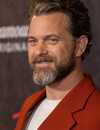

Fringe could’ve been just another monster-of-the-week procedural. Instead, it evolved into one of the most ambitious sci-fi series ever aired on network TV. Initially following the investigations of Olivia Dunham (Anna Torv), mad scientist Walter Bishop (John Noble), and his son Peter (Joshua Jackson), the show quickly expanded into multiverse conflicts, time loops, and philosophical questions about consciousness.
The showrunners took creative risks season after season.
The character-driven emotional core of Fringe, particularly the bond between Walter and Peter, grounded the more cerebral ideas. The showrunners took creative risks season after season, embracing nonlinear storytelling and massive sci-fi swings without losing track of their characters.
By the time Fringe reached its finale, it had grown into something far bigger than expected. Its narrative discipline and emotional payoff are why it's widely considered a perfect sci-fi TV show, proving that big ideas and big feelings aren’t mutually exclusive.
3 The Twilight Zone (1959-1964)
A Timeless Anthology That Still Defines Sci-Fi Television

The Twilight Zone
- Release Date
- 1959 - 1964-00-00
- Network
- CBS
- Showrunner
- Rod Serling
- Directors
- John Brahm, Buzz Kulik, Douglas Heyes, Lamont Johnson, Richard L. Bare, James Sheldon, Richard Donner, Don Medford, Montgomery Pittman, Abner Biberman, Alan Crosland, Jr., Alvin Ganzer, Elliot Silverstein, Jack Smight, Joseph M. Newman, Ted Post, William Claxton, Jus Addiss, Mitchell Leisen, Perry Lafferty, Robert Florey, Robert Parrish, Ron Winston, Stuart Rosenberg
- Writers
- Charles Beaumont, Richard Matheson, Earl Hamner, Jr., George Clayton Johnson, Jerry Sohl, Henry Slesar, Martin Goldsmith, Anthony Wilson, Bernard C. Schoenfeld, Bill Idelson, E. Jack Neuman, Jerome Bixby, Jerry McNeely, John Collier, John Furia, Jr., John Tomerlin, Lucille Fletcher, Ray Bradbury, Reginald Rose, Sam Rolfe, Adele T. Strassfield
Cast
-
Rod SerlingSelf - Host
-
Robert McCordWaiter
- Creator(s)
- Rod Serling
Rod Serling’s The Twilight Zone set the gold standard for science fiction on television. With a staggering range of stories - alien invasions, dystopian futures, moral parables, and personal nightmares - it became a platform for socially conscious storytelling disguised as speculative fiction. From “Eye of the Beholder” to “Time Enough at Last,” its legacy is filled with classics.
Its legacy and one of the most important series ever made can’t be disputed.
What makes The Twilight Zone a perfect sci-fi TV show is its creative precision. Every episode was a compact narrative with a clear vision and thematic punch. Even with limited special effects, the ideas were powerful enough to transcend their era.
It’s rare for a series this old to still feel essential. However, Serling’s mix of eerie imagination and human insight ensures The Twilight Zone remains not just influential, but unparalleled. Even five decades after its conclusion, new sci-fi TV shows are all inspired by The Twilight Zone in one way or another, and its legacy and one of the most important series ever made can’t be disputed.
2 The Expanse (2015–2022)
A Realistic Space Epic With Layered World-Building And Political Bite

The Expanse
- Release Date
- 2015 - 2022-00-00
- Network
- SyFy, Prime Video
- Showrunner
- Naren Shankar, Mark Fergus, Hawk Ostby
- Directors
- Breck Eisner, Jeff Woolnough, David Grossman, Kenneth Fink, Rob Lieberman, Terry McDonough, Thor Freudenthal, Bill Johnson, David Petrarca, Jennifer Phang, Mikael Salomon, Sarah Harding, Marisol Adler, Anya Adams, Nick Gomez, Simon Cellan Jones
- Writers
- Georgia Lee, Robin Veith, Hallie Lambert, Matthew Rasmussen, Ty Franck, Naren Shankar, Mark Fergus, Hawk Ostby, Daniel Abraham, Dan Nowak
Cast
-
 Steven StraitJim Holden
-
 Dominique TipperNaomi Nagata
- Franchise(s)
- The Expanse
Adapted from the novels by James S.A. Corey, The Expanse began as a mystery set in a colonized solar system and grew into a sprawling interplanetary saga. With a huge cast including James Holden (Steven Strait), Naomi Nagata (Dominique Tipper), and Chrisjen Avasarala (Shohreh Aghdashloo), it balanced science realism with emotional storytelling.
Its mature treatment of geopolitics made it a breath of fresh air in the genre.
The show’s attention to detail - like its physics-based space travel - and its mature treatment of geopolitics made it a breath of fresh air in the genre. It embraced complexity without losing its humanity, weaving together themes of war, exploitation, and survival with thrilling set pieces.
Every season of The Expanse built upon the last without losing momentum. Its final season stuck the landing with grace, earning its place as a perfect sci-fi TV show. It may not have the flash of some series, but its brains, heart, and scope are unmatched.
1 Firefly (2002)
A Single-Season Wonder That Delivered A Complete Sci-Fi Experience

Firefly
- Release Date
- 2002 - 2003-00-00
- Network
- FOX
- Showrunner
- Joss Whedon
- Directors
- Allan Kroeker, David Solomon, James A. Contner, Marita Grabiak, Michael Grossman, Tim Minear, Vern Gillum
- Writers
- Cheryl Cain, Drew Z. Greenberg, Jane Espenson
Cast
-
 Mal Reynolds
-
 Zoë Washburne
Despite only consisting of 14 episodes, Firefly didn’t need multiple seasons to be perfect. Joss Whedon’s space western blended action, humor, and character drama with astonishing finesse, following Captain Malcolm Reynolds (Nathan Fillion) and the crew of the Serenity as they smuggled, fought, and bonded across a post-civil war galaxy.
Firefly earns its place as a perfect sci-fi TV show because it ha no weak links.
Every single one of its handful of episodes was sharply written and packed with world-building. The ensemble cast - featuring standout performances from Nathan Fillion, Gina Torres, Alan Tudyk, Morena Baccarin, and Summer Glau - had instant chemistry, making the Firefly's quirky tone feel effortless rather than gimmicky.
Firefly earns its place as a perfect sci-fi TV show because it has no weak links. Its cancellation was a tragedy, but its legacy lives on through its fanbase and the follow-up movie Serenity, which gave the story the ending it deserved. Some shows take years to find greatness - Firefly arrived there from the very first episode.
