


Summary
- Ahsoka Tano may be the key to revealing the true origin of the Force in Star Wars, as the original plan for her character reveals.
- Ahsoka Tano's light side of the Force connection may be stronger than previously shown in Star Wars, potentially leading to her becoming the embodiment of the light side.
- Ahsoka's original name, Ashla, and her connection to the Force and the planet Tython suggest her potential role as an avatar for the light side of the Force.
Lucasfilm's Chief Creative Officer, Dave Filoni, originally had a much different plan for Anakin Skywalker's former Padawan Ahsoka Tano, and it suggests that Ahsoka's light side of the Force connection might be even stronger than Star Wars has shown thus far. Ahsoka was introduced in the Star Wars: The Clone Wars movie as Anakin's Padawan, which came as a surprise after the prequel trilogy made no mention of her. Despite that late addition, Ahsoka's popularity exploded throughout her appearances in the Clone Wars series, and she became even more important throughout the Star Wars timeline; that importance, though, is only growing.
Ahsoka has gone on to appear in Star Wars Rebels, The Mandalorian, The Book of Boba Fett, and now in her own TV series, Ahsoka. While her story experienced significant turbulence after Ahsoka left the Jedi Order, leaving her resolute in the fact that she was not a Jedi, Ahsoka saw her complete her training with her former master in Star Wars' World Between Worlds. Now a Jedi, Ahsoka the White, it seems Ahsoka's very distant past may inform her future, possibly concluding with Ahsoka becoming the light side of the Force itself.
Dave Filoni's "Ashla" Plan Explained



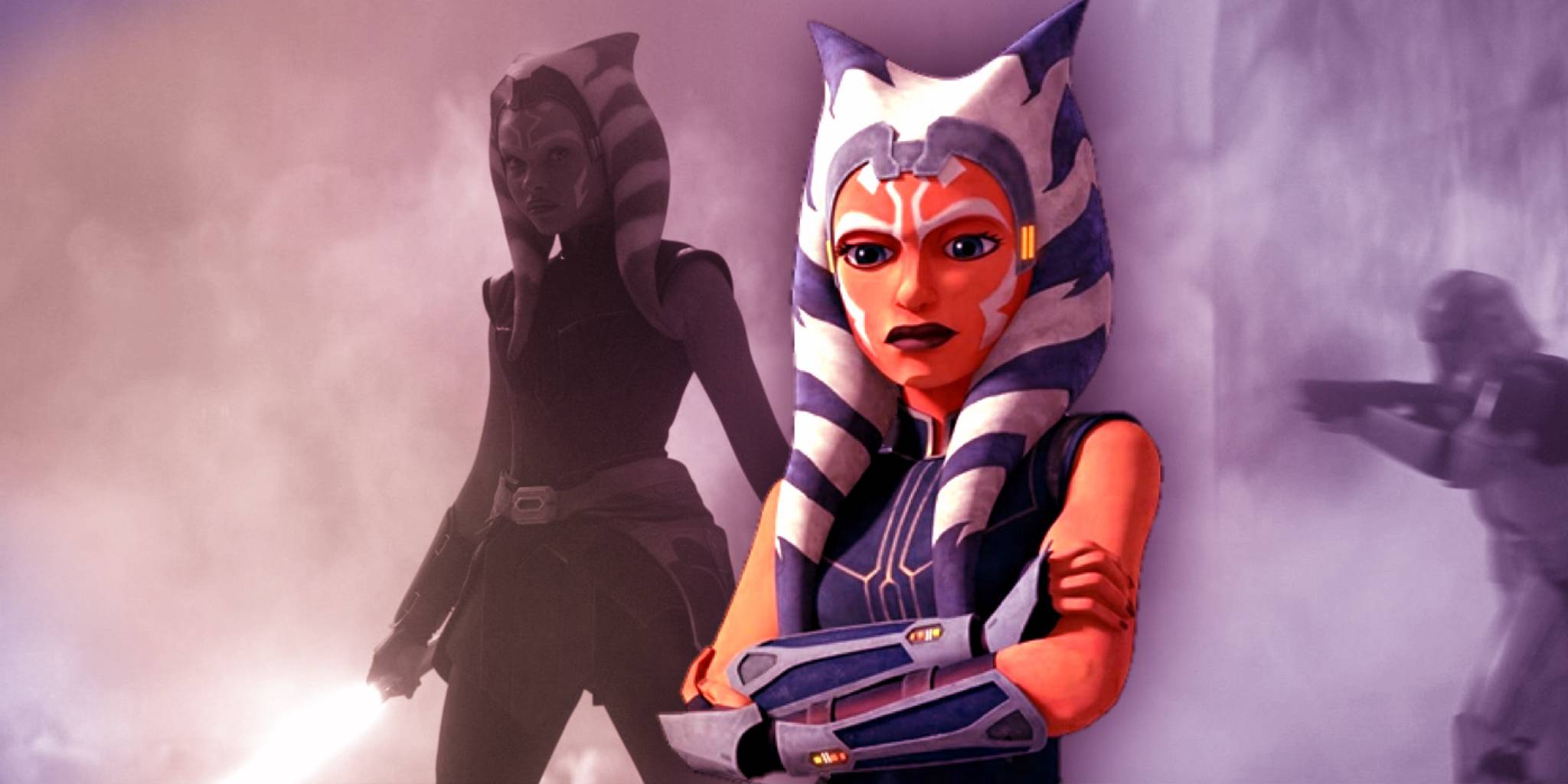

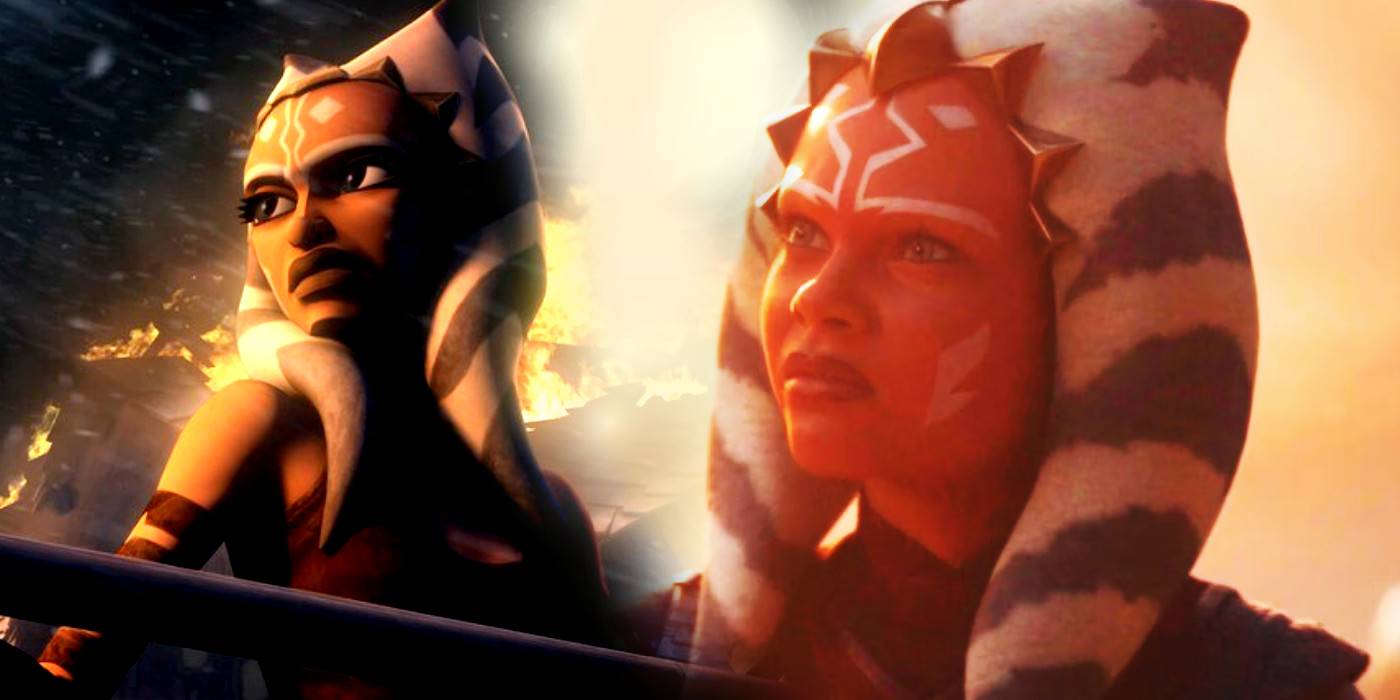






It seems that fans almost got to see Ahsoka several years earlier than her debut in The Clone Wars movie, which was only the beginning of Ahsoka's Ashla connection. Dave Filoni considered using a Togruta girl who appeared in Star Wars: Episode II - Attack of the Clones, whose name was Ashla, as Ahsoka herself in a retcon. In an interview with Vanity Fair, Dave Filoni explained this in more depth.
We called her Ashla in the beginning. That was 2005, and that worked on several levels for me. I think it was the name given to one of the [young Jedis Yoda was training] in Attack of the Clones. There was a little Togruta girl. We kicked around the idea that maybe that was Ahsoka, but then we thought the age didn't really work out for it to be the same character. She was too young in the film.
It makes sense that Filoni ultimately decided against retconning the girl to be Ahsoka because of her age; although the Clone Wars timeline has yet to be precisely confirmed in relation to Attack of the Clones, it's estimated to be only a few months after the events of the film. Ashla, in the movie, is certainly not close to 14, the age Ahsoka was when she became Anakin's Padawan. However, this establishes that, from the beginning, Ahsoka and Ashla were intertwined.
Ashla's Light Side Origins Explained

The name only acquires more meaning in the Star Wars franchise from there. Ashla, in part, comes from the name of one of two moons, Ashla and Bogan, of the planet Tython. Each one symbolizes a side of the Force—Ashla light and Bogan dark. While the origins of the moons and the planet were initially relegated to Legends along with their link to the precursor to the Jedi, the Je'daii, the planet appeared in The Mandalorian season 2, canonizing it.
This connection, seemingly embodying the light side of the Force itself, is further supported by one of many names for the Force. The Lasat people use the name Ashla for the Force, which translates to "the spirit of the galaxy." This only makes it all the more interesting that Ahsoka chose the name for herself when in hiding during both the canon Tales of the Jedi series and in the now non-canonical novel Ahsoka. While she may not have drawn a connection between the name of the Jedi youngling and her alias, she likely knew of both the moons and the moniker for the Force.
Ahsoka was also the one who guided Din Djarin and Grogu to Tython in The Mandalorian, seemingly tying her even more closely with the planet.
This is particularly interesting given that Ahsoka was decidedly not a Jedi at the time, and her connection to the Force was strained at best; she didn't feel comfortable using the Force, as that put her at risk of being discovered by the Imperial Inquisitors. This only further complicates her choice of the name, though; the Inquisitors were also Force wielders and may well have been just as aware of this history of the name. Given that, it seems that at a minimum, Ahsoka wasn't very good at hiding that she was Force-sensitive.
Does Star Wars' Original Name Hint At Dave Filoni's Ahsoka Plans?

Although an addition after the prequel trilogy, Ahsoka has proven extremely important to Star Wars. In fact, George Lucas himself wanted Anakin Skywalker to have a Padawan. Ahsoka seems set to become even more critical to the Star Wars galaxy, though, and that began with a storyline in The Clone Wars. Obi-Wan Kenobi, Anakin, and Ahsoka end up stranded on an odd planet, Mortis, with little memory of what came before the crash. On the planet, they encounter the Mortis Gods: the Father, the Son, and the Daughter, who end up signifying balance, the dark side, and the light side.
Ahsoka, killed by the Son (one of two deaths Ahsoka's had so far), is brought back to life by the Daughter, who transfers her life force to Ahsoka. This presents the fascinating possibility that Ahsoka will become an avatar for the light side of the Force, essentially embodying the Force itself. If that's the case, the name Ashla would make all the more sense.
Ashla, the name for the Force itself in Lasat culture and the name of Tython's light side moon, is the alias Ahsoka dons in Tales of the Jedi and the Ahsoka novel and was at one time the character's name. All of this could very well mean that Ahsoka season 2 or another future Star Wars appearance could see Ahsoka merge with the Force itself. This would be a beautiful, in many ways perfect, arc for Ahsoka Tano, who has long represented the true nature of a Jedi.
Source: Vanity Fair
