Following the controversial revelation in Marvel's newest Captain America run that the American superhero, Steve Rogers, has always, in fact, been an agent of Hydra, we began to wonder: how many other superheroes have turned evil?
Either due to a retcon, a third-party influence, or a mental breakdown, or because they were just big jerks, many superheroes (throughout their long runs) have at one point or another succumbed to a life of villainy. Sometimes they come back to the light and redeem themselves, but not always. As Harvey Dent said in The Dark Knight: "You either die a hero, or you live long enough to see yourself become the villain."
With that in mind, here are 15 Superheroes Who Turned Evil.
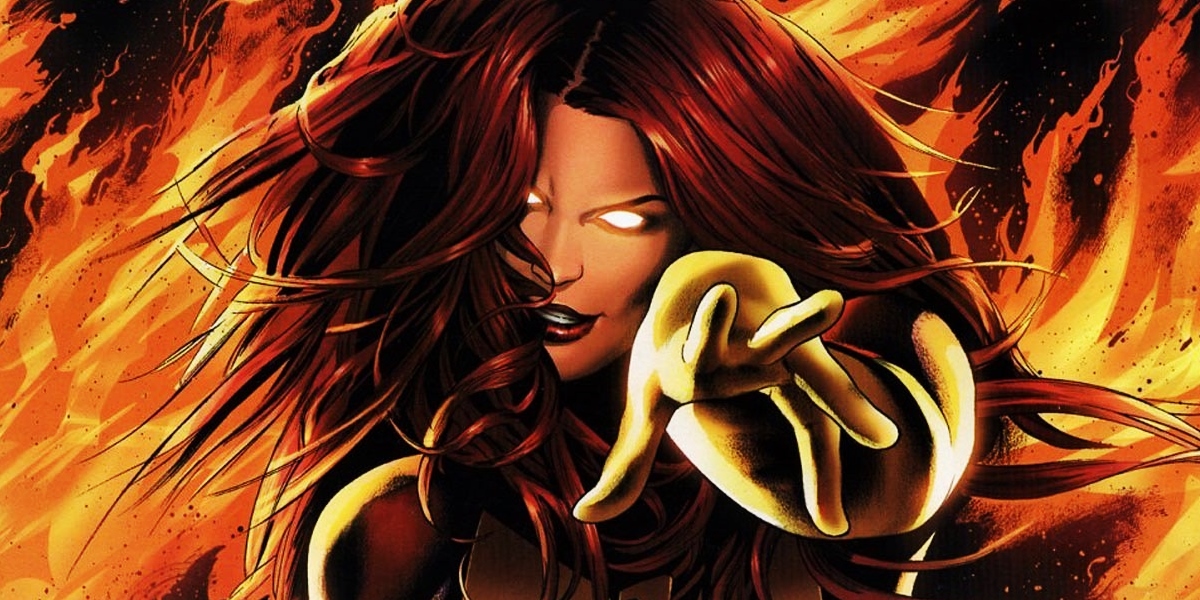
15. Jean Grey

As a charter member of the X-Men, Jean Grey has become one of the most recognized and cherished superheroes in the Marvel universe. And while she is a powerful telepath and telekinetic in her own right, her potential is far greater than even Professor Xavier could imagine.
During Chris Claremont and John Byrne's acclaimed story arc, The Dark Phoenix Saga, Jean Grey becomes consumed by the primordial Phoenix Force, an entity described as a child of the universe and a hub of all psionic energy in the multiverse - and assumes the identity of the Dark Phoenix. In doing so, however, she loses herself and all sense of reality.
As the Dark Phoenix, Jean essentially harvests the energy of stars across the galaxy - which causes the destruction of other nearby stars, as well as other lifeforms - and commits an act of genocide, as well as destroying almost all of the X-Men. When she utilizes the Phoenix Force, she is virtually unstoppable. Perhaps this is something we'll see in a future X-Men movie.
14. Hal Jordan

Similar to Jean Grey in Marvel Comics, DC Comics' Hal Jordan aka Green Lantern (the first human Lantern) once became consumed by an ancient force -- in this case, an entity that embodies the yellow light of fear, known as Parallax.
Hal was once the best of the Green Lanterns, but when his home, Coast City, was destroyed by the alien Mongul, Hal goes mad and uses his ring to recreate the city as well as manifestations of his family and friends. Eventually, he is reprimanded by the Corps and taken to Oa to face judgment. It's there, during the controversial 1994 story arc Emerald Twilight, that Hal assumes the name Parallax (later revealed to be a separate entity) and attacks the Corps, killing virtually all the Lanterns.
Hal redeems himself during the Final Night story arc, when he attempts to revive the Sun, but it's not until Geoff Johns' highly acclaimed Green Lantern: Rebirth arc that Hal once again becomes a Green Lantern.
13. Scarlet Witch

Just as in Joss Whedon's Avengers: Age of Ultron, in the comics, Scarlet Witch aka Wanda Maximoff was introduced as a villain. It was later revealed that she and her brother, Quicksilver, were simply paying back a debt and were not inherently evil, despite being the children of Magento. Not long after leaving the Brotherhood of Mutants, Scarlet Witch joined the Avengers, where she became one of their most powerful members.
During the massive crossover event Avengers Disassembled, Wanda loses all concept of reality, a direct result of realizing that her two sons - who were manifestations of Wanda's hex powers - are, in fact, parts of the devil's soul. This realization enrages her, and she directs several attacks against the Avengers (especially Iron Man), who she blames for the death of her children. Her attacks eventually result in the deaths of three major members: Hawkeye, Vision, and Scott Lang.
While the Disassembled story arc was the catalyst writer Brian Bendis needed to effectively relaunch the Avengers, splitting them up into two teams, the House of M storyline continued Wanda's villainy by creating an alternate reality and de-powering 90 percent of the mutant population.
12. Superman

Superman may be one of the most powerful beings in the DC Universe, but he's not a Green Lantern, which makes him susceptible to corruption just as much as the rest of us. The Man of Steel, who is the archetype for any and all superheroes, has dabbled in villainy before - notably, when he was under the control of Darkseid - and likely will do so again.
But there is one story arc that seems primed for a future Justice League movie. Judging by the Knightmare sequence and subsequent message from The Flash in Zack Snyder's Batman v Superman: Dawn of Justice, there may be a chance we'll see an Injustice: Gods Among Us adaptation on the big screen soon. For the uninitiated, the Injustice story arc depicts a reality where the Joker destroys Metropolis with a nuclear bomb and tricks Superman into killing Lois Lane and their unborn child. Driven mad by the loss of his family and home, Superman murders Joker and establishes a new world order. Batman, of course, isn't on board with that and forms an insurgency, and so begins a world war.
The fact is, Superman has turned evil multiple times; sometimes of his own free will and sometimes because he was forced to. So if you're looking for an evil Superman story arc, take your pick; they're not far or few.
11. Superboy Prime

One of the Earths in DC Comics' multiverse is Earth-Prime (our Earth), a world where superheroes like Batman, Superman, and Wonder Woman exist only in comic books. There, in that world, existed Superboy-Prime, a young man with the powers of Superman, who later, in a series of rather complex events during the acclaimed crossover event Crisis on Infinite Earths, ended up in the paradise dimension along with the Golden Age Superman, Earth-Two Lois Lane, and Earth-Three Lex Luthor.
While in the paradise dimension, Superboy-Prime had grown frustrated with being able to view Earth-One (the new primary Earth) without being allowed to be a part of it. One day, he began punching the barrier of reality, trying to break through the wall. Eventually, he was successful, and with the help of Alexander Luthor, the two launched the crossover event Infinite Crisis (a sequel the previous Crisis). During this event, Superboy-Prime either wounds or kills several members of the Teen Titans, Doom Patrol, and Justice Society and America.
Unfortunately, Infinite Crisis was only the beginning of his life as a supervillain. And even though he was eventually imprisoned by the Guardians of the Universe, Superboy-Prime managed to continue wreaking havoc.
10. Angel

People who have seen X-Men: Apocalypse will recognize Warren Worthington III aka Angel as one of Apocalypse's Four Horsemen, who is known in the movie as Archangel. But the thing is, the way he was recruited in the movie is (shocker!) not precisely the same way he was recruited in the comics.
Following the death of several Defenders, Angel briefly considered retiring, but instead, he and four other members of the X-Men - Jean Grey, Beast, Cyclops, and Iceman - formed the mutant team X-Factor. During the crossover event Mutant Massacre, Angel's wings are mutilated, and he is left unable to fly. As Angel takes off in his private jet, the plane explodes, and the rest of the X-Factor presumes he died, but, in fact, Apocalypse rescues him just in time.
Just as in the movie, Apocalypse recruits Angel, retrofits him with metal wings, and conditions him to obey his commands - no matter what they may be. Although he eventually returns to being Angel, Warren falters several times, succumbing to his dual identity Archangel, especially during the famed Dark Angel Saga.
9. Hulk

People in the Marvel Universe may view the Hulk as a villain, an irradiated creature to be feared, but really, he simply can't always control himself. That doesn't mean he's a bad guy, because inherently, Bruce Banner is good. But the question is, what if the green guy takes over and Banner loses control; what happens then? We're stretching the rules here with the Hulk, because while he hasn't turned evil yet, we know that, eventually, he will, thanks to an alternate reality and a future nuclear apocalypse.
In the '90s, writer Peter David and artist George Perez created the character Maestro, a future counterpart of the Hulk - who, as a result of a nuclear war one hundred years in the future (dubbed Earth-9200), absorbed too much radiation, which not only enhanced his strength, but also drove him mad, while allowing him to maintain his intelligence. With his newfound might, Maestro gained control of the future and ruled over all those who survived as a dictator, with virtually no one left to oppose him. After all, the Earth's superheroes had all perished during the war.
8. Terra

We're slightly breaking the rule with Terra, who was perceived to be a hero while she was, in fact, all along a villain. Terra, along with Nightwing, Kid Flash, and Red Arrow was a member of the Teen Titans, who, for many years, fought the good fight. She befriended members of the team and, more or less, became one of them. Which only increased the shock value of her betrayal.
Throughout her tenure with the team, Terra - who was initially recruited by Beast Boy into the New Teen Titans - fed information to Deathstroke the Terminator, including the secret identities of all the Titans. It's this act that ultimately results in the Titans (and the audience) discovering that Terra was, in fact, a traitor - or, more accurately, a mole.
One of the characters' co-creators, George Perez, has previously stated that their intention was for Terra was to betray the team the entire time, but that is something the audience didn't find out until it actually happened.
7. Sinestro

Although Sinestro was never exactly a "superhero," he was still a prominent member of the Green Lantern Corps, who eventually became Hal Jordan's instructor when Jordan joined the Corps. Unfortunately, due to his dictatorial methods, and the fact that he chose to conquer his home planet in order to preserve order, Sinestro ultimately shifted from being one of the Corps' greatest Lanterns to its most enduring foe - which makes him a viable candidate for this list.
Using his ring to instill fear rather than hope turned Sinestro down a dark path, one which conclusively led him to be exiled by the Guardians of the Universe into the negative matter universe (a counterpart to our positive matter universe). It's there that he met the race of scientists and warriors, known as the Weaponers of Qward, who fueled his hatred for the Green Lantern Corps. They vowed to help Sinestro achieve his vengeance and returned him to our universe, but not without creating a yellow power ring to counteract the Lanterns' green rings. And so began decades of battles and villainy.
6. Cyclops

Sure, Scott Summers aka Cyclops has always been somewhat of a jerk but he was never villainous. But in the Marvel Universe, heroes can't always control their actions. Similar to what happened with Jean Grey, Cyclops once became consumed by the Phoenix Force and subsequently turned evil, destroying virtually all of the X-Men (that tends to happen a lot).
In the story arc Avengers vs. X-Men, the Phoenix Force returns to Earth, presumably looking to take Hope Summers as its next host, which Cyclops believes could be beneficial to propelling the mutant population forward. The Avengers disagree with Cyclops and want to destroy the Phoenix. Needless to say, the Avengers and X-Men - the latter led by Cyclops - become embroiled in a conflict over whether or not to terminate the Phoenix. After a series of battles, Iron Man uses his Phoenix-Killer suit to destroy the Phoenix, but fails to do so, and instead fractures it, forcing the Phoenix to inhabit five nearby X-Men, including Cyclops. As you can surmise, Cyclops and the rest of the appropriately-named Phoenix Five go on a killing spree.
At one point, Cyclops becomes the new Dark Phoenix, but thanks to the combined effort of the Avengers and the X-Men, the Dark Phoenix is defeated. They don't manage to do it before the Phoenix Force infects thousands of people around the world, turning them into mutants.