


Summary
- The Ninth Gate ending left room for interpretation, blending skepticism and fanaticism in a dark and surprising way.
- Boris's belief in summoning the Devil contrasts with Dean's skepticism, leading to a twist where the skeptic becomes key.
- Despite mixed reviews, the film's exploration of supernatural themes and the power of belief adds depth to its eerie tale.
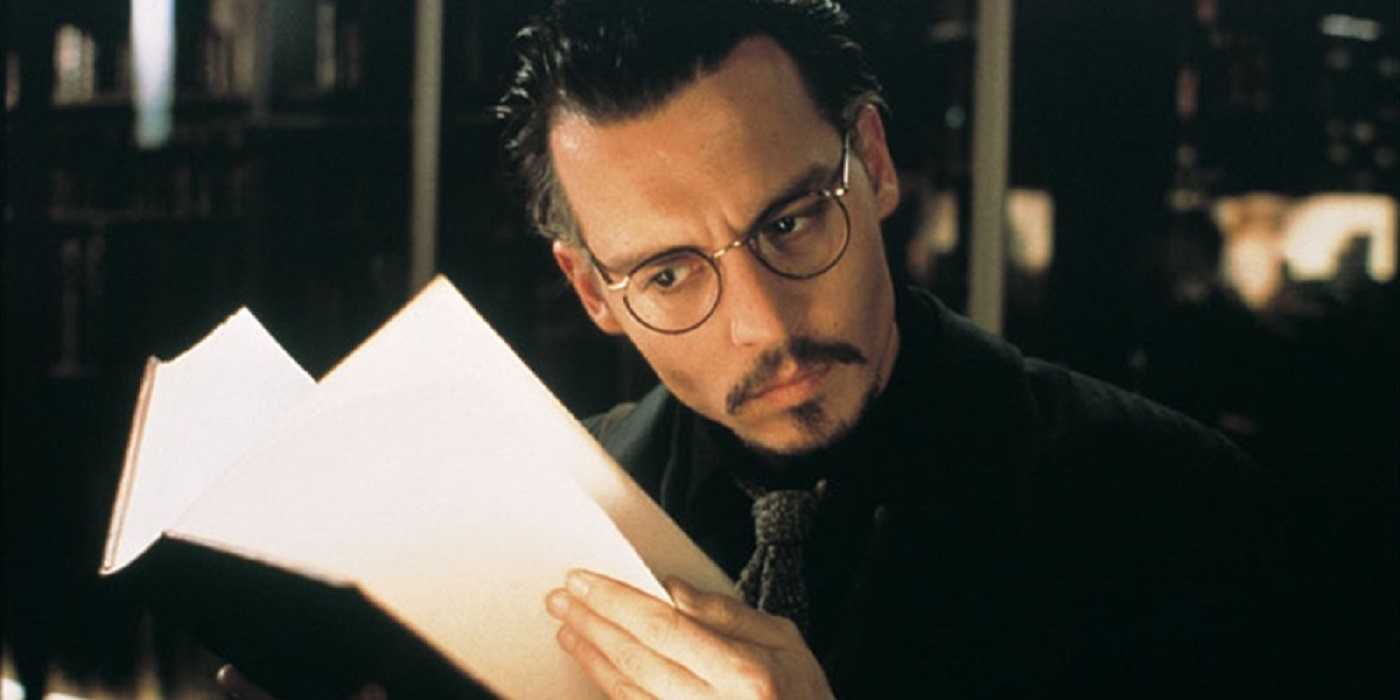
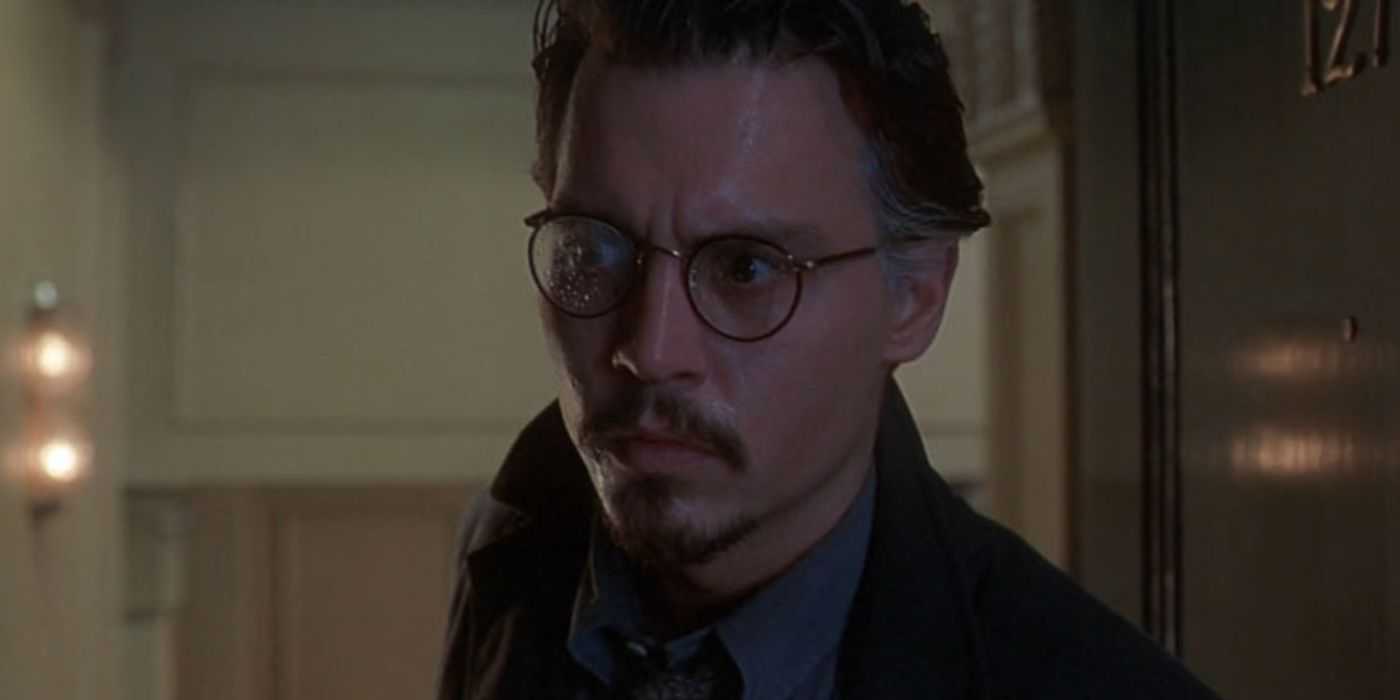
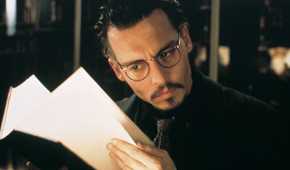
The Ninth Gate ending explained an otherworldy and mysterious climax that, while not conclusively pointing to something supernatural, is much too coincidental for that reading not to be considered. Directed by Roman Polanski, The Ninth Gate stars Johnny Depp in one of the more overlooked movies of his long filmography. Dean Corso (Depp) is a rare book dealer hired by the wealthy and eccentric Boris Balkan (Frank Langella) to find all the copies of The Nine Gates of the Kingdom of Shadows, a centuries-old book said to be capable of summoning the Devil.
Dean's globetrotting journey, one he makes cynically for money alone, turns into a suspenseful and psychologically vexing task that changes his perspective and the audience's. There were three decades between Polanski's mind-bending and unsettling Rosemary's Baby and this 1999 film. While The Ninth Gate does not have quite the same dreaded atmosphere and deep philosophical reading as that film, it's still an intense look at religious fervor and belief. The Ninth Gate's ending has often been criticized, but a deeper look reveals a more thought-provoking angle to the film.
Boris Balkan Tries To Summon The Devil
The Nine Gates Are Supposedly A Portal To Hell

As Dean goes on his journey to acquire the two other copies of the book for Boris to complete his collection, he realizes that in each book he's found, three engravings are signed "L.C.F." while the other six are signed, "A.T." for Aristide Torchia, the original author of the books. Boris alleges that the Devil helped Torchia write the books, and Dean realizes, though not fully believes, that "L.C.F." stands for Lucifer. When Dean travels to Portugal, he finds the last of the books but also discovers Boris has been following him the whole time.
Boris interrupts a Satanic ritual using the books. To Dean's shock and horror, Boris murders the previous owners of one of the copies. When Boris escapes with the three books, he travels to a remote church to perform the Satanic ritual himself. Dean goes after him, and whether it is to stop him, confront him, or observe him is unclear. Dean has become fully ensnared in a conspiracy he had no idea he was a part of. Boris subdues Dean and forces him to watch as he performs the ritual using the nine engravings signed L.C.F.
The Ninth Gate is based on the novel The Club Dumas by Arturo Pérez-Reverte.
These nine gates appear to grant Boris the power and longevity he seeks when he brushes his hands over a fire, unharmed. As the circle of flames he created in the old church dance toward Dean, stuck in a hole in the floor he can't pull himself out of, he challenges Boris to prove he has the power of Satan. Boris obliges and douses himself in gasoline, lighting himself on fire. His laughs of triumph turn to screams of pain as he suddenly realizes his ritual didn't work.
As Boris burns, Dean frees himself from the floor and grabs the nine engravings, sticking around just a moment longer to take a gun and put Boris out of his misery. In the background of The Ninth Gate, Boris has been secretly angling to make a deal with the Devil, never mind who he hurts or uses. Despite his powerful belief, Dean's understanding of the world seems to win out. The Devil cannot be summoned, a man cannot walk through fire, and it's a bullet that has the power of life and death.
The Girl Is A Biblical Figure
An Unnamed Figure May Not Be Human


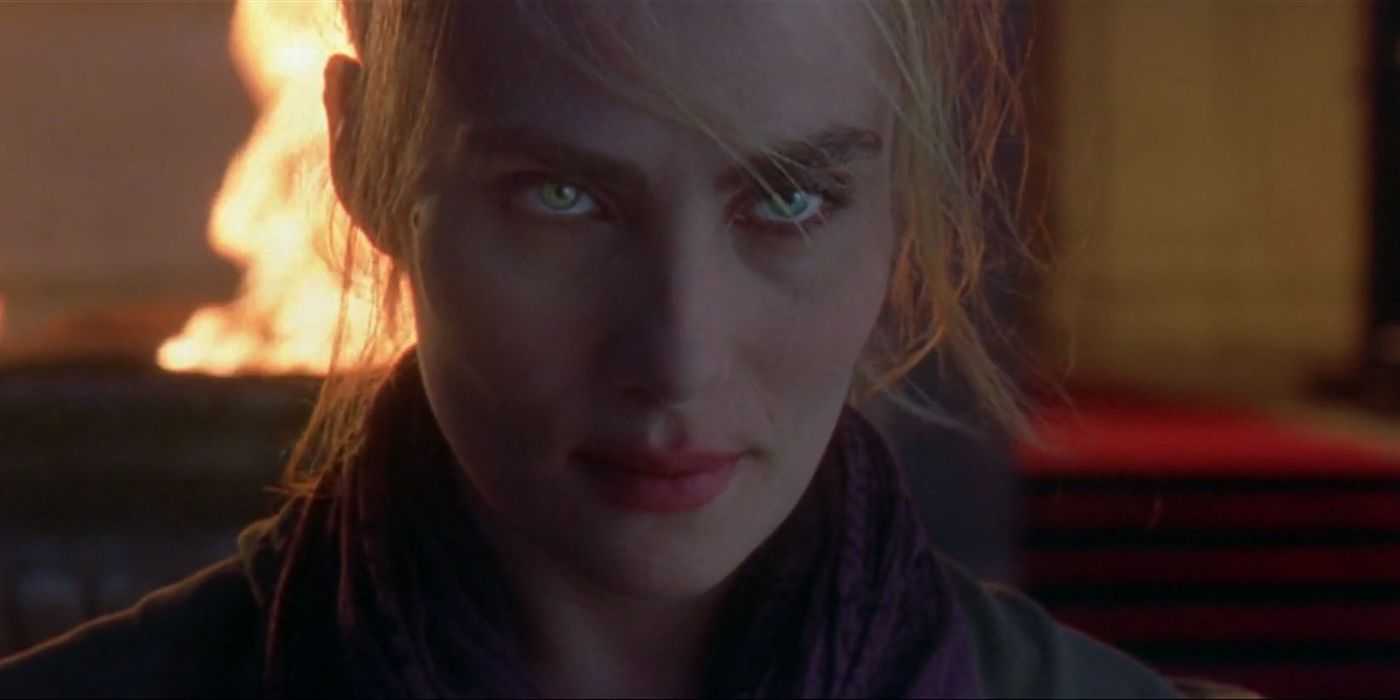
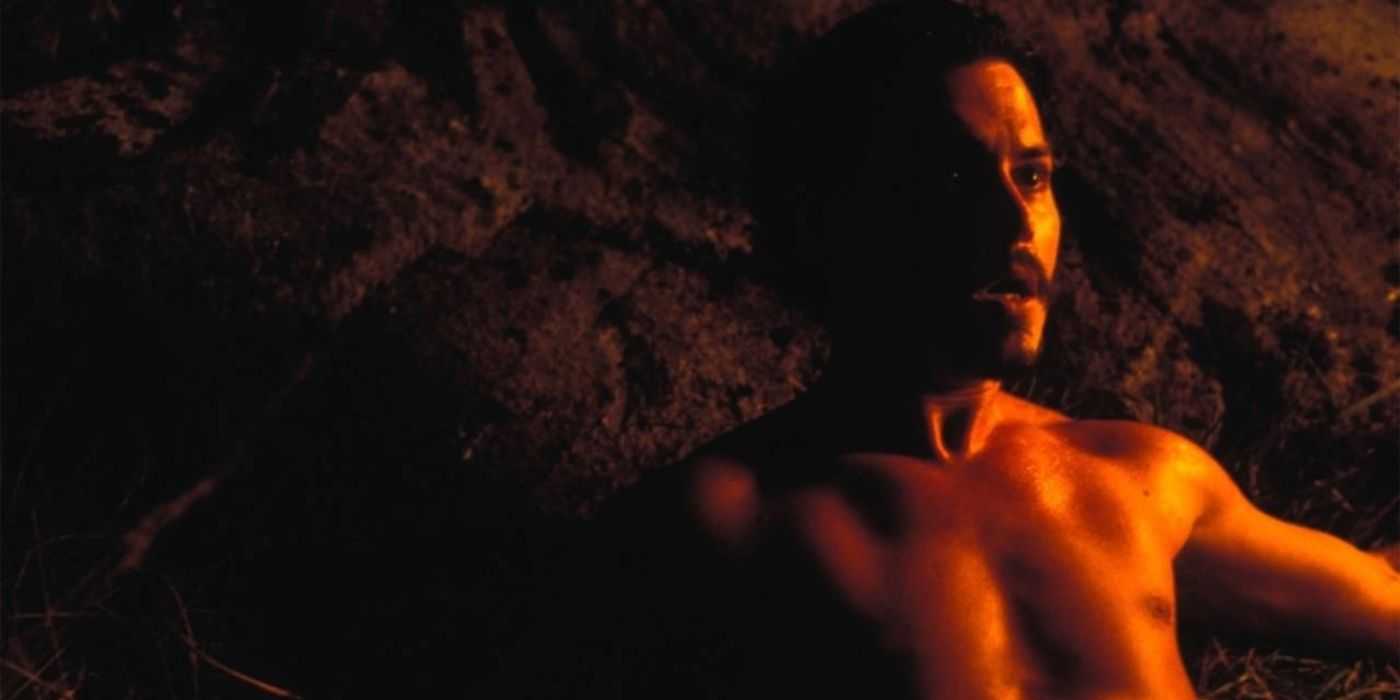
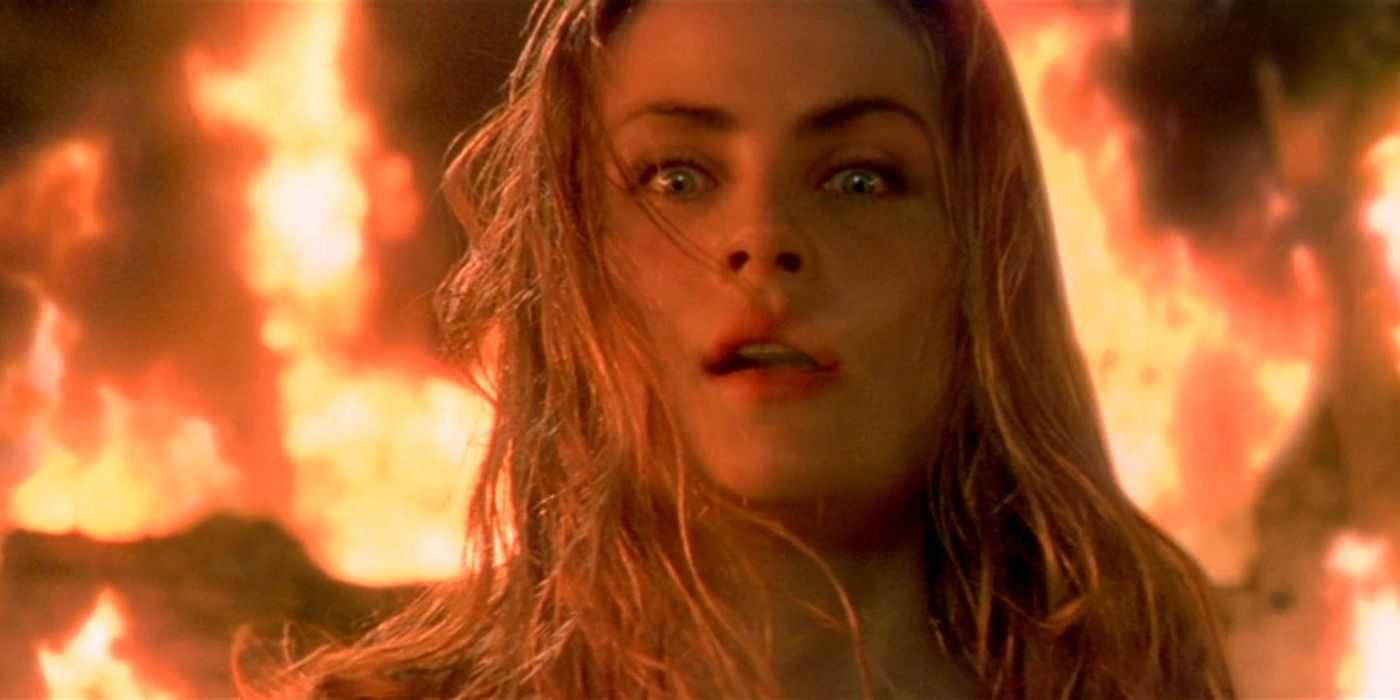


A strange character in The Ninth Gate is a woman, played by Emmanuelle Seigner, who is only referred to as "the Girl." Dean meets the Girl during his travels, and she seems oddly willing to help him search for the books. After Dean escapes the burning castle, the Girl reappears in his car and kisses him. Despite everything he's been through in the last few hours, Dean and the Girl end up having sex on the ground in a mesmerizing scene of the pair completely lost in bliss with the burning castle in the background.
They leave the castle grounds and the Girl remarks how the ritual could have worked, but one of the engravings is a forgery. Dean doesn't pay this much mind, but when he parks at a rest stop, she disappears. On her seat is a note telling Dean to visit an abandoned shop where Dean finds the final engraving, which falls from behind a dusty bookcase. It depicts a woman, who looks remarkably like the Girl, sitting naked atop a dragon-like beast in the same position she and Dean were just in.
It's the biblical Whore of Babylon from the Book of Revelations in the Bible and the ninth engraving to complete the ritual. Dean realizes that he has been unwittingly dragged into a ritual himself and now may be responsible for something he not only didn't intend but did not believe was possible.
What Is The Ninth Gate?
It's The Final Key Needed To Open The Gates Of Hell

After Dean finds the final engraving, he now has everything that is presumably necessary to complete the Satanic ritual that the cult and Boris both failed to complete. On the engraving behind "Babylon the Great" is the same remote castle that Boris set alight, with the sun peaking through the towers.
With this final piece of the puzzle, Dean returns to the remote castle that looks remarkably like the one in the engraving. As he approaches, a blinding white light engulfs him, and the movie ends. Whether this means the actual Ninth Gate has been opened or if Dean's mind has been opened to the possibility is left ambiguous.
The Real Meaning Of The Ninth Gate's Ending
Fanaticism And Skepticism Are Two Sides Of The Same Coin

Some consider The Ninth Gate to be a film where the end actively ruins what was a good movie up until that point. While it's true that the end of the film does change the eerie tone into something more supernatural and religiously epic, it's still in line with the movie that came before it. The Ninth Gate is about skepticism and fanaticism and how those two seemingly separate views on religion can drag someone to the same place. Dean spends the film as a non-believer.
He considers Boris's views on the Devil foolish and is only interested in the money he intends to receive. Even in the face of increasingly supernatural events, Dean clings to his cold logic, unwilling to believe that there is something more out there. Conversely, Boris is not only willing to accept that there are forces beyond human knowledge, but that he personally can benefit from them. When Boris dies in the fire, it seems that all of Dean's suspicions are confirmed. God and the Devil are not real. Those who believe too fervently otherwise can expect a painful death.
The source novel referenced several Alexandre Dumas novels, but the movie ignores that aspect of the story.
However, things change in the final moments of The Ninth Gate. In quick succession, Dean has a sexual liaison that's almost a religious experience; the Girl he's been traveling with disappears, and he finds a new engraving that looks remarkably like the woman he just spent the film with. It's not the fanatic who is chosen to open the Ninth Gate of Hell; it's the skeptic. Boris worshipped the Devil and prayed to him. There would be no challenge, nothing to gain for that evil to reveal itself to someone who is already an acolyte.
Dean is a far greater prize. He believes himself above prayer and religion, and therefore, the Devil. By making Dean, in particular, the key to opening the Ninth Gate, his fall is much greater and the power of the Devil more unmistakable. The Ninth Gate stresses the importance of being willing to accept what otherwise may seem impossible without teetering over into obsession or blind obedience. Boris may have died, but Dean's sinister journey is just beginning.
How The Ninth Gate Ending Was Received
Most Complained About The Ending, But Some Referenced The Dark Humor

The Ninth Gate has a low 43% critics rating on Rotten Tomatoes, and the audience score is only 58%, showing that something about the movie just didn't work for everyone. The legendary Roger Ebert only gave the movie two stars. He explains his disappointment by saying that "all through the first hour there is reason for hope." However, he said the movie never paid it off, and while it had good things in it, he could only ask, "What?" when he watched the final scene.
"It's just that a film of such big themes should be about more than the fate of a few people; while at the end I didn't yearn for spectacular special effects, I did wish for spectacular information--something awesome, not just a fade to white."
Some critics who praised the movie, including Bob Graham of the SF Gate, recognized the dark humor of The Ninth Gate, which many of its biggest supporters praise. According to Graham, Polanski "has come up with 75 percent of a very good movie but has a dickens of a time with the supernatural ending." With that said, Graham said Polanski wanted the ending to be "ridiculous" in a "darkly funny film."
For fans, The Ninth Gate has a 3.1 rating on Letterboxd, which puts it slightly above average. One reviewer compared The Ninth Gate ending to Polanski's previous movies, writing, "the final 30 minutes or so which descends into the dreamlike supernatural horror that Polanski had made so memorable with Rosemary's Baby and The Tenant." However, they also say that it is a "big step down from those films."

- Release Date
- December 24, 1999
- Runtime
- 133 Minutes
- Director
- Roman Polanski
- Writers
- John Brownjohn, Roman Polanski, Enrique Urbizu
Cast
-
 Dean Corso
-
 Frank LangellaBoris Balkan
- Studio(s)
- Canal+

