


Summary
- Teenage Mutant Ninja Turtles: Sourcebook is a comprehensive guide to the entire TMNT IDW run, including spin-offs and tie-ins.
- The Sourcebook provides character backgrounds and additional information not found in the original comics, making it a must-have for fans.
- It's not just an encyclopedia, but a narrative retelling of the TMNT canon, allowing readers to experience a complete story.
The Teenage Mutant Ninja Turtles universe has never been more expansive, and the future of TMNT is only getting bigger. With more than 300 issues making up one complete narrative, featuring hundreds of original characters, the current TMNT canon is enough to make even the most hardcore Turtle-head dizzy. Which is why IDW Publishing has fans covered with the release of Teenage Mutant Ninja Turtles: Sourcebook #1 (of 4), written by Patrick Ehlers.
The Teenage Mutant Ninja Turtles: Sourcebook is a comprehensive timeline of events chronicling IDW Publishing’s TMNT series from issue #1-#150, including all the spin-off and tie-in comics/storylines as well. And it’s not simply a TMNT textbook or encyclopedia, either, but a total retelling of TMNT’s entire IDW Publishing canon in a streamlined book, complete with character backgrounds and additional pieces of information fans didn’t get just from reading the original comics. Thankfully, Screen Rant spoke with Teenage Mutant Ninja Turtles: Sourcebook writer Patrick Ehlers, who explains exactly why this is a must-have for every TMNT fan’s collection.
The TMNT Sourcebook is an Integral Addition to Every Turtle-Head’s Collection
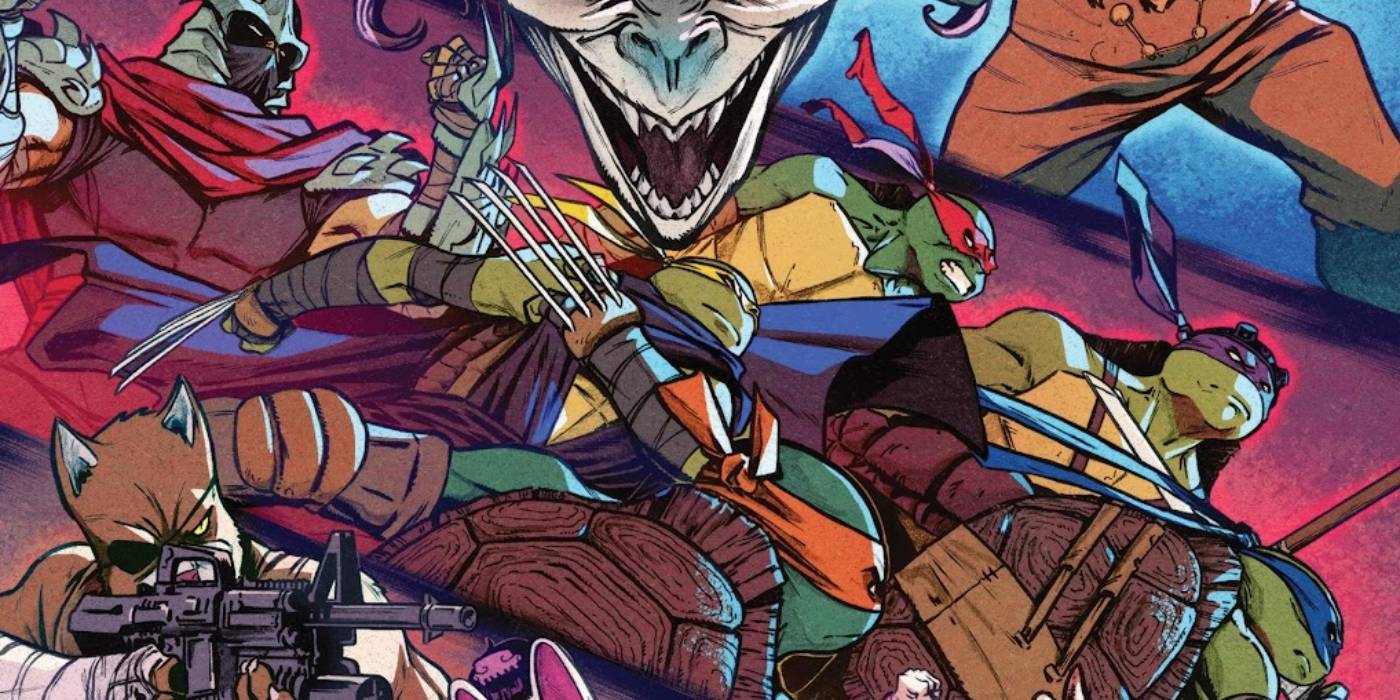
The Teenage Mutant Ninja Turtles: Sourcebook is a complete guide to/retelling of the entire IDW run!

Screen Rant: For existing fans of the Teenage Mutant Ninja Turtles, can you tell us what makes this new Sourcebook so important to include in their collection?
Patrick Ehlers: "The Sourcebook is important to have in your collection because it doesn't matter how well you think you know the series, there are details about these characters, and about these events that you will not be able to immediately recall. There are so many.
I just finished writing the second issue, which is all about Dimension X and the Utroms and all of that, and there are so many Triceraton warriors, Utroms, and Neutrinos that all have names and jobs and alliances and all these kinds of things that… they're going to come back. We're going to see these characters again in future Ninja Turtles stories in the same continuity. And if you want a quick, easy way to see who is who, and why they are the way they are, the Sourcebook will be that. It's going to be a great reference material for that.
But it's more than that, because it's structured in a narrative way that if you wanted to read an issue of the Sourcebook from cover to cover, you would experience a complete story. So, if you have skipped the IDW run out of comics altogether, and you just want to hop on at the new #1 with Jason Aaron, you can read through the Sourcebook and have all that same information and feel as though you're not just reading an encyclopedia, but getting a story as well."
SR: Did you have a favorite era of TMNT to explore, when compiling all of this history into one compendium?
PE: "There are so many eras within IDW Publishing that are super compelling, like the reinvention of the Turtles right from the get-go with the reincarnation storyline, which is so exciting and casts back to Feudal Japan. All that kind of stuff is really appealing to me. I love the art of Mateus Santolouco, which was absolutely killer during that period.
But, I have to say, one of the things that I have found in digging deep [into TMNT canon] is that I'm really moved and intrigued by the Armageddon Game era of the comics, wherein there's a conflict between the Triceratons and the Utroms. They are sharing Burnow Island together, and they have a limited number of resources, and it's all genuinely about warfare, and how one group of people subjugates another. There are questions of food and questions of reproduction and all these huge, macro-level sociological warfare questions. It's remarkable how well it gets explored in Teenage Mutant Ninja Turtles comics."
SR: This is just the first issue of four, so what TMNT era are you most excited to explore next?
PE: "There's a lot. So, the first issue is really just the Splinter (Hamato Yoshi) versus Shredder (Oroku Saki). The second issue is a lot of Utrom stuff, and I'm excited. I was very happy to dig more deeply into that, and I'm excited for people to read that.
The thing that has me most excited is that I'll have the opportunity to explore Mutant Town. With TMNT #101, Sophie Campbell takes over the writing and, like, a million new mutants are born. I'm exaggerating, the numbers are not quite that high. But there are so many new and crazy characters, that are references to the most deep cut characters from the Archie series, characters that are referenced in the original Teenage Mutant Ninja Turtles & Other Strangeness RPG book in the Palladium series.
I just want to live in that world. It is as though Sophie Campbell's brain was planted in the ground, and out sprouted a forest of new mutants, and we get to go exploring in that forest, and I couldn't be more excited."
“He’s Been My Boy Forever”: TMNT Writer Confirms Favorite Original Turtle Brother

SR: We have to ask, who was your favorite character to delve into?
PE: "I love deep-cut characters. I love Leatherhead. I like this expression of Leatherhead. I love what happened with Dirtbag and Groundchuck, and how they've become this body horror amalgamation where they're jammed together into one body. But the simple answer, and maybe the basic answer, is Michelangelo. He's been my boy forever. His characterization, particularly as Tom Waltz and Sophie Campbell wrote him, he's just the most emotionally intelligent of the Turtles. To call him a ‘party dude’ is to sell him short.
He knows what people need to hear, he knows how to solve a problem without violence, and then if it comes to violence, he also kicks ass. You know? He's too good with those nunchucks. People don't really swing around a pair of nunchucks. That's not a real thing that people really do. Check out Bruce Lee, he's using a single pair, but Michelangelo, he's swinging around two like a maniac.
Michelangelo’s the best. I love him. Anytime one of these stories veers into Michelangelo territory, I always feel like they're going to be okay because Mikey’s there."
SR: Upon diving into TMNT’s history so deeply, did any one event stand out, or shock you more than the others?
PE: "I don't know if things shocked me too much. I worked on the Teenage Mutant Turtles Oral History that we were putting together in the lead-up to issue #100, where I was interviewing the creators, and actually getting their firsthand accounts of what it was like to be making these comics. One major takeaway from those interviews is that this series, even though it's a big IP comic series, really is the work of a lot of auteurs. You are getting personality-driven stories that reflect the specific personal interests of a lot of these creators.
Everything that Sophie Campbell does is steeped in heavy metal music and identity, and all this stuff that you're just like, “that's Sophie.” And you see it really well pronounced in Tom Waltz too. He's a little bit more of a spiritual guy, so he wanted to explore the Turtles dying and coming back to life, and he wanted to explore gods and a pantheon. One of the things that I love about Tom is that he's got this delightfully conspiratorial mind. He likes to talk about UFOs, aliens, and the military industrial complex, and all this kind of stuff. He's such a smart, grounded, wonderful guy, and then this little quirk here, where you're like, “this is an interest that is genuinely his”.
You can see that reflected through the character of Agent Bishop and his father, who established the EPF - the Earth Protection Force. And he weaves that into Roswell, New Mexico and Area 51, but instead of the Grays or whatever, what if they were Utroms? Then we can build the Turtles mythology out around this real world history, or the sort of darker, weirder parts of real world history that maybe hold some myths to it, and maybe there's some reality to it too.
I would say, as far as surprises go or things that are so impactful to me, it's really seeing the specific personalities of the creators come out in the stories that are being told throughout this series."
The True Core TMNT Characters of The Entire Series


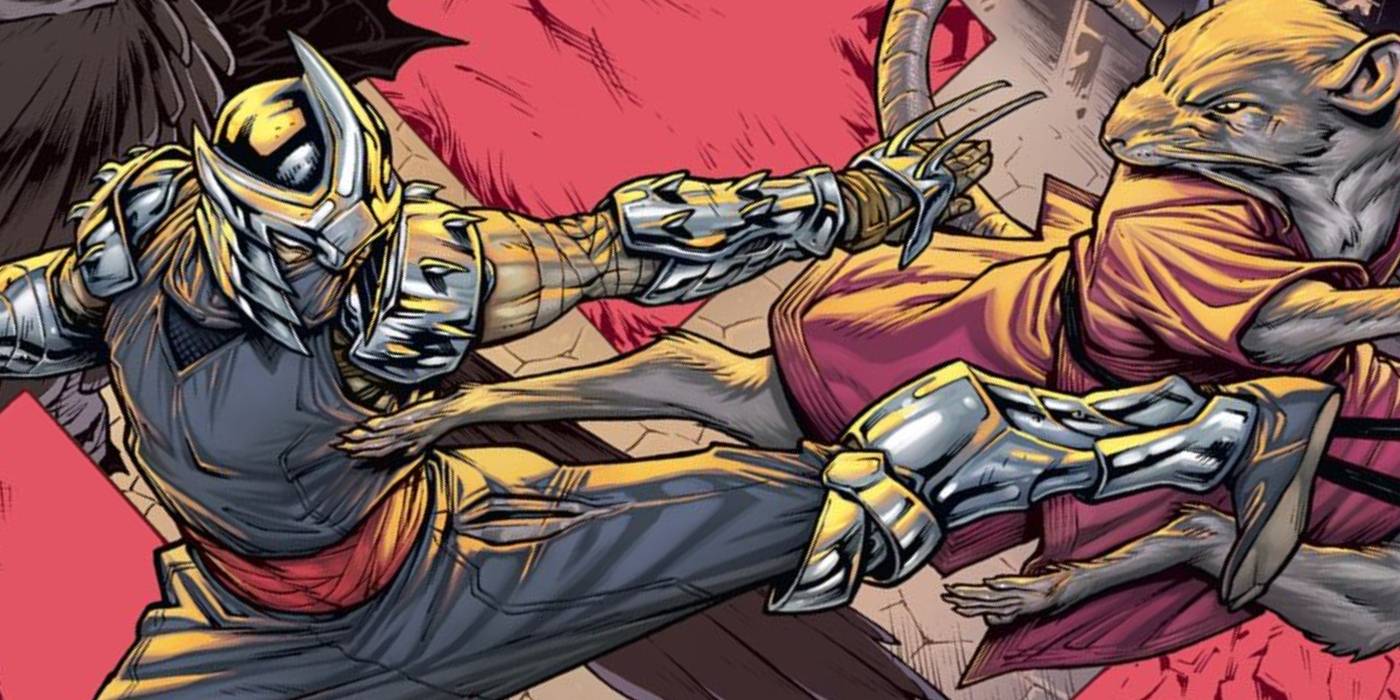
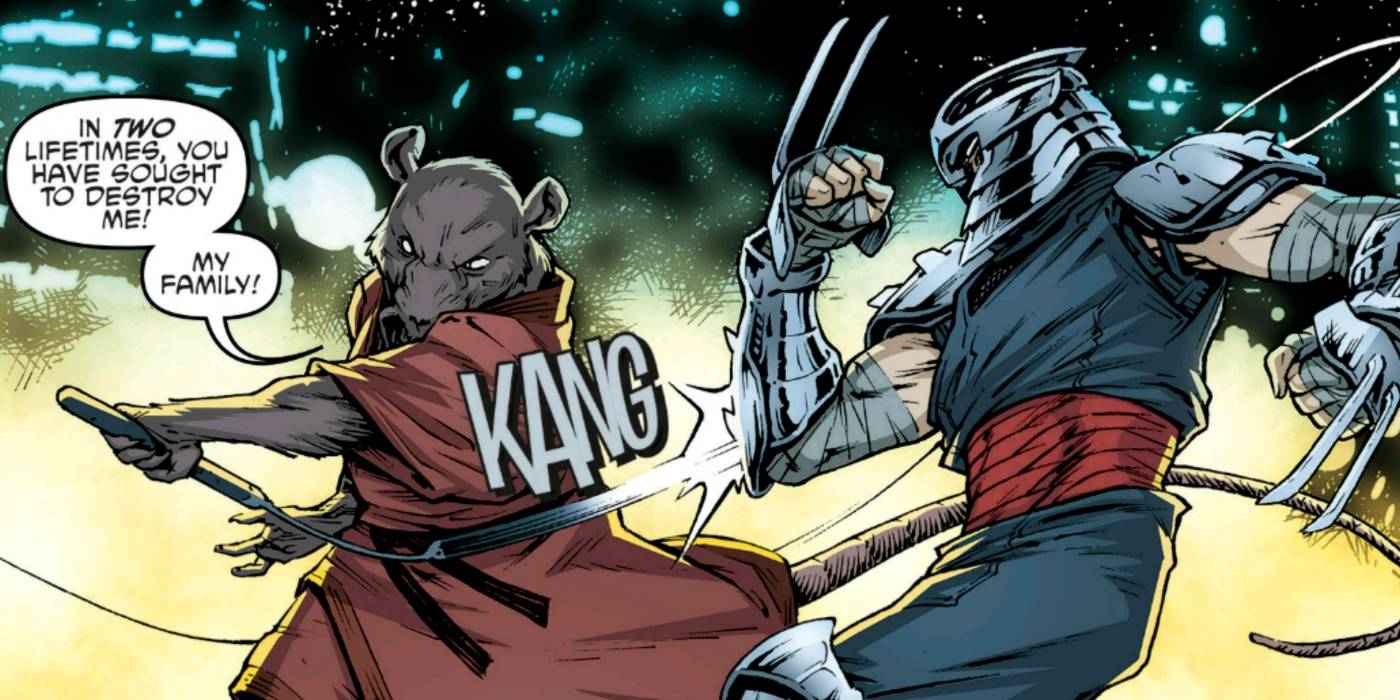
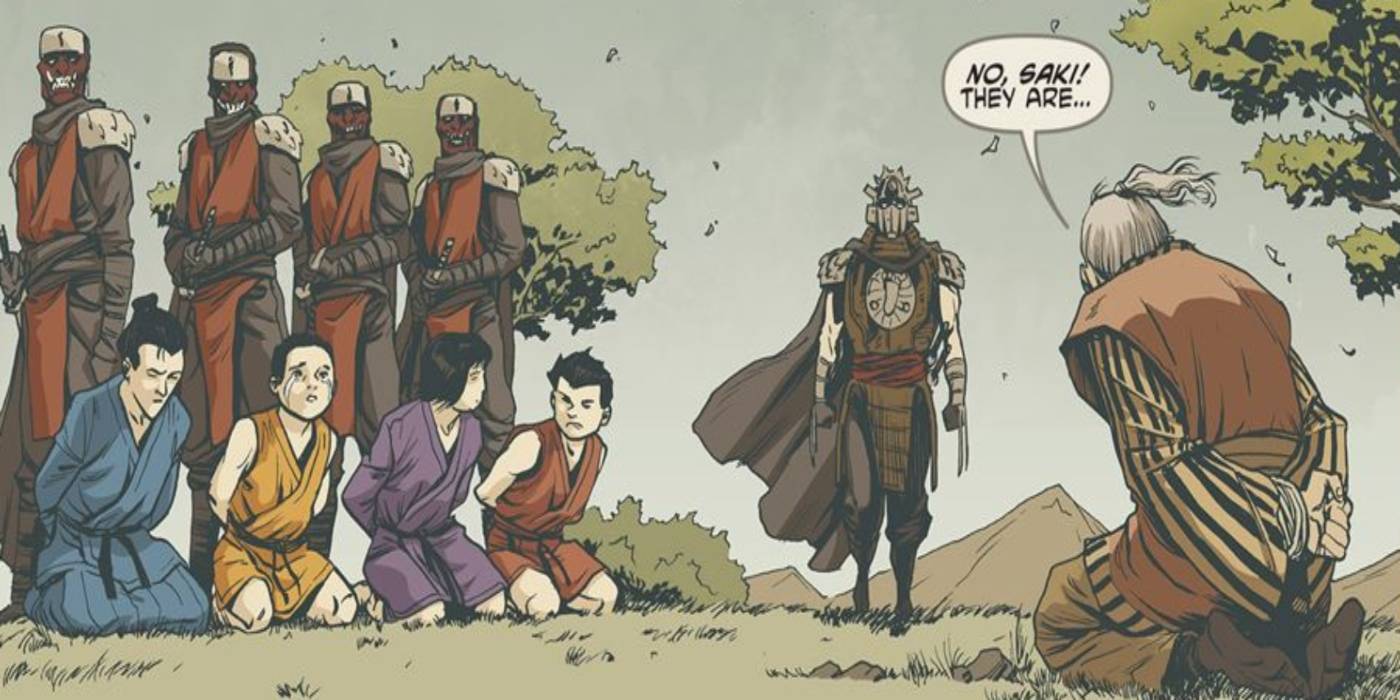
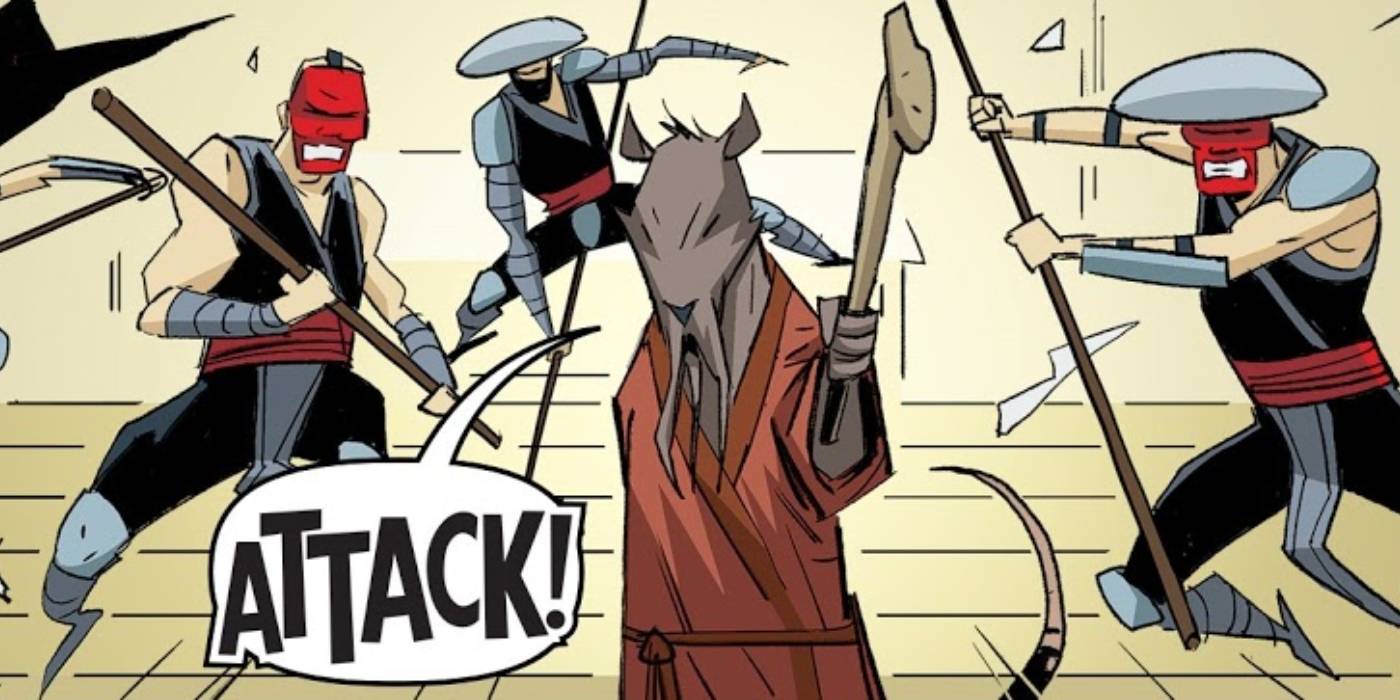
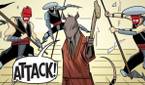

SR: This first era of IDW’s TMNT canon really boils down to the relationship between Shredder and Splinter. Can you speak on the impact their relationship had on the wider canon?
PE: "We're talking about Oroku Saki - Shredder - and Hamato Yoshi - Splinter - and we trace them back to Feudal Japan, and they live their entire lives there. They come up as peers, they're competitive, and they are vying for their position within the Foot Clan and what it means to be a part of a unit like that, part of a ninja clan. But then, of course, the story refuses to end there. They continue to have this tumultuous relationship throughout time. They either go into hibernation or one is killed, and they come back in the modern day.
The thing about Teenage Mutant Turtles as a property is that you've got mutants, and you've got interdimensional aliens, and you've got time travel and all this wonky stuff. But Hamato Yoshi, and Oroku Saki are like the two rails on which the train of all that crazy [stuff] actually travels. It's their relationships. Splinter has a fatherly relationship with the Teenage Mutant Ninja Turtles, and then we skip ahead 100 issues and suddenly now Shredder’s in that position, and he's acting as the father to the Ninja Turtles. Same thing with the Foot Clan. Shredder is the unquestioned lord and master of the Foot Clan, until he dies, and then Splinter takes over.
Every big thing that happens in this world has to go through the lens of the relationship between these two guys. It's a way to make these other worldly, enormous stories smaller and understandable. We know what it's like to have a friend, we know what it's like to have a father, and we know what it's like when those people disappoint us or hurt us or help us. That's really the crux of the first 100 issues of the series, and then even going on into the future.
SR: Is there anything you would like to share with the fans, maybe just about the process of crafting this book, or anything in particular you got out of it personally?
PE: "It's a lot of work. There are roughly 300 issues that go into informing these characters and these events that we're covering in the Sourcebook. Almost more than anything, it's given me the opportunity to read, and reread, and reread, and reread the series, until I know it forwards and backwards. One thing that I'm looking forward to when this process is all over is putting away my collected edition, so they're not just stacked up on my kitchen table indefinitely, forever.
But, no, one of the great things about Turtles fandom, and the people who make Ninja Turtles stuff is that everyone is so knowledgeable and passionate. So, when I am writing up something and I have a question, or something's not totally clear, it becomes like an ‘all hands on deck’ sort of thing where I can tap the resources of the people who actually wrote the comics, or the sort of IP gate holders at Nickelodeon, and we can come to solid canon answers for, like, 90 million questions."
So, for me, I think the joy in making it is going to be a lot of the same joy that people are going to experience in reading it. It's going to feel like you've got canon answers in your hand, where you're like, “ah, that's why this happened, that's where these people were at this time”. It feels good to have some things nailed down.
Teenage Mutant Ninja Turtles: Sourcebook Will Include Additional TMNT Content

This is an example of Renet the Timestress chiming in throughout the story, which is one of many additional pieces of content TMNT fans can enjoy from the Sourcebook!
SR: Is there anything that's going to be in the Sourcebook that you wouldn't necessarily get just by reading the original Teenage Mutant Ninja Turtles issues?
PE: Yes, a couple of things. One is that, as I said before, I got a lot of perspective through the Oral History on why the characters are the way they are from the creators, so some of that perspective is reflected in there, from my interviews with people. In addition to that, we wanted the book to be a fun read and not just like a dry informational read, so there is commentary throughout the book from various characters.
For instance, Dr. Harold Lilja will chime in from time to time to comment on technology, or other things like that, and that'll be in that character's voice. You won't hear those things if you're reading the series. Renet, the Timestress will chime in sometimes to talk about what happens in alternate versions, and alternate timelines, and how that is different from what happens in the IDW comics.
We've got the mutant morphology. Whenever possible, I tried to look into what these mutants actually were when they were animals, or in some cases, the animal that they mutated into, and dig up some fun animal facts and relate them to why that character is the way they are. So yeah, we went through some pretty strenuous efforts to make this a fun read, and a lot of that you’re going to see in character voices."
Teenage Mutant Ninja Turtles: Sourcebook #1 (of 4) from IDW Publishing is available February 21, 2024.
|
Teenage Mutant Ninja Turtles: The Sourcebook #1 (2024) |
|
|---|---|

|
|
