


Summary
- The first DC/Watchmen crossover was in The Question #17, titled "A Dream of Rorschach," connecting Vic Sage with Rorschach.
- Vic Sage finds a kinship with Rorschach as both characters are driven vigilantes, inspired by the original incarnation of the Question.
- Despite learning from Rorschach, Vic's strategy backfires, showing a conflict between different schools of thought.
Doomsday Clock by Geoff Johns and Gary Frank may have been the most high-profile crossover between the DC Universe and the Watchmen universe to date, but it certainly wasn’t the first. There is a little-known story that previously brought the two worlds together — not that long after the landmark series by Alan Moore and Dave Gibbons was released.
The “crossover” comes in The Question #17 by Denny O’Neil, Denys Cowan, Rick Magyar, Tatjana Wood, and Willie Schubert. Titled “A Dream of Rorschach,” the story sees Vic Sage traveling from Hub City to Seattle, on the trail of a wanted assassin.

Catching a plane ride, Vic decides to pick up something to read on his flight, and finds a copy of the Watchmen trade paperback in the airport. Vic notes that the story is far more “heavy” than the comics he read as a kid, and is most impressed with the character of Rorschach.
Just like Vic Sage, real-life readers can pick up the Watchmen collection in multiple formats — including a new DC Compact Comics edition, which has the affordable retail price of $9.99.
Rorschach and the Question Are Two Sides of a Coin
How Are the Two Characters Connected?

It’s appropriate that Vic Sage would find a kinship with Rorschach, as the driven Watchmen vigilante was based in part on the original Question as created by Steve Ditko. Vic notes that even though he’s bigoted and “over the edge,” he certainly manages to get things done. As he falls asleep on the flight, Vic dreams of himself as Rorschach as he relives a scene from previous issues, in which a corrupt Hub City cop sacrifices himself to save the Question. It’s the perfect visual representation of the connection between Rorschach and the Question, as the creative team takes the opportunity to pay tribute to Moore and Gibbons’ antihero.
Watchmen was originally meant to star Charlton superheroes such as the Question, Blue Beetle, and Peacemaker before Moore and Gibbons decided to create original characters based on those classics.
Vic seems inspired by Rorschach’s approach as he tracks down the hired killers in Seattle, charging in with fists first to solve his problems. This strategy winds up backfiring on Vic, as he soon becomes overwhelmed and ends up getting beaten to within an inch of his life. As Vic himself notes, “Being tough is not enough,” remembering how Rorschach met his end in Watchmen. It’s a nice bit of characterization, and this scene highlights how Denny O’Neil refashioned the Question from Ditko’s Objectivist hero into a Zen adventurer.
The Question Learns the Wrong Lessons from Rorschach
But Their Legacies Are Forever Connected

Even though Vic Sage finds himself a changed man in his '80s series, O’Neil’s characterization still saw the hero struggling to control his anger and often returning to his old ways. “Why do I keep learning the same lessons over and over?” Vic asks at one point in the issue, showing the conflict that exists between the two separate schools of thought. By tying Watchmen’s Rorschach to DC’s the Question, this little-known crossover acknowledges the legacy of all the creators who have worked on these legendary characters.
The Question #17 and Watchmen are available now from DC Comics.
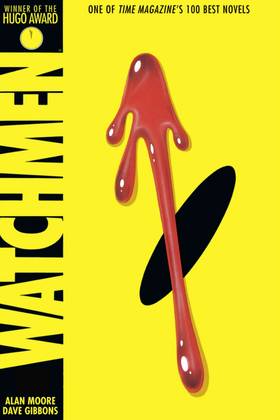
Watchmen
- Writer
- Alan Moore
- Penciler
- Dave Gibbons
- Inker
- Dave Gibbons
- Colorist
- John Higgins
- Publisher
- DC Comics
In the mid-eighties, Alan Moore and Dave Gibbons created Watchmen, changing the course of comics' history and essentially remaking how popular culture perceived the genre. Popularly cited as the point where comics came of age, Watchmen's sophisticated take on superheroes has been universally acclaimed for its psychological depth and realism.
