


Peanuts has always been much stranger than its cheerful reputation suggests. Beneath Charlie Brown's failed kicks, Snoopy's elaborate fantasies, and Lucy's five-cent psychiatry booth, Charles M. Schulz repeatedly explored loneliness, anxiety, mortality, insecurity, and disappointment. The brilliance is that these subjects rarely arrive with dramatic music or heavy narration. Instead, Schulz slips them into four simple panels and lets the joke do the emotional damage.
That mixture makes some Peanuts strips surprisingly bleak decades after they were first published. A child contemplating death, a kid left alone after school, or a lonely dog talking to a cactus might sound grim outside Schulz's world. Inside it, those ideas become comedy because the characters react with such blunt honesty. These are ten of the strip's darkest examples.
10 Charlie Brown's Midnight Existential Crisis

This 1990 Peanuts strip begins with Snoopy unable to sleep and knocking on Charlie Brown's door. Charlie welcomes him into bed, assuming loneliness is the problem. Instead of simply comforting his dog, Charlie launches into a remarkably bleak meditation about lying awake in darkness, questioning existence, wondering why life matters, and thinking about whether anyone truly cares.
The joke arrives when Snoopy's attention abruptly shifts to cookies. That contrast is classic Schulz: Charlie Brown is wrestling with enormous philosophical questions while Snoopy is thinking about snacks. What makes it depressing is how sincere Charlie's spiral feels before the punchline. The strip turns ordinary insomnia into a miniature crisis of meaning and isolation.
9 The Doctor's Call That Becomes Pure Nightmare Fuel

The May 4, 1964, strip begins with Charlie Brown dealing with medical tests and waiting for results. His doctor calls after an X-ray, mentions another examination, and leaves Charlie visibly rattled. Schulz never tells readers exactly what the doctor says, which makes the scene more unsettling. The missing information forces imagination to fill the gap.
The final panel does most of the emotional work. Charlie's enormous reaction, combined with Snoopy's alarmed expression and unusual body language, makes the phone call feel catastrophic. There is no tidy explanation and no reassuring punchline. Instead, Schulz creates comedy from Charlie's panic while leaving readers with the uncomfortable feeling that something terrible may have happened.
8 Peppermint Patty Faces Childhood's Latchkey Reality

Peppermint Patty's three-strip latchkey storyline, beginning December 5, 1984, quietly introduces a very adult problem into the children's world. Patty explains that she goes home alone after school because her single father works. She treats the situation matter-of-factly, but the implication is anything but lighthearted: a child has learned to handle an empty house by herself.
Her description of latchkey children as a “growing breed” gives the joke an unexpectedly social dimension. This is not merely a quirky fact about Patty. It suggests that many other children share the same experience. Schulz manages to make the strip funny through Patty's confidence while simultaneously highlighting the loneliness and responsibility placed on kids who have nobody waiting at home.
7 Linus Learns That Feeling Miserable Is Not So Easily Fixed

Linus is usually one of the most thoughtful characters in Peanuts, but that intelligence often works against him. In a 1968 strip centered on his despair, he gives voice to the sort of gloomy thinking that Charlie Brown usually gets. His sadness is not presented as a dramatic crisis; instead, it emerges through an ordinary conversation that gradually becomes heavier than expected.
Lucy, naturally, is the least convincing person imaginable to help. She proudly presents herself as a psychiatrist despite her questionable qualifications and frequently terrible advice. That mismatch creates the dark comedy. Linus genuinely wants emotional relief, while Lucy approaches suffering with the confidence of someone who absolutely should not be running a clinic.
6 Sally Discovers That Even the Stars Have an Expiration Date

On June 9, 1963, Charlie Brown and Sally look at the stars while discussing how long celestial bodies last. Charlie explains that even stars eventually disappear, introducing Sally to mortality on a cosmic scale. The information is accurate enough to impress an older reader, but for Sally it immediately becomes emotionally devastating.
Her reaction is one of the strip's most effective examples of childish innocence colliding with an adult truth. She is overwhelmed by the idea that something as beautiful and seemingly permanent as a star has an ending. Schulz does not need a complicated setup. A quiet nighttime conversation becomes a miniature existential horror story in four panels.
5 Spike's Desert Life Is Much Sadder Than the Cactus Joke Suggests

Spike, Snoopy's brother, is often used for jokes about his isolated life in the desert. In a 1994 Peanuts strip, however, the familiar cactus gag takes on a more melancholy meaning. Spike's conversations with plants are funny precisely because he treats them like real companions, but the joke also exposes just how little human or animal company he has.
That isolation makes Spike's situation surprisingly painful. He is not simply a bizarre character living somewhere unusual; he has effectively removed himself from the social world around Snoopy's family. Talking to a cactus becomes funny because it is absurd, yet it is also evidence of profound loneliness. Schulz lets the punchline and the sadness exist simultaneously.
4 Snoopy Loses His Doghouse

Snoopy's doghouse catches fire in a memorable storyline, and the normally self-assured beagle is suddenly left without the little home that serves as the center of his universe. The premise sounds like classic slapstick, especially because Snoopy's possessions are so often treated as extensions of his elaborate imagination.
Yet the image of Snoopy staring at the burned remains is genuinely heartbreaking. The doghouse is more than a prop: it is where Snoopy sleeps, dreams, writes, transforms into the World War I Flying Ace, and escapes reality. Seeing it destroyed strips away one of the safest constants in his life. The comedy lands, but so does the loss.
3 Charlie Brown Wonders Whether He Has Already Died

During a late-1970s hospital storyline, Charlie Brown finds himself alone with far too much time to think. For most people, hospitalization would be stressful enough. For Charlie Brown, however, isolation immediately becomes fuel for catastrophizing. His thoughts move from worrying about his condition to contemplating death, eventually reaching the bizarre possibility that he may already be dead.
That progression is funny because it is quintessential Charlie Brown logic: give him uncertainty and he will construct the worst possible explanation. Still, the joke contains a remarkably dark premise. A child in a hospital is left alone with thoughts about mortality, and instead of dismissing the idea, Schulz follows the spiral until it becomes an absurdly bleak punchline.
2 Charlie Brown's Loneliness Becomes a Running Joke

One of the earliest turning points in Charlie Brown's characterization arrived on February 1, 1954, when loneliness became central to the character's identity. Earlier Charlie Brown was not yet the universally defeated figure audiences came to know. Schulz increasingly discovered the comedic possibilities of making one boy the target of life's little humiliations.
That shift mattered because Charlie's sadness became more than an occasional gag. It became part of the emotional machinery of Peanuts. His disappointments, social awkwardness, and perpetual sense of being overlooked created endless comic scenarios, but they also gave the strip an unusual melancholy. Readers laughed because Charlie could not catch a break, then felt bad for laughing.
1 Olaf's “Ugliest Dog” Reputation Gets Disturbingly Dark

Olaf, another of Snoopy's brothers, is repeatedly mocked for his appearance and even carries the cruel nickname “Ugly Olaf.” In a 1989 strip, those jokes take a much darker turn when Olaf becomes upset enough to attempt hurting himself. The situation is presented through the exaggerated logic of cartoon comedy, but the underlying idea is deeply uncomfortable.
What makes the Peanuts strip especially grim is Olaf's admission that this is not his first attempt. Suddenly, the running joke about being unattractive has consequences. Schulz shows how constant ridicule affects the character rather than treating every insult as harmless. The result is a strange mixture of absurdity and sadness, with the laughter becoming increasingly uneasy as the implications sink in.
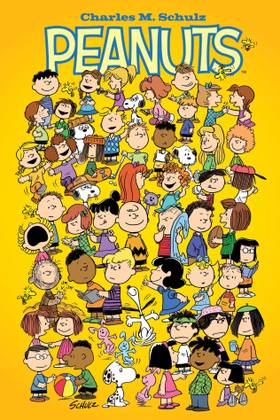
- TV Show(s)
- Peanuts, Peanuts, The Snoopy Show
- First Film
- A Boy Named Charlie Brown
- Cast
- Christopher Shea, Kathy Steinberg, Bill Melendez, Sally Dryer, Peter Robbins, Noah Schnapp, Hadley Belle Miller, Mariel Sheets, Lisa DeFaria, Venus Omega Schultheis
- Created by
- Charles M. Schulz
- Movie(s)
- A Boy Named Charlie Brown, Snoopy, Come Home, Race for Your Life, Charlie Brown, Bon Voyage, Charlie Brown (and Don't Come Back!), The Peanuts Movie
- Comic
- Peanuts
